
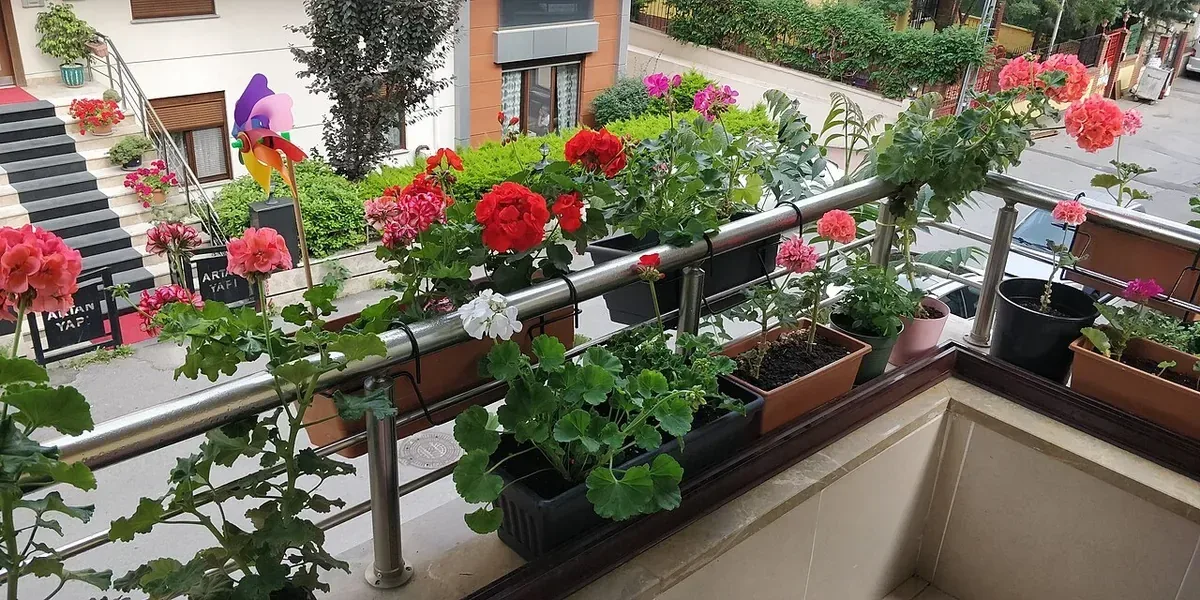
| ☀️ Light | Full sun |
|---|---|
| 💧 Water | Moderate (lightly moist) |
| 🪴 Soil | Free-draining potting mix or fertile garden soil, neutral to alkaline |
| 🌡️ Temp | 7°C – 30°C |
| 🐾 Safety | Cats: toxic · Dogs: toxic |
| 📏 Mature size | 60 cm |
Where It Grows & Climate Tolerance
Pet & Companion Animal Toxicity (Geranium Care in Canada: Summer Pots and Overwintering)
Zonal geraniums fill window boxes from Victoria to St. John's every summer. Plant them out after your area's last frost, deadhead through August, then carry them through winter indoors or as cuttings.
Care instructions
Care Guide & Maintenance Routine
Grow on indoors until local last frost, then full sun on a deck, balcony or window box. Feed through summer and pick off spent flowers. Before the first fall frost, choose an overwintering method: houseplant, cuttings or dormant bare-root storage in a cool basement.
Light & Sunlight
NC State Extension says zonal pelargonium needs full sun and becomes leggy and blooms poorly in low light. Indoors in winter it needs your brightest window or a grow light.
Watering Schedule
The RHS describes pelargoniums as not thirsty: water moderately from spring to summer and sparingly in winter. NC State notes established plants are drought tolerant, though they flower better with moderate moisture. Pots may dry out between waterings.
Potting Mix & Drainage
Free-draining potting mix or fertile garden soil, neutral to alkaline
Temperature & Humidity
Frost kills it. Average last spring frost ranges from 26 March in Vancouver to late May on the Prairies and 1 June in St. John's; first fall frost from about 10 September in Calgary to early November in Vancouver (ECCC normals via GrowersGuide.ca). Indoors, many keep blooming at 7 to 10°C (RHS).
Geraniums through a Canadian season
Few plants say summer on a Canadian porch like a pot of red geraniums. They are tender, so they live outside only between the last spring frost and the first fall frost, and many gardeners keep the same plants going for years by bringing them inside each autumn.
Buying in spring
Garden centres fill up with geraniums in late April. Pick plants with plenty of unopened buds and dark green leaves, and avoid any with yellow lower leaves or grey fuzz. If a cold snap is forecast, bring them into the garage or house overnight. On the drive home in April, a cold car seat can chill plants, so cover the flat with newspaper.
When to plant out, by region
Average last frost dates from ECCC 1991-2020 normals (via GrowersGuide.ca):
- BC coast: Vancouver about 26 March, Victoria about 14 April. Planting out in late April is common; wait for nights to stop dipping near freezing.
- Ontario and Quebec: Toronto about 4 May, Ottawa 7 May, Montréal 29 April, Québec City 11 May. The Victoria Day long weekend is the traditional start.
- Prairies: Edmonton and Saskatoon about 22 May, Winnipeg 24 May, Calgary 26 May, Regina 28 May. Harden plants off for a week and keep a sheet handy for June cold snaps.
- Atlantic: Halifax about 8 May, Fredericton 16 May, Charlottetown 18 May, St. John's 1 June.
Zones do not apply
Geraniums are grown as annuals here. NRCan's 1991-2020 zones range from 3a in Saskatoon and Regina to 9a in Vancouver and Victoria, and no Canadian zone lets them survive winter outside.
Bringing them in
Wisconsin Horticulture describes three methods: grow them on as houseplants in a sunny window, root cuttings in late summer, or let them go dormant bare-root in a cool, dark basement. First fall frost averages around 10 September in Calgary, 11 September in Edmonton and Regina, 2 October in Ottawa, 9 October in Toronto and Montréal, 17 October in Halifax and 4 November in Vancouver. Check for whitefly before they come in.
Winter indoors
Dry furnace air bothers geraniums far less than it bothers ferns or calatheas, so skip the humidifier for them. The bigger issue is light. Put them in your sunniest south window, or under LED shop lights on a timer in the basement, and expect lanky stems that you cut back in March.
Mail-order cuttings and cold snaps
Specialty growers across Canada mail rooted cuttings and plugs in spring. A parcel left on a Winnipeg or Québec City doorstep in an April cold spell can arrive with blackened, water-soaked leaves. Pick a shipping week after your local thaw, track the parcel, and unwrap it indoors straight away.
Common questions in Canada
- Spindly by February? The basement or north window is too dim. Shear back in March and root the tips.
- Dog or cat in the house? ASPCA lists it as toxic, so park overwintering pots on a high shelf.
- Grey fuzz on a window box during a soggy Halifax or Vancouver July? Botrytis; snap off faded blooms and open up crowded planters.
- Can a hanging basket from the Victoria Day sale overwinter? Yes; pull out the best two or three plants and pot them individually in September.
Seasonal rhythm
Seasonal Calendar
| Month | Care Tasks | Seasonal Focus |
|---|---|---|
| Jan | Protect from frost/heat | Overwintering pots in a bright, cool window; water sparingly. Check bare-root plants hanging in the basement once a month. |
| Feb | Sow | Seed sown indoors now at 21 to 24°C (NC State) blooms by early summer. Pinch overwintered plants. |
| Mar | Prune, Fertilize, Repot | Daylight saving returns: pot up stored plants and cut them back hard. Feed once new shoots show. |
| Apr | Plant out | Victoria and Vancouver: plant out after mid-April frost risk. Everywhere else: sunniest window or under shop lights. |
| May | Plant out | Victoria Day weekend in Ontario, Quebec and the Maritimes: plant out after local last frost. Prairies: harden off, plant late in the month. |
| Jun | Plant out, Fertilize | Prairies and Newfoundland: into window boxes by early June. Switch to a high-potassium feed as buds form. |
| Jul | Fertilize | Canada Day colour: deadhead weekly, water when the top of the mix dries. |
| Aug | Prune | Root cuttings for winter. Calgary frost can arrive by mid-September, so plan early. |
| Sep | Protect from frost/heat | Calgary, Edmonton, Regina: bring pots in early in the month. Ontario and Quebec: by month end. Look for whitefly. |
| Oct | Prune, Protect from frost/heat | Thanksgiving in Toronto, Montréal, Halifax: last call before mid-October frost. Trim large plants. |
| Nov | Protect from frost/heat | Coastal BC: bring in before early November frost. Brightest window indoors. |
| Dec | Protect from frost/heat | Feed monthly only if still flowering. Water when the mix dries. |
Diagnostics
Common Problems & Troubleshooting
Grey fuzzy mould on old flowers and leaves; rusty pustules under leaves; black, rotting stems on cuttings; leggy growth with few flowers in low light; corky bumps under leaves (edema) when soil stays wet in cool, humid weather; yellow lower leaves from overwatering.
Pests & seasonal watch: Whitefly and aphids on new shoots, especially plants coming indoors in fall. Grey mould in cool, wet spells on the BC coast and in the Maritimes. Inspect overwintering plants for whitefly before they share a window with other houseplants.
- Yellow leaves — Leaves fade from green to yellow, often starting at the bottom.
- Root rot — Roots turn brown and mushy in soil that stays wet.
- Leggy — Long weak stems with big gaps between small leaves, leaning to the window.
- Thrips — Silvery streaks and twisted new leaves, sometimes with black specks of frass.
- Aphids — Clusters of small soft insects on new tips, often sticky.
- Whitefly — Tiny white insects fly up in a cloud when you touch the plant.
- Leaf spot — Brown or tan spots with a yellow halo, sometimes with tiny dots in the centre.
- Grey mould — Fuzzy grey mould on faded flowers, damaged leaves or soft stems.
- Overwatering — Soil stays wet, leaves yellow or droop, and the pot feels heavy.
- No flowers — A flowering houseplant stays leafy and will not bloom.
- Edema — Corky or blistered spots on leaf undersides after the plant takes up more water than it can lose.
- Stem rot — The stem goes soft, dark or black at soil level and the top collapses.
Q&A
Frequently Asked Questions
Are geraniums and pelargoniums the same plant?
The balcony geranium is botanically a pelargonium. True geraniums (Geranium species, or cranesbills) are hardy perennials with simpler, cup-shaped flowers.
Are geraniums toxic to cats and dogs?
Yes. ASPCA lists Pelargonium species as toxic to dogs, cats and horses. NC State notes cats are the most sensitive.
Why is my geranium leggy with few flowers?
Too little light. NC State says plants in insufficient light become leggy and bloom poorly. Move it to full sun and pinch back the long stems.
How often should I water geraniums in pots?
Water when the top of the mix feels dry, then let excess drain. They prefer slightly dry roots over soggy ones.
What fertiliser gives more geranium flowers?
The RHS uses a balanced liquid feed in spring and a high-potassium feed, such as tomato feed, once buds form.
Can I keep geraniums over winter?
Yes. Grow them in a bright, cool window, store them dry and dormant, or root cuttings in late summer and grow those on indoors.
Should I remove dead geranium flowers?
Yes. Deadheading keeps the plant tidy, reduces grey mould and encourages more flower clusters.
What are the corky bumps under my geranium leaves?
Often edema, which happens when roots take up more water than the leaves can lose, usually in cool, humid weather with wet soil. Water less and improve airflow.
When can I plant geraniums outside?
After the last frost in your area. NC State recommends planting out after the last frost.
Similar Botanical Matches
Keep exploring
Related plants
Grower field notes
Reader Field Notes in Canada
Share how this plant performs in your local Canada climate.