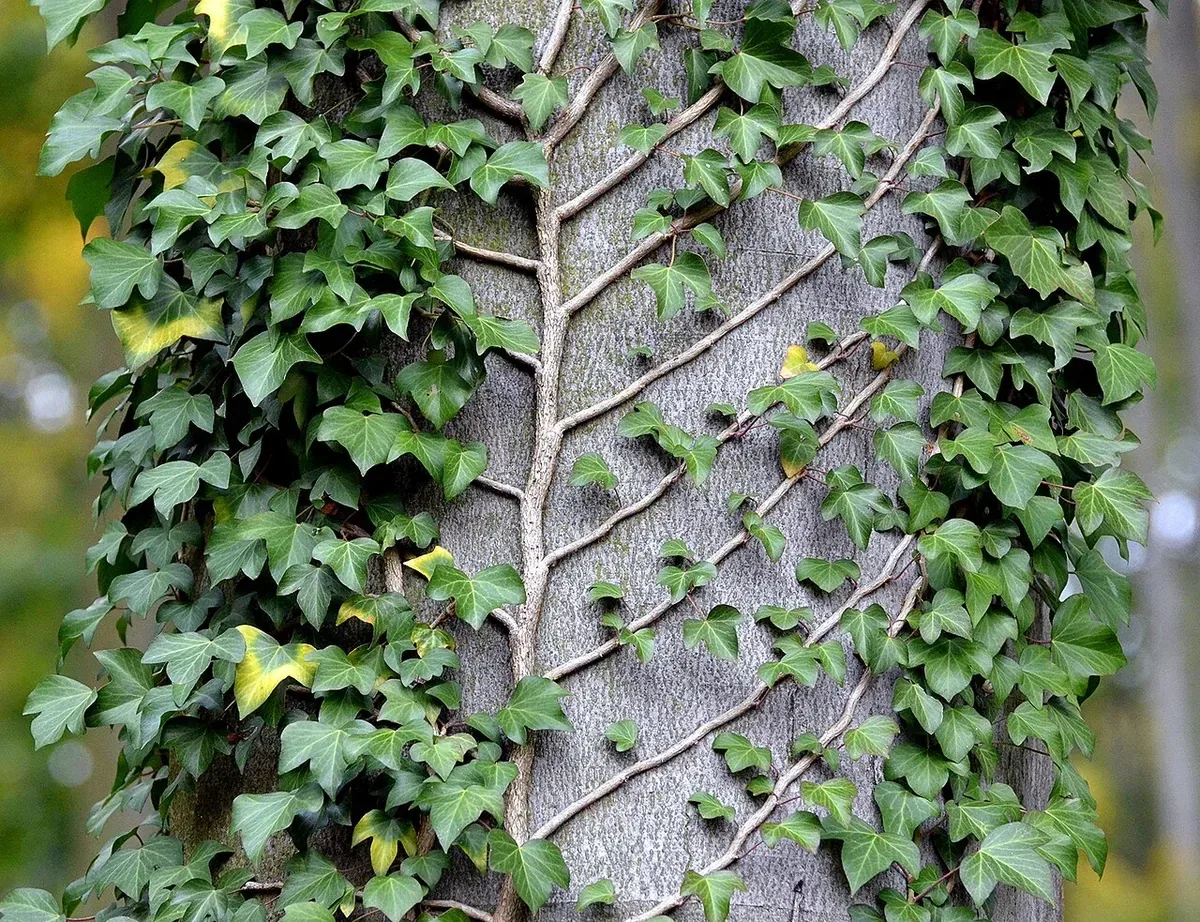
| ☀️ Light | Bright indirect light |
|---|---|
| 💧 Water | Moderate (lightly moist) |
| 🪴 Soil | Regular peat or coir-based potting mix with good drainage |
| 🌡️ Temp | 5°C – 24°C |
| 🐾 Safety | Cats: toxic · Dogs: toxic |
| 📏 Mature size | 6.0 m |
Where It Grows & Climate Tolerance
Pet & Companion Animal Toxicity (English Ivy in Canada: Indoor Care and BC Invasive Status)
English ivy makes a good trailing houseplant for cool Canadian homes and cottages. In British Columbia it is an invasive species, so the Invasive Species Council of BC asks gardeners not to plant it outdoors.
Care instructions
Care Guide & Maintenance Routine
Coolest bright room, ideally a north or east window, from Thanksgiving to May. Humidifier or a weekly shower rinse once the furnace runs, to keep spider mites down. Patio pots possible in Ontario, Quebec and the Atlantic provinces after last frost; never in BC gardens.
Light & Sunlight
Illinois Extension recommends bright light. Variegated forms need more light to keep their cream or yellow markings. A north window is often too dim for good growth indoors, while a hot south window in summer can dry it out quickly.
Watering Schedule
Keep the mix evenly moist but never soggy. Water when the surface feels just dry. Pots that dry out completely cause crisp leaf edges and invite spider mites; pots that stay wet cause yellowing and root rot.
Potting Mix & Drainage
Regular peat or coir-based potting mix with good drainage
Temperature & Humidity
Illinois Extension recommends cool indoor temperatures. Keep indoor plants frost-free and clear of forced-air registers. Ivy itself tolerates cold, but in BC it spreads into forests, so it should not go into the ground there. Bring patio pots in before hard frost.
Ivy in Canadian homes, and why BC says keep it inside
English ivy hangs from shelves in Montréal walk-ups and trails off Halifax windowsills with little fuss, because it likes the cooler rooms many Canadian homes keep in winter. The catch is in British Columbia. The Invasive Species Council of BC lists it as invasive: on the coast it climbs and smothers trees, carpets forest floors and is spread by birds that eat its berries. Grow it in a pot indoors, bag the trimmings for the garbage rather than the green bin or compost, and choose salal, deer fern or piggy-back plant for shady BC gardens.
Buying and getting it home
Garden centres, Loblaw and Sobeys stores, Home Depot and Canadian Tire sell small hanging pots year round. Ivy handles cold better than most houseplants, but a frozen car seat in February can still blacken tender tips. Wrap it in a paper sleeve and do not leave it in the vehicle while you run errands. Check leaf undersides at the store: fine webbing means mites are already aboard.
Furnace air, humidity and spider mites
Mites are the number one ivy complaint in Canadian winters. Forced-air heat dries rooms while frost feathers the inside of single-pane windows. A cool spare bedroom, a humidifier nearby, or a lukewarm shower rinse every couple of weeks keeps them in check. Keep the pot well away from baseboard heaters, wood stoves and fireplaces.
Light through the dark months
Ivy accepts less light than many trailing plants, but from November to February in Edmonton or Saskatoon, a north window is too dim. Move it to an east window, or hang an LED grow light on a timer above the shelf so vines do not stretch out with long gaps between leaves.
Summer on the deck
- Ontario and Quebec: average last frost is about 4 May in Toronto, 7 May in Ottawa and 29 April in Montréal; a shaded porch pot works from mid-May. Keep it in the container.
- Prairies: last frost averages 22 May in Edmonton, 24 May in Winnipeg and 28 May in Regina, and fall frost returns around 11 September in Edmonton and Regina. A short July outing is plenty.
- Atlantic: last frost averages around 8 May in Halifax and 16 May in Fredericton. Wind off the water dries hanging baskets fast.
- British Columbia: keep it indoors. Stems root where they touch soil, and dumped trimmings start new patches.
Zones
NRCan's 1991-2020 map rates Toronto Zone 7a, Halifax 6b and Ottawa 5a. Outdoor survival in a zone does not make planting it a good idea; the BC experience shows how far it can spread.
Questions from Canadian readers
- Cats and dogs? ASPCA lists it as toxic, so hang baskets high.
- Grey, dull leaves in January? Almost always mites; check with a magnifier.
- Yard waste? In BC, bag it for the landfill.
Seasonal rhythm
Seasonal Calendar
| Month | Care Tasks | Seasonal Focus |
|---|---|---|
| Jan | protect | Coolest bright window in the house. Inspect leaf undersides weekly; furnace air breeds mites. |
| Feb | protect | Lukewarm shower rinse. Prairie and northern homes: an LED grow light on a timer keeps vines tight. |
| Mar | prune, repot | Daylight saving returns. Cut back bare runners and pot up crowded baskets. |
| Apr | feed | First fertilizer of the year at label strength. Root cuttings in a glass of water by the sink. |
| May | protect | BC gardeners: pull wild ivy seedlings in yards before they establish. Houseplants stay inside. |
| Jun | plant | Ontario, Quebec and Maritime porches: containers can go out once frost has passed. BC: indoors only. |
| Jul | feed | Shade deck pots from hot afternoon sun; water more often during heat waves. |
| Aug | prune, feed | Last feeding month. Pinch tips to keep baskets full. |
| Sep | protect | Prairie frost arrives early: bring pots in around Labour Day. Check for aphids before mixing with other houseplants. |
| Oct | protect | Furnaces start up. Move the basket away from registers and water a little less. |
| Nov | protect | Short grey days. Wipe dust from leaves and keep watching for webbing. |
| Dec | protect | Keep clear of holiday fireplaces and space heaters. BC: bag trimmings for the garbage, never the compost. |
Diagnostics
Common Problems & Troubleshooting
Speckled, dull leaves from spider mites; brown, dry leaf edges in hot dry rooms; long bare stems in low light; green leaves on variegated types in shade; yellowing from wet soil.
Pests & seasonal watch: Spider mites from November to March, when furnace-heated air is warm and dry. Aphids on pots carried back in from the deck. Scale and mealybugs on older stems.
- Yellow leaves — Leaves fade from green to yellow, often starting at the bottom.
- Brown tips — Leaf tips and edges turn dry, brown and papery.
- Root rot — Roots turn brown and mushy in soil that stays wet.
- Mealybugs — White cottony clumps in leaf joints, often with sticky honeydew.
- Leggy — Long weak stems with big gaps between small leaves, leaning to the window.
- Spider mites — Fine webbing and pale speckled leaves, worse in dry heated rooms.
- Scale — Hard or soft brown bumps stuck to stems and leaf ribs, often with sticky honeydew.
- Aphids — Clusters of small soft insects on new tips, often sticky.
- Leaf spot — Brown or tan spots with a yellow halo, sometimes with tiny dots in the centre.
- Underwatering — Soil is bone dry and leaves are crispy, curled or dull.
- Fading variegation — Variegated leaves come in greener, or whole shoots turn fully green.
Q&A
Frequently Asked Questions
Is English ivy toxic to cats and dogs?
Yes. ASPCA lists English ivy as toxic to dogs, cats and horses. NC State says the leaves and berries contain saponins and the sap can irritate skin.
Is English ivy invasive in Canada?
The Invasive Species Council of BC lists it as invasive in British Columbia, where it spreads through coastal forests. Keep it in pots indoors, and do not dump clippings in natural areas.
Why does my indoor ivy get crispy brown leaves?
Usually warm, dry air or soil that dried out completely. Check leaf undersides for spider mites too, since they build up fast in the same conditions.
How do I know if my ivy has spider mites?
Look for fine pale speckles on the leaves and very thin webbing where leaves meet stems. Tap a leaf over white paper; tiny moving dots confirm mites.
Can English ivy grow in low light?
It survives, but stems get long and bare and variegated types turn plain green. Bright light gives a fuller plant.
How do I make my ivy bushier?
Pinch the tips of shoots regularly and cut back long bare stems in spring. Several cuttings rooted in one pot also fill it out faster.
Does English ivy clean the air?
There is no strong evidence that a few houseplants clean the air in a real home, so grow it for its looks rather than for air quality.
Why do some ivy leaves have no lobes?
Mature, flowering stems produce oval leaves without points. The Invasive Species Council of BC notes this on fruiting stems outdoors.
Can I grow English ivy in India?
It grows best in cool hill climates. In the plains, keep it in a cool, bright room and expect it to struggle in the hottest months.
Similar Botanical Matches
Grower field notes
Reader Field Notes in Canada
Share how this plant performs in your local Canada climate.