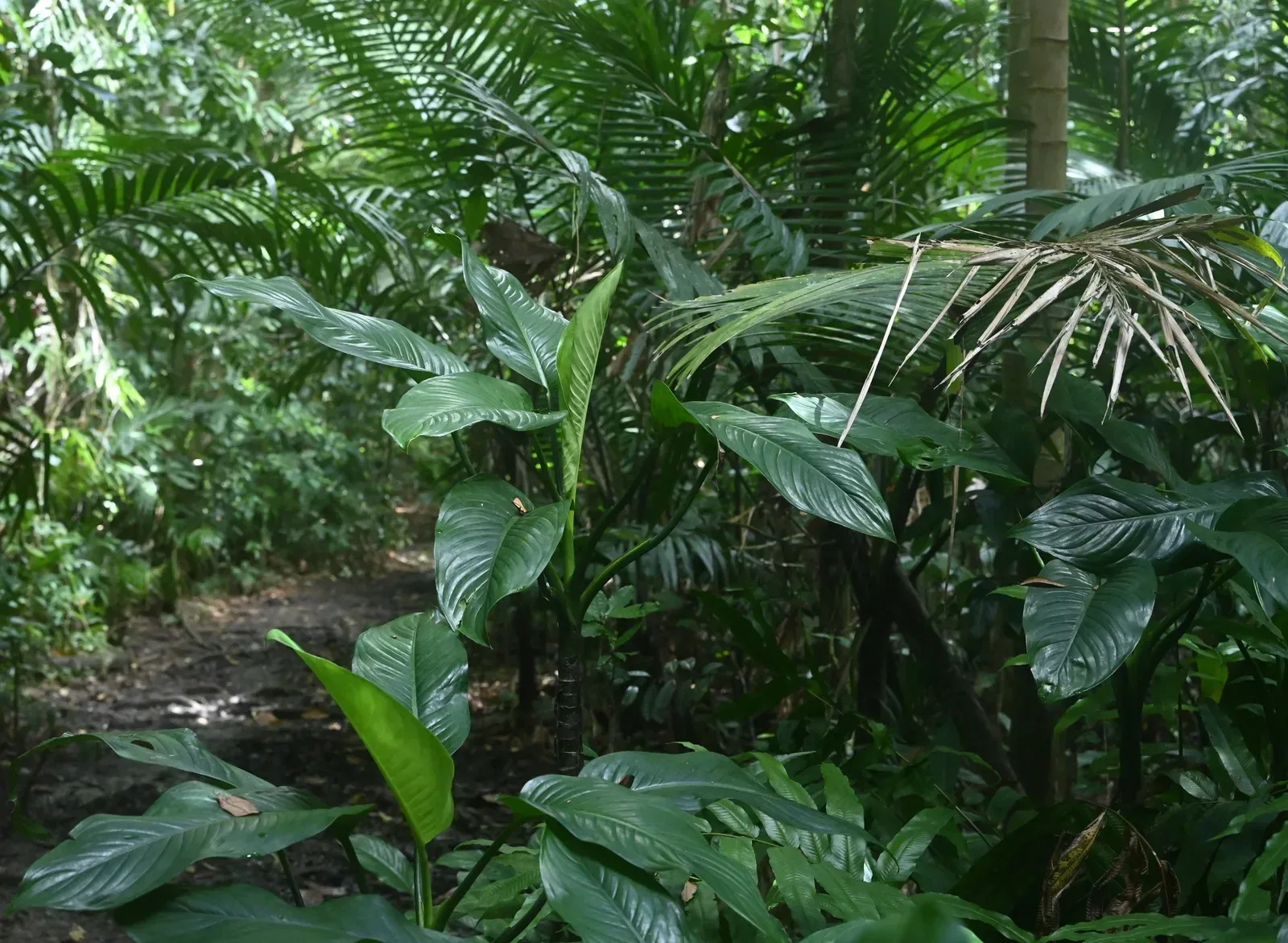
| ☀️ Light | Medium light |
|---|---|
| 💧 Water | Moderate (lightly moist) |
| 🪴 Soil | Standard indoor mix with perlite |
| 🌡️ Temp | 16°C – 27°C |
| 🐾 Safety | Cats: toxic · Dogs: toxic (ASPCA Animal Poison Control) |
| 📏 Mature size | 1.2 m |
Where It Grows & Climate Tolerance
Pet & Companion Animal Toxicity (Dieffenbachia)
Dumb cane with spotted leaves; easy medium-light plant that is toxic if chewed — keep from pets.
Care instructions
Care Guide & Maintenance Routine
Medium light, water when top dry, warm room, keep away from pets.
Light & Sunlight
Medium to bright indirect. Avoid harsh midday sun.
Watering Schedule
Water when top 3 cm dry. Less in winter.
Potting Mix & Drainage
Standard indoor mix with perlite
Temperature & Humidity
Above 15 C. Cold drafts cause leaf drop.
Dieffenbachia, or dumb cane, is a common Canadian office and living-room plant with cream-spotted leaves.
It handles medium light well. Water when the top few centimetres of mix are dry, and cut back in winter. Keep it warm — cold drafts near doors cause sudden leaf drop that looks dramatic but often stops when conditions stabilize.
Wear gloves when pruning; sap irritates skin and mouths. The plant is toxic to pets and children if chewed. Wipe leaves and check for mites in dry furnace rooms.
Tall bare canes can be cut and rooted to renew the plant. A bright bathroom or east living-room window suits most varieties sold in Canadian big-box stores. Give it space — mature plants can reach well over a metre indoors with time.
Big-box stores across Canada sell dieffenbachia as a quick floor plant. The sap is why older gardeners called it dumb cane — keep it well away from curious pets and toddlers. Wear gloves when you cut a tall cane to renew a bare trunk. Sections of cane with at least one node root in water or damp mix on a warm shelf.
Cold drafts from apartment hallway doors in January cause sudden lower leaf yellowing that looks like disease but is usually temperature shock. Move the plant deeper into the room and steady the watering. Medium light keeps variegation; a dark corner turns leaves mostly green and sparse. Dust the broad leaves so they catch more of Canada's short winter daylight.
When renewing a tall plant, save tip cuttings and mid-cane sections. Let cut ends dry briefly before potting to reduce rot. Medium light and careful winter water keep the thick trunks firm. If lower leaves yellow one at a time with new growth at the top, that can be normal aging — not every yellow leaf means disaster.
Seasonal rhythm
Seasonal Calendar
A month-by-month calendar for Dieffenbachia in Canada is coming soon. See the light, water and temperature notes above.
Diagnostics
Common Problems & Troubleshooting
Leaf drop (cold/draft); yellow lower leaves (overwater); dull colour (low light).
Pests & seasonal watch: Spider mites in dry air; mealybugs.
- Leaf spot — Brown or tan spots with a yellow halo, sometimes with tiny dots in the centre.
- Cold damage — Dark, water-soaked or blackened patches after a cold night or an AC blast.
Care encyclopedia · 1 guide
Guides & Articles for Dieffenbachia
Q&A
Frequently Asked Questions
Why is it called dumb cane?
Sap irritates the mouth and can cause temporary swelling if chewed.
Is it safe for pets?
No. Keep well away from cats and dogs.
How much light?
Medium indirect light. Too little fades variegation.
Why are lower leaves yellow?
Often overwatering or natural aging of older leaves.
Similar Botanical Matches
Grower field notes
Reader Field Notes in Canada
Share how this plant performs in your local Canada climate.