
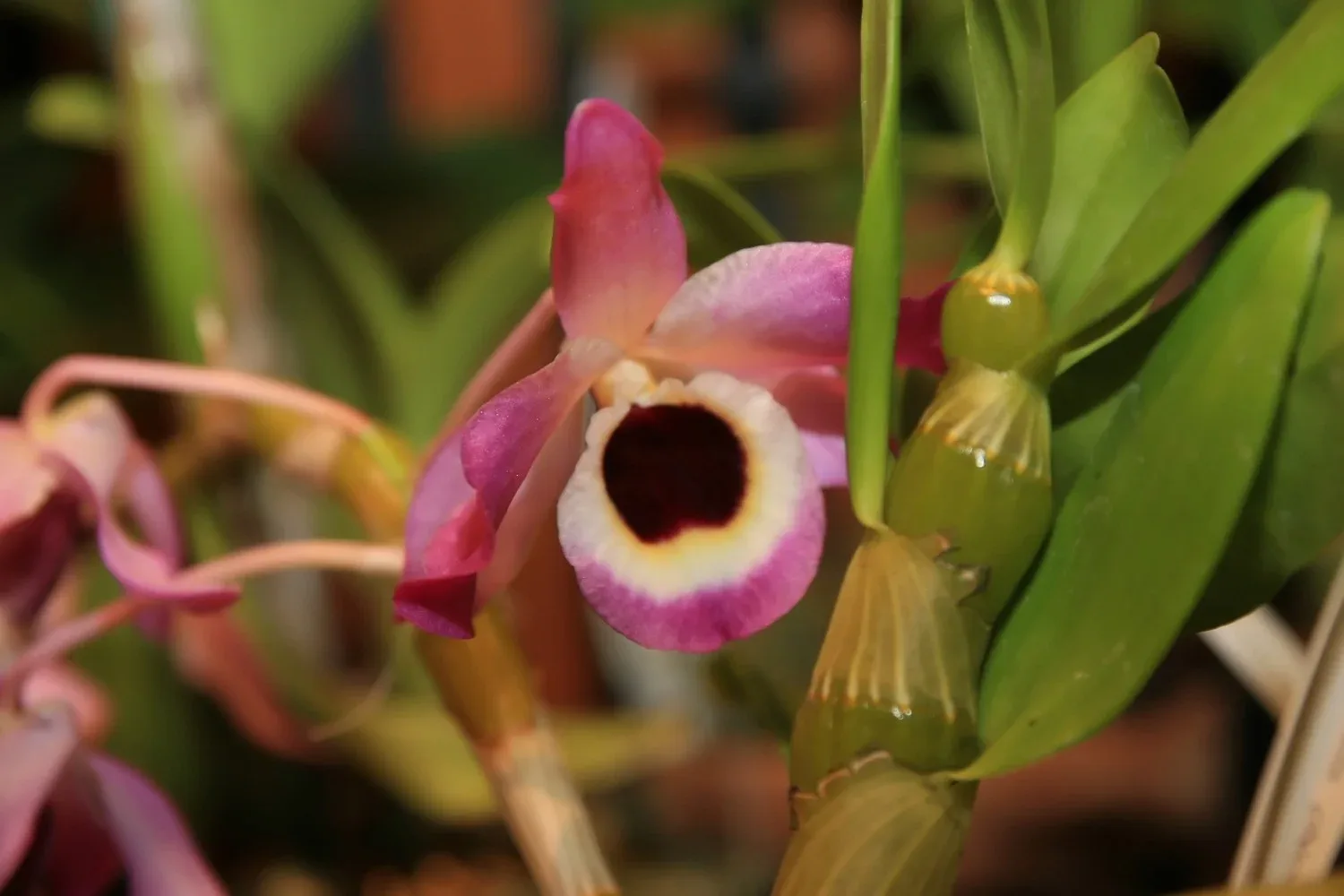
| ☀️ Light | Bright indirect light |
|---|---|
| 💧 Water | Moderate (lightly moist) |
| 🪴 Soil | Coarse orchid bark or a draining epiphytic orchid mix |
| 🐾 Safety | Cats: not verified · Dogs: not verified |
Where It Grows & Climate Tolerance
Pet & Companion Animal Toxicity (Dendrobium Nobile Orchid)
Not yet verified: Toxicity status for cats, dogs, and horses has not yet been confirmed against veterinary poison-control records. Keep out of reach of pets or consult your veterinarian.
In Canada, a bright cool room offers a useful winter position for a mature nobile orchid. Check the temperature next to the pot. A shelf can be much warmer above a heater or much colder against single-pane glass.
Care instructions
Care Guide & Maintenance Routine
In Canada, a bright cool room offers a useful winter position for a mature nobile orchid. Check the temperature next to the pot. A shelf can be much warmer above a heater or much colder against single-pane glass.
Light & Sunlight
Choose strong filtered light and protect new leaves from harsh afternoon sun. Give the plant as much light as it can use during cool winter growth or rest.
Watering Schedule
Water the bark thoroughly during active growth and let excess drain. Reduce watering after cane maturation. Check the mix and cane firmness so the plant does not severely dehydrate.
Potting Mix & Drainage
Coarse orchid bark or a draining epiphytic orchid mix
Temperature & Humidity
Many nobile-type orchids make buds when cooler nights follow a growing season. Keep the plant frost-free and use nursery guidance for the individual species or hybrid.
In Canada, a bright cool room offers a useful winter position for a mature nobile orchid. Check the temperature next to the pot. A shelf can be much warmer above a heater or much colder against single-pane glass.
Build canes through the summer
Use a bright indoor site or a sheltered summer patio during mild weather. Increase outdoor light gradually. Keep bark airy and water according to how fast the small pot dries.
Cool down without freezing
Move the pot indoors in time to avoid cold nights. Give mature canes bright light and cooler frost-free nights if the cultivar needs them. Use a grow light during dark stretches and increase water only when roots or new shoots begin growing.
Sources
- RHS • Dendrobium nobile
- American Orchid Society • Dendrobium culture
- University of Saskatchewan • Houseplant light and watering
Featured photo by David J. Stang via Wikimedia Commons, CC BY-SA 4.0. Resized for display.
Seasonal rhythm
Seasonal Calendar
| Month | Care Tasks | Seasonal Focus |
|---|---|---|
| Jan | Routine check | Check for buds and use supplemental light if days are dark. |
| Feb | Routine check | Water resting plants lightly if canes begin to shrivel. |
| Mar | Routine check | Look for active roots before increasing watering. |
| Apr | Repot | Repot only if the bark has broken down or roots are crowded. |
| May | Routine check | Increase light gradually as days grow longer. |
| Jun | Protect from frost/heat | Move to sheltered filtered light after nights become suitable. |
| Jul | Routine check | Water through the bark while canes are extending. |
| Aug | Routine check | Keep checking roots and pot moisture during heat. |
| Sep | Routine check | Inspect for scale before an indoor move. |
| Oct | Protect from frost/heat | Use a cool, bright frost-free room as mature canes slow down. |
| Nov | Routine check | Reduce feed and monitor cane firmness in the quiet period. |
| Dec | Routine check | Keep the pot clear of frosty glass and radiator air. |
Diagnostics
Common Problems & Troubleshooting
Repeated plantlets and few flowers can follow warm, wet conditions in the resting season. Inspect the roots if canes shrivel in damp bark. Retain firm older canes, even if they drop their leaves.
Similar Botanical Matches
Keep exploring
Related plants

Grower field notes
Reader Field Notes in Canada
Share how this plant performs in your local Canada climate.