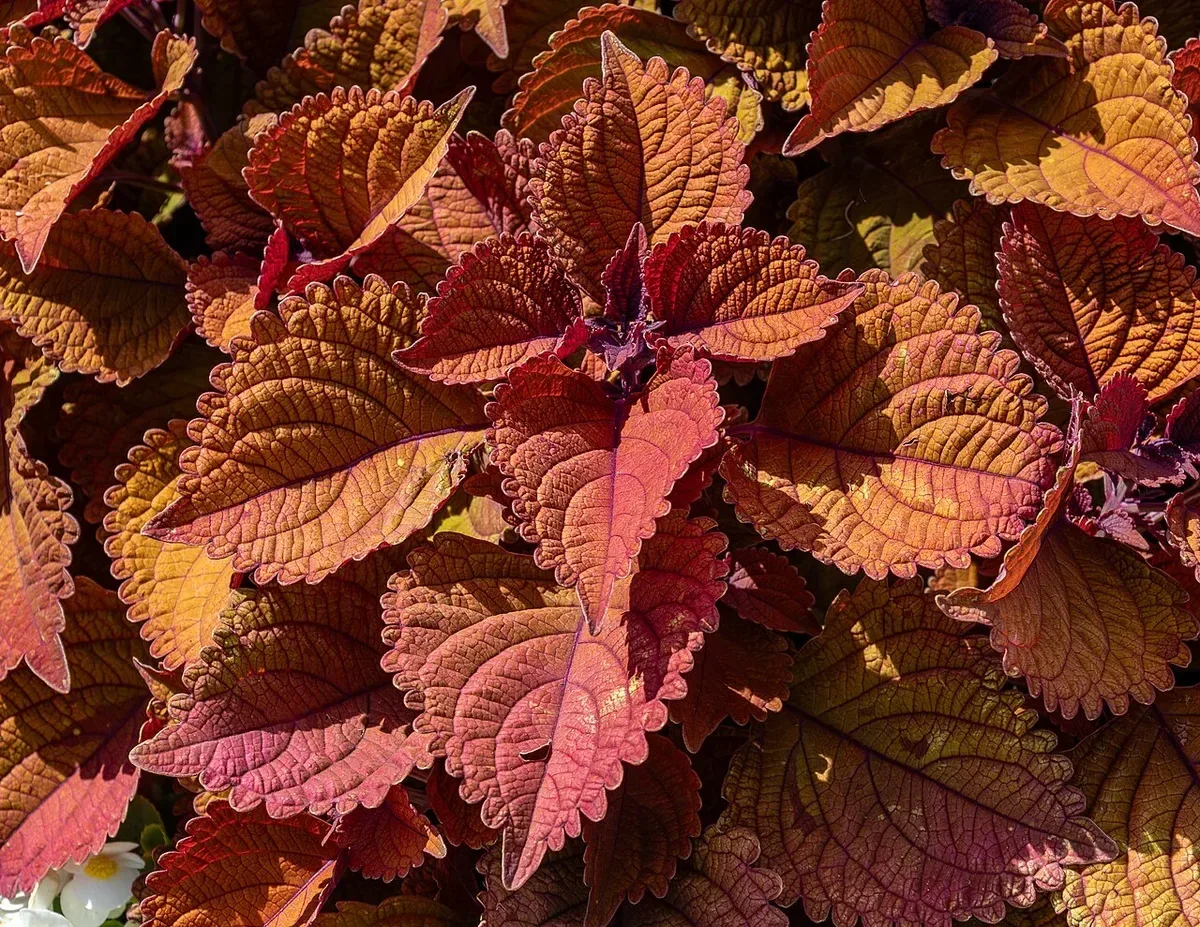
| ☀️ Light | Bright indirect light |
|---|---|
| 💧 Water | Moderate (lightly moist) |
| 🪴 Soil | Rich, loose, moisture-retentive but well-drained soil or potting mix |
| 🌡️ Temp | 10°C – 35°C |
| 🐾 Safety | Cats: not verified · Dogs: not verified |
| 📏 Mature size | 60 cm |
Where It Grows & Climate Tolerance
Pet & Companion Animal Toxicity (How to Grow Coleus in Canada)
Coleus is a summer annual for shady beds and containers across Canada. Plant it out once nights stay warm, enjoy the colour until the first frost, and root a few cuttings indoors to carry it through winter.
Care instructions
Care Guide & Maintenance Routine
Wait to plant out until late May or June when nights stay above about 10°C. Grow in shade or morning sun, keep pots evenly moist and feed every few weeks. Take cuttings in late August or September and grow them in a bright window until spring.
Light & Sunlight
NC State Extension says coleus grows best in part shade, tolerates full shade, and may wilt in full sun; too much shade gives leggy plants. Newer sun-tolerant cultivars cope with more sun. Indoors it needs bright light.
Watering Schedule
Keep the soil evenly moist but not soggy. Plants in pots and in sun dry out fast and wilt quickly, but usually recover after watering. Reduce watering in cool weather.
Potting Mix & Drainage
Rich, loose, moisture-retentive but well-drained soil or potting mix
Temperature & Humidity
No frost tolerance; leaves are damaged below about 10°C. Plant out after nights warm, usually late May to mid-June. First fall frost ranges from about 10 September in Calgary to early November in Vancouver and Victoria (ECCC normals).
Coleus in Canadian summers
Coleus is one of the most dependable plants for shady patios, north-facing front steps and window boxes in Canada. It does not mind humid Toronto or Montréal summers and fills a planter quickly. Frost kills it, so it is grown as an annual outdoors, often kept going indoors as cuttings over winter.
When to plant out
Coleus sulks in cold soil and chilly nights, so wait a week or two past the average last frost (ECCC 1991-2020 normals via GrowersGuide.ca):
- Vancouver 26 March, Victoria 14 April: plant out in mid-May once nights warm up.
- Toronto 4 May, Ottawa 7 May, Montréal 29 April: plant out late May.
- Halifax 8 May, Fredericton 16 May, Charlottetown 18 May: early June.
- Edmonton 22 May, Winnipeg 24 May, Calgary 26 May, Regina 28 May: early to mid-June.
First fall frost ends the season
Average first fall frost arrives around 10 to 15 September in Calgary, Edmonton, Regina and Saskatoon, 22 September in Winnipeg, early October in Ottawa and Québec City, 9 October in Toronto and Montréal, mid-October in Halifax and early November on the BC coast. Coleus blackens at the first touch of frost, often before it, so take cuttings two weeks ahead.
Hardiness zone does not matter here
NRCan zones from 3a in Saskatoon to 9a in Victoria all treat coleus the same way: as a summer plant. Even in Vancouver, winter is far too cold and wet for it outdoors.
Containers and shade beds
Use a large pot or window box with drainage holes and good potting mix. Coleus pairs well with impatiens, begonias and ferns in shade. A spot that gets sun until about 11 a.m. gives the brightest colour. Hot afternoon sun on a south-facing deck makes leaves scorch and wilt.
Bringing it inside
Root 10 cm tip cuttings in water in late August. Pot them up and keep them in a bright south or west window, away from cold glass and heating vents. Growth slows from November to February. In March, pinch the plants and take fresh cuttings for the next season.
Indoor pests
Dry furnace air brings spider mites, and mealybugs and whiteflies often hitch a ride indoors on plants brought in from the patio. Check leaves before bringing pots in.
Questions from Canadian readers
- Can I plant coleus on the Victoria Day long weekend? In the Prairies, usually too early. Wait until nights stay above about 10°C.
- Pets? Not verified for this species. The ASPCA coleus entry covers a different species, so keep it away from pets that chew.
Garden centre timing
Flats of coleus appear in big-box garden centres and independent nurseries from early May, often weeks before it is warm enough to plant. Keep them in a sunny window indoors until June.
Planting out on the Prairies
In Regina or Saskatoon, coleus sulks if planted before nights reach about 10°C. Wait until early June, and keep a sheet ready for cold nights in a late spring.
Seasonal rhythm
Seasonal Calendar
| Month | Care Tasks | Seasonal Focus |
|---|---|---|
| Jan | protect | Indoor cuttings in a bright window; keep away from cold glass and heat vents. |
| Feb | protect | Check indoor coleus for mealybugs and spider mites. Water lightly. |
| Mar | plant, prune | Pinch indoor plants and take fresh cuttings for summer. Sow seed under lights. |
| Apr | feed | Start feeding indoor plants as days lengthen. Pot on rooted cuttings. |
| May | plant | BC coast: plant out mid to late month. Elsewhere: harden off on warm days. |
| Jun | plant | Plant out in Ontario, Quebec, the Maritimes and the Prairies once nights stay warm. |
| Jul | prune, feed | Feed every few weeks, pinch tips and remove flower spikes. |
| Aug | plant | Take cuttings for winter at month end. Water containers daily in heat. |
| Sep | protect | Prairie frost by mid-month: bring pots in or let plants go. Pot up cuttings. |
| Oct | protect | Bring remaining pots in before first frost in Ontario, Quebec and Atlantic Canada. |
| Nov | protect | Coastal BC: last outdoor plants come in. Indoor plants slow down. |
| Dec | protect | Short days: cuttings grow slowly. Keep soil just moist. |
Diagnostics
Common Problems & Troubleshooting
Wilting in sun or dry soil; leggy growth in deep shade or after flowering; faded colour in too much or too little light; leaf drop and blackening in cold; mealybugs and whiteflies indoors.
Pests & seasonal watch: Spider mites, mealybugs and whiteflies on indoor plants in winter. Slugs on bedding plants in wet BC and Atlantic summers. Aphids on new growth.
- Drooping — Stems and leaves hang limp even though the plant was recently fine.
- Mealybugs — White cottony clumps in leaf joints, often with sticky honeydew.
- Leggy — Long weak stems with big gaps between small leaves, leaning to the window.
- Spider mites — Fine webbing and pale speckled leaves, worse in dry heated rooms.
- Aphids — Clusters of small soft insects on new tips, often sticky.
- Whitefly — Tiny white insects fly up in a cloud when you touch the plant.
- Underwatering — Soil is bone dry and leaves are crispy, curled or dull.
- Sun scorch — Bleached or crispy patches on the side that faces strong sun.
- Cold damage — Dark, water-soaked or blackened patches after a cold night or an AC blast.
Similar Botanical Matches
Grower field notes
Reader Field Notes in Canada
Share how this plant performs in your local Canada climate.