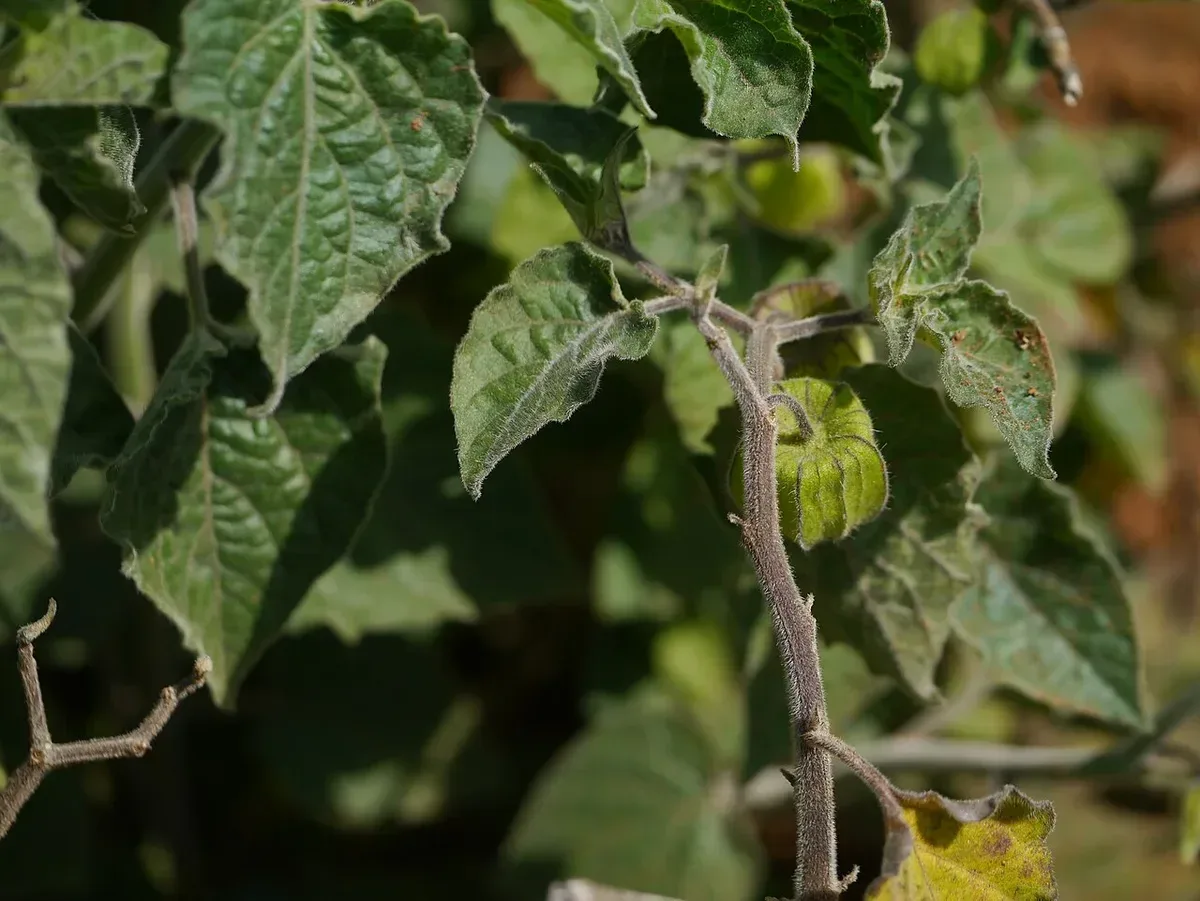
| ☀️ Light | Full sun |
|---|---|
| 💧 Water | Moderate (lightly moist) |
| 🪴 Soil | Well-drained loam or sandy soil of medium to low fertility |
| 🌡️ Temp | 1°C – 32°C |
| 🐾 Safety | Cats: toxic · Dogs: toxic |
| 📏 Mature size | 1.0 m |
Where It Grows & Climate Tolerance
Pet & Companion Animal Toxicity (How to Grow Cape Gooseberry in Canada)
Cape gooseberry is a long-season annual in Canada. The University of Arkansas Extension notes transplants start fruiting about 70 to 80 days after planting, so in most provinces the crop depends on starting seed early indoors and planting in the warmest spot available.
Care instructions
Care Guide & Maintenance Routine
Start seed indoors in March under lights. Transplant into lean, well-drained soil in full sun after the May long weekend, or once your local danger has passed. Cage the plants. Pick from August as husks dry. When a cold snap is forecast in September, gather every coloured berry; they finish ripening on a kitchen counter.
Light & Sunlight
The RHS and NC State both call for a sunny position. Fruit set and sweetness drop in shade.
Watering Schedule
Water regularly while plants establish. The University of Arkansas Extension warns that too much water, like heavy feeding, encourages leafy growth and delays flowering. Once plants are fruiting, water when the top few centimetres are dry.
Potting Mix & Drainage
Well-drained loam or sandy soil of medium to low fertility
Temperature & Humidity
Dies at freezing. Transplant only once spring cold has passed, and gather coloured berries before the season's first freeze, typically mid-September in Saskatoon, Regina and Calgary and October across much of southern Ontario and the Lower Mainland.
Cape gooseberry in Canadian gardens
Many Canadians first meet this fruit as the husked berry on a supermarket dessert tray. Growing it at home is easy; the challenge is fitting a crop into a short season.
Start early indoors
Sow in March under lights or on a south window, about 6 to 8 weeks before your last frost, as NC State suggests. Pot seedlings on into 10 cm pots so they are sturdy by planting time.
Frost dates
Average last frost dates from ECCC 1991-2020 normals, compiled by GrowersGuide.ca, are 26 March in Vancouver, 22 April in Windsor, 29 April in Montréal, 4 May in Toronto, 7 May in Ottawa, 8 May in Halifax and 16 May in Kelowna. Plant out after these dates when nights are mild.
Where it works best
- Southern Ontario, Niagara and Essex County: the longest, warmest seasons and the heaviest crops.
- Okanagan and Fraser Valley: hot summers in the Okanagan; a long season on the coast.
- Montréal, Ottawa, the Maritimes: a reasonable crop from early transplants in a warm spot.
- Prairies: Calgary and Edmonton frost dates of 22 to 26 May and first fall frosts in September leave a short window. Many Prairie gardeners grow the smaller, quicker ground cherry instead.
Seedling tips
Bottom heat from a seedling mat at 21 to 24°C speeds germination, which can take two to three weeks on a cool windowsill. Keep lights a few centimetres above the plants so they do not stretch. Fans or brushing the tops daily make stems sturdier.
Lean soil, warm spot
Choose the hottest bed, ideally against a south wall. Black plastic mulch warms the soil in spring. Do not add manure; rich soil gives leaves rather than fruit.
Containers
A large pot on a sunny deck heats up faster than the ground. Use a 30 cm or larger container with a cage, and move it under the eaves on cold nights in September.
Fall harvest
Pick fruit whenever husks dry. When frost is forecast, harvest every berry showing colour. Kept in their husks in a cool room, they ripen further and keep for weeks.
Stretching the season
Floating row cover on chilly June nights and again in September buys a week or two at each end. In Ottawa or Halifax, a small hoop tunnel or a spot in an unheated greenhouse often doubles the crop.
Preserving
Extra berries make good jam with lemon, or can be dried like raisins. They also freeze well once husked.
Questions from Canadian readers
- Is cape gooseberry the same as ground cherry? No, they are different Physalis species. Ground cherry is shorter, earlier and smaller-fruited.
- Is it safe for dogs? No ASPCA entry exists; NC State lists Physalis plants as toxic except for the ripe fruit.
Seasonal rhythm
Seasonal Calendar
| Month | Care Tasks | Seasonal Focus |
|---|---|---|
| Jan | protect | Order seed; check grow lights. |
| Feb | protect | Plan the warmest bed or a large container. |
| Mar | sow | Sow indoors under LED shop lights on a heat mat. |
| Apr | repot | Pot seedlings into 10 cm pots. |
| May | plant | Harden off; transplant in southern Ontario and the Lower Mainland. |
| Jun | plant, protect | Prairies and Maritimes: plant out. Add cages. |
| Jul | protect | Water when dry; no manure. |
| Aug | harvest | First fruit as husks dry. |
| Sep | harvest, protect | Main picking. Prairies: gather coloured berries ahead of cold snaps. |
| Oct | harvest | Niagara, Essex and coastal BC: last pickings before the first freeze. |
| Nov | protect | Store husked fruit in a cool room. |
| Dec | protect | Save seed from the best berries. |
Diagnostics
Common Problems & Troubleshooting
Lots of leaves but little fruit in rich soil or with heavy watering; floppy stems without support; fruit splitting after heavy rain; frost kill; seedlings collapsing in wet, cold mix.
Pests & seasonal watch: Flea beetles and Colorado potato beetle on young plants in June. Aphids and whitefly in hot, sheltered spots. Slugs on the BC coast.
- Drooping — Stems and leaves hang limp even though the plant was recently fine.
- Spider mites — Fine webbing and pale speckled leaves, worse in dry heated rooms.
- Aphids — Clusters of small soft insects on new tips, often sticky.
- Whitefly — Tiny white insects fly up in a cloud when you touch the plant.
- Leaf spot — Brown or tan spots with a yellow halo, sometimes with tiny dots in the centre.
- Overwatering — Soil stays wet, leaves yellow or droop, and the pot feels heavy.
- Cold damage — Dark, water-soaked or blackened patches after a cold night or an AC blast.
Similar Botanical Matches
Grower field notes
Reader Field Notes in Canada
Share how this plant performs in your local Canada climate.