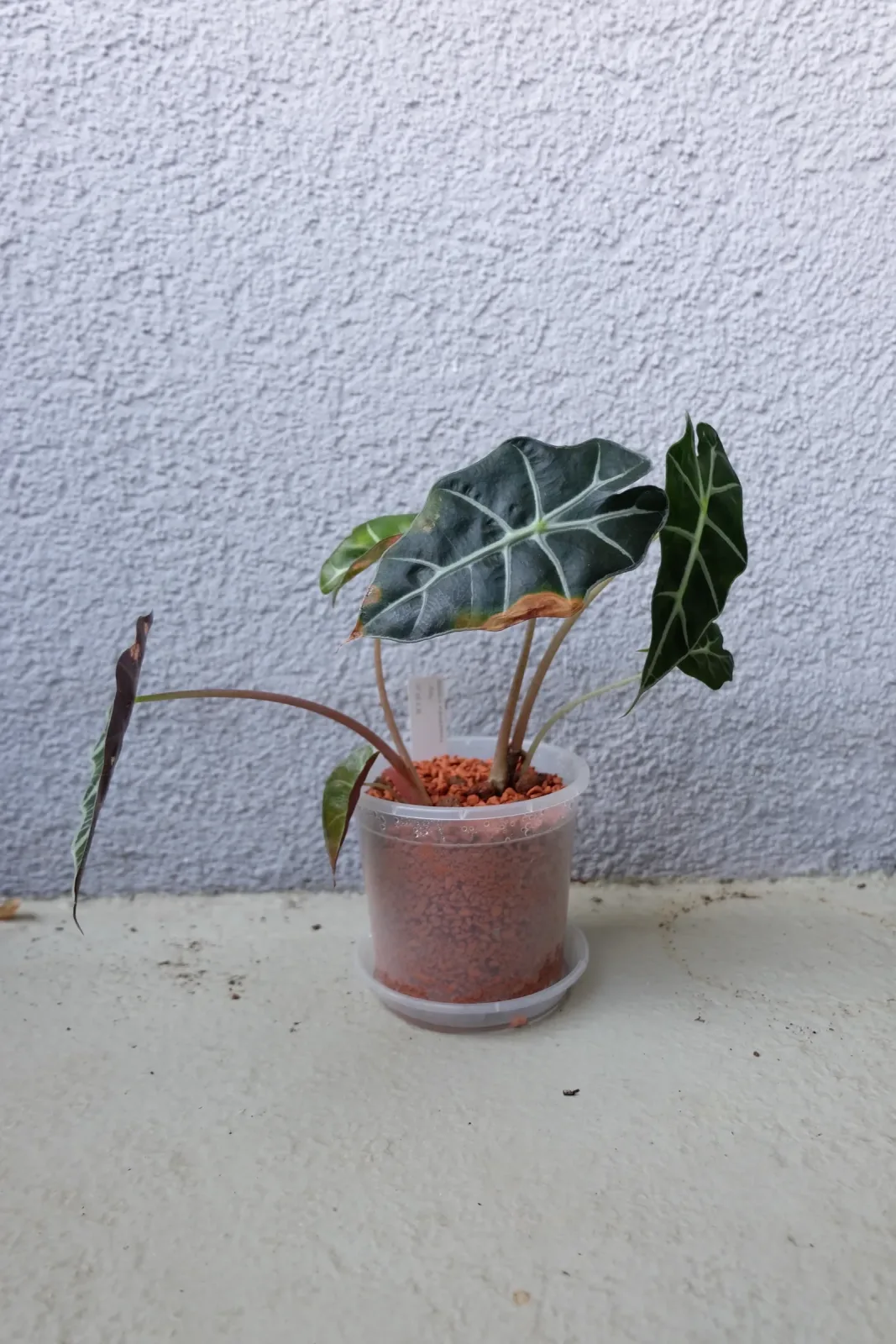
| ☀️ Light | Bright indirect light |
|---|---|
| 💧 Water | Moderate (lightly moist) |
| 🪴 Soil | Chunky aroid mix (bark, perlite, coco) |
| 🌡️ Temp | 18°C – 27°C |
| 🐾 Safety | Cats: toxic · Dogs: toxic (ASPCA Animal Poison Control) |
| 📏 Mature size | 50 cm |
Where It Grows & Climate Tolerance
Pet & Companion Animal Toxicity (Alocasia Polly)
Jewel alocasia with dark, arrow-shaped leaves and pale veins; needs warmth, bright shade and careful watering.
Care instructions
Care Guide & Maintenance Routine
Bright indirect light, water when top is just dry, high humidity, chunky mix, keep warm.
Light & Sunlight
Bright shade. No harsh midday sun. Supplement with a grow light in dark Canadian winters if needed.
Watering Schedule
Water when top 2–3 cm is dry. Reduce in winter dormancy. Empty saucers.
Potting Mix & Drainage
Chunky aroid mix (bark, perlite, coco)
Temperature & Humidity
Dislikes cold. Below 15 C it may go dormant and lose leaves.
Alocasia Polly is a compact hybrid sold widely in Canadian garden centres and big-box stores. The dark green, arrow-shaped leaves with pale veins look bold on a shelf or plant stand, but this plant is picky about cold, wet feet and bone-dry air.
Place it in bright, indirect light. An east window or a spot a metre back from a south window suits it. Direct hot sun burns the leaves. Water when the top 2 to 3 cm of mix feels dry. Keep the mix lightly moist in active growth; in winter let it dry a little more between drinks. Never leave the pot in a full saucer.
Canadian furnace air is hard on alocasias. Aim for 50% humidity or higher. A pebble tray or small humidifier helps. Keep temperatures between 18 and 27 C. Below about 15 C the plant may drop leaves and rest — that is common, not always death. Wait for warmer, brighter days before you water heavily again.
Use a chunky aroid mix: potting soil with bark, perlite and a little coco coir. Feed lightly every 3 to 4 weeks in spring and summer. All Alocasia contain calcium oxalates and are toxic if chewed, so keep away from pets and children. Check for spider mites on the undersides of leaves in dry winter rooms.
Many Canadian growers see Alocasia Polly stall from November to February. That rest is normal when light and heat drop. Mark the pot so you remember not to discard a leafless rhizome too soon. In spring, as days lengthen, resume a slightly moister routine and you will often see a flush of new spears. Avoid oil-based leaf shines; they clog pores on these thin leaves. If you use a pebble tray, keep the pot above the water line so roots never sit wet.
Seasonal rhythm
Seasonal Calendar
A month-by-month calendar for Alocasia Polly in Canada is coming soon. See the light, water and temperature notes above.
Diagnostics
Common Problems & Troubleshooting
Leaf drop in cold (dormancy); yellow mushy base (rot from wet soil); crispy edges (dry air).
Pests & seasonal watch: Spider mites and mealybugs. Inspect weekly in winter.
Care encyclopedia · 1 guide
Guides & Articles for Alocasia Polly
Q&A
Frequently Asked Questions
Why did my Alocasia Polly lose all its leaves?
Often winter dormancy from cold or low light. Keep the rhizome barely moist and warm; new leaves may return in spring.
How often to water Alocasia Polly?
When the top 2–3 cm of mix is dry. Less often in winter.
Is Alocasia Polly toxic to pets?
Yes. It contains calcium oxalates that irritate the mouth. Keep away from pets.
Does it need a humidifier in Canada?
It helps a lot. Furnace air below 40% RH invites spider mites and brown edges.
Similar Botanical Matches
Grower field notes
Reader Field Notes in Canada
Share how this plant performs in your local Canada climate.