
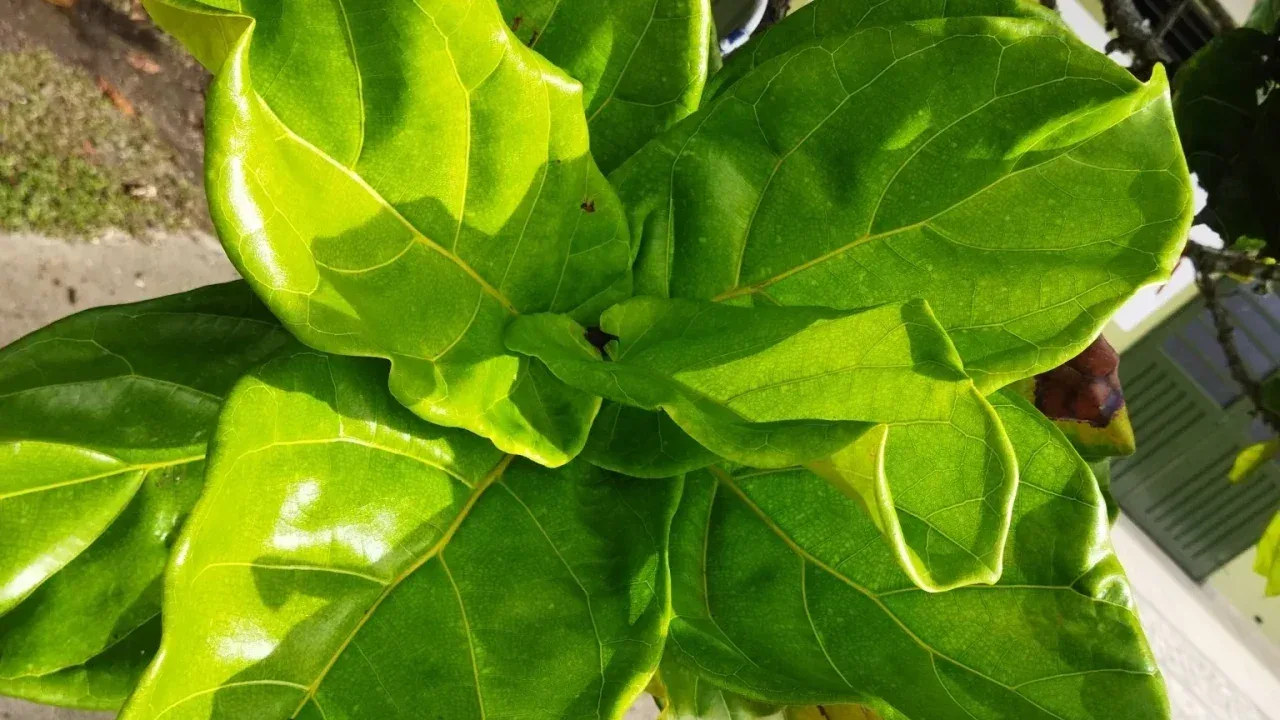
A fiddle leaf fig needs the brightest useful space you can offer, not simply the corner where its leaves look best. In Canadian homes, winter light and a slowly drying root ball are the two checks that prevent most avoidable trouble.
Quick answer
Keep Ficus lyrata beside a genuinely bright window and check moisture inside its large root ball before watering. Canadian winter light often limits growth more than fertilizer does. Protect broad leaves from cold panes, maintain a stable position, and use fresh growth rather than old brown scars to judge recovery.
How do you identify fiddle leaf fig?
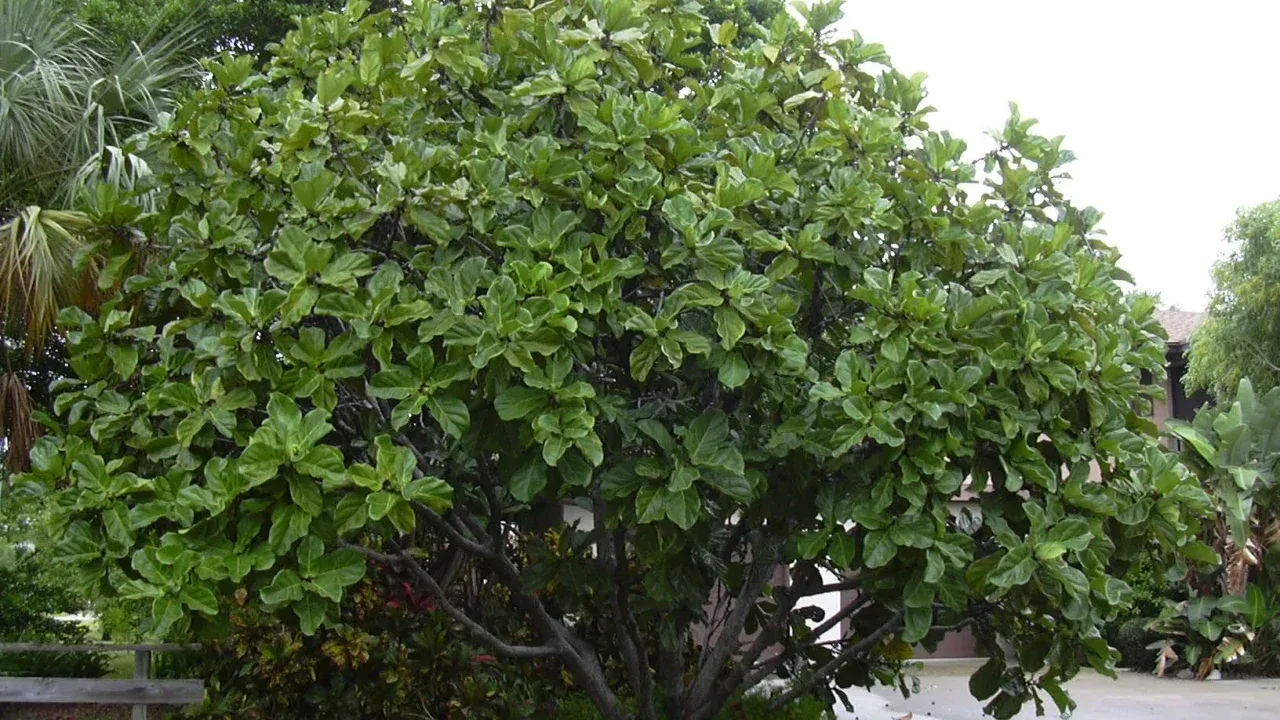
Fiddle leaf fig: Ficus lyrata has stiff, violin-shaped leaves with strong veins. 'Bambino' stays smaller than a standard tree. A plant trained on one trunk is a shape, not a separate species.
Why do fiddle leaf figs drop leaves after coming home?
A move from a greenhouse to a Canadian living room reduces light and often slows drying around the roots. A few old leaves may fall, but repeated loss means checking the root zone and night temperature. Do not respond by watering more. Keep the tree beside its best window, away from a patio door. Photograph marks weekly: existing brown patches cannot turn green. New leaves without spreading spots are a better measure of recovery. Avoid repeated moves while it adjusts.
What light does it need in a Canadian winter?
South or west window in Canadian winters. Avoid hot afternoon sun through glass. Rotate weekly.
Place a fiddle leaf fig where the whole canopy sees the window. A tall tree pushed against a narrow pane may have bright lower leaves but a shaded crown, particularly beneath a balcony overhang. Look upward from the growing tip before deciding the position is good enough. During the short days of a Toronto or Winnipeg winter, move curtains clear each morning and keep the glass clean. If a lamp supplies extra light, illuminate the upper leaves rather than aiming at the trunk. Introduce direct sun in stages; a leaf formed on a shaded nursery bench can burn even though an acclimatised fig tolerates sunlight.
How should you water through the seasons?
Large nursery root balls can hide two different moisture conditions. The outer mix may feel dry while a dense central plug remains wet. Probe carefully in more than one place, without repeatedly stabbing major roots. A wooden skewer helps reveal that wetter centre. Water until the root mass is evenly wetted, allow a thorough drain and check the cover pot later. A heavy ceramic cachepot can conceal a surprising puddle. In February, do not assume dry furnace air means the fig needs its summer watering frequency. Leaves can lose moisture while chilled roots remain unable to use much water.
What soil or potting mix is best?
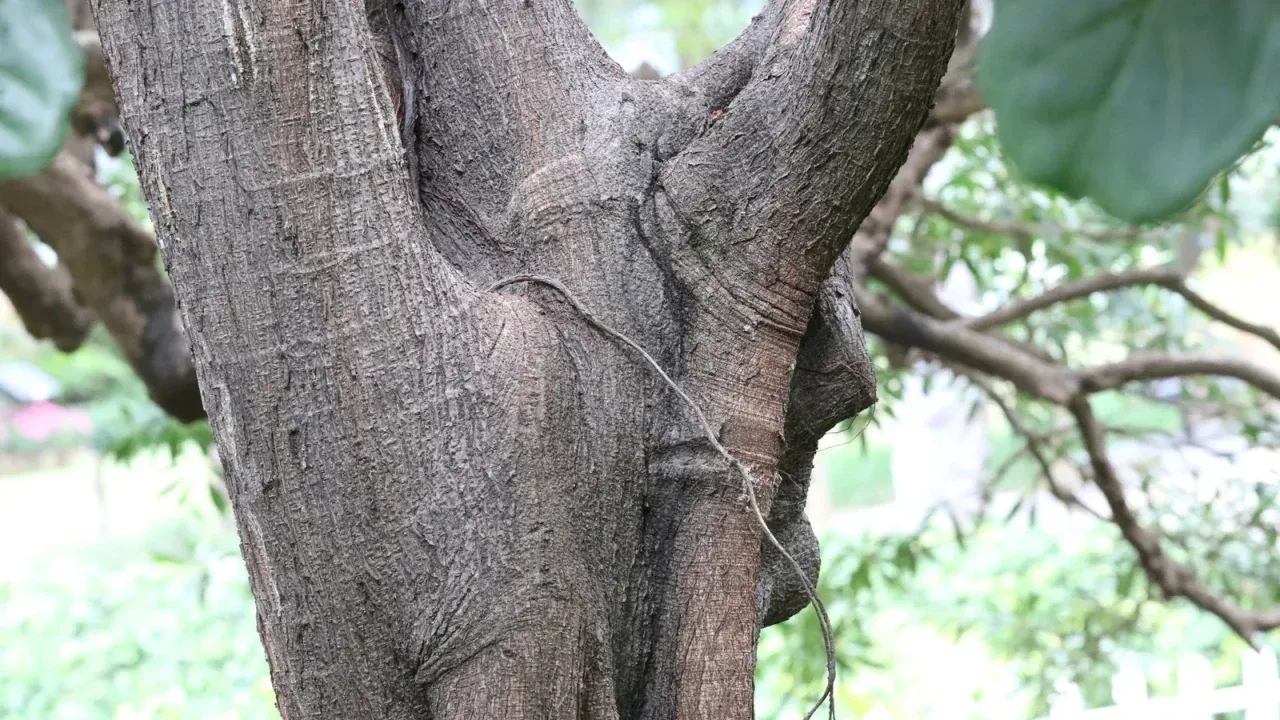
When the roots have occupied the existing container, prepare fresh indoor mix with coarse material that leaves air spaces. Bark should be small enough to combine with the rest of the mix rather than forming large dry cavities. Choose a modest increase in diameter and stabilise the trunk at its original depth. A huge planter filled with fresh wet compost makes the next watering decision harder. If your tree already occupies its final floor pot, replacing a little exhausted surface mix may be more practical than enlarging it again. Keep exposed trunk bark above the compost, even if a deeper planting would hide an awkward shape.
When should you fertilize?
Half-strength liquid feed every 4 weeks from April to September; pause in winter.
A fig that is opening firm new leaves can use a measured dose of houseplant fertilizer during the brighter part of the year. A recently delivered tree dropping leaves is a poor feeding candidate. Record the product strength rather than adding several feeds that each sound gentle. White deposits on the rim call for a review of accumulated salts. If drainage is sound, occasional thorough watering with low-mineral water helps carry some soluble salts out. Do this when the tree needs water, not as an extra soaking between normal waterings. Fertilizer cannot make a shaded branch carry a full set of leaves.
Does dry air or humidity matter?
Protect the large blades from rubbing against a wall, fan or frequently opened door. Mechanical scars often follow the same edge on several leaves. Wipe the surfaces with a soft damp cloth, supporting each blade from below; polishing sprays are unnecessary. A humidifier may ease severe dryness, but keep its plume off the canopy and avoid a permanently damp wall behind the pot. Measure conditions at leaf height. Temperature beside cold glass can fall well below the thermostat reading across the room. A small gap between foliage and the window matters more than arranging a decorative pebble tray beneath a large tree.
What temperatures and winter protection does it need?
Protect from cold windows at night in deep winter.
How should you prune it?
Shorten a healthy fig stem above viable growth tissue when light supports recovery. Protect hands and flooring from latex during the cut.
Plan height control before the top reaches the ceiling. In active growth, a cut above a viable node may encourage shoots below it, but branching is not guaranteed in a dark room. Protect floors from dripping latex and keep the cutting area separate from food preparation. Use a healthy tip for propagation only if it carries stem tissue, not simply a loose leaf. Give a newly rooted cutting its own small pot; putting it straight into the parent's large container makes its moisture needs difficult to judge. Do not prune a weakening winter specimen merely because its outline has become uneven.
What is the best propagation method?
Root a stem tip with at least one node in warm, lightly moist propagation mix. A single leaf may form roots but cannot make a new tree without viable stem tissue. Air layering is another option for an oversized healthy tree.
Which pests and diseases should you watch for?
Spider mites love dry winter air. Check undersides of leaves; wipe or use insecticidal soap.
How do you work out the cause?
Brown edges (dry air/uneven water); yellow lower leaves (overwater); leaf drop after moving (shock).
Is it safe around pets and children?
ASPCA's Ficus entry treats figs as toxic to cats and dogs. This plant's latex can irritate skin and the mouth; do not confuse it with the unrelated philodendron also called fiddle leaf. Keep away from children, wear gloves for cutting and wash sap off promptly.
A seasonal care calendar for Canada
| Season | What to do |
|---|---|
| Spring | New growth; repot and start feeding. Move closer to the brightest window if winter was dim. |
| Summer | Steady water and feed. Watch for spider mites in hot dry spells. |
| Autumn | Slow feeding. Prepare for shorter days; do not move far from the window. |
| Winter | Water less. Keep off cold glass and heating vents. Raise humidity. |
What should you check before buying?
A room planned around weeping fig needs similar attention to stable conditions, while bird of paradise can demand still more space. For a finer divided canopy, compare schefflera before committing to a broad-leaved floor tree.
At the shop, examine the junctions between leaf stalks and stem. Cottony material, sticky patches or fine webbing are reasons to investigate before bringing the plant home. Look beyond the impressive top leaves: a soft base, sour root ball or several fresh leaf scars may tell a different story. Ask staff to sleeve the canopy during freezing weather and warm the vehicle first. At home, separate the tree from other foliage while monitoring for pests. Keep a dated photograph of its overall form. That makes it easier to distinguish a new problem from a scar that was present at purchase.
Watch: a related growing task

Comments
No comments yet — share what worked in your climate.