
Bird of paradise is a large sun-loving plant, not a quick way to fill a dark corner. In Canada, choosing the right species and leaving enough bright floor space avoids disappointment as the leaves expand.
Quick answer
Check which Strelitzia species you own and allow for its eventual size. Provide substantial light, an aerated root zone and room for new leaves to unfurl. Some splitting is natural. Canadian indoor flowering is not guaranteed, so prioritize healthy foliage and stable temperatures rather than buying stronger bloom food.
How do you identify bird of paradise?
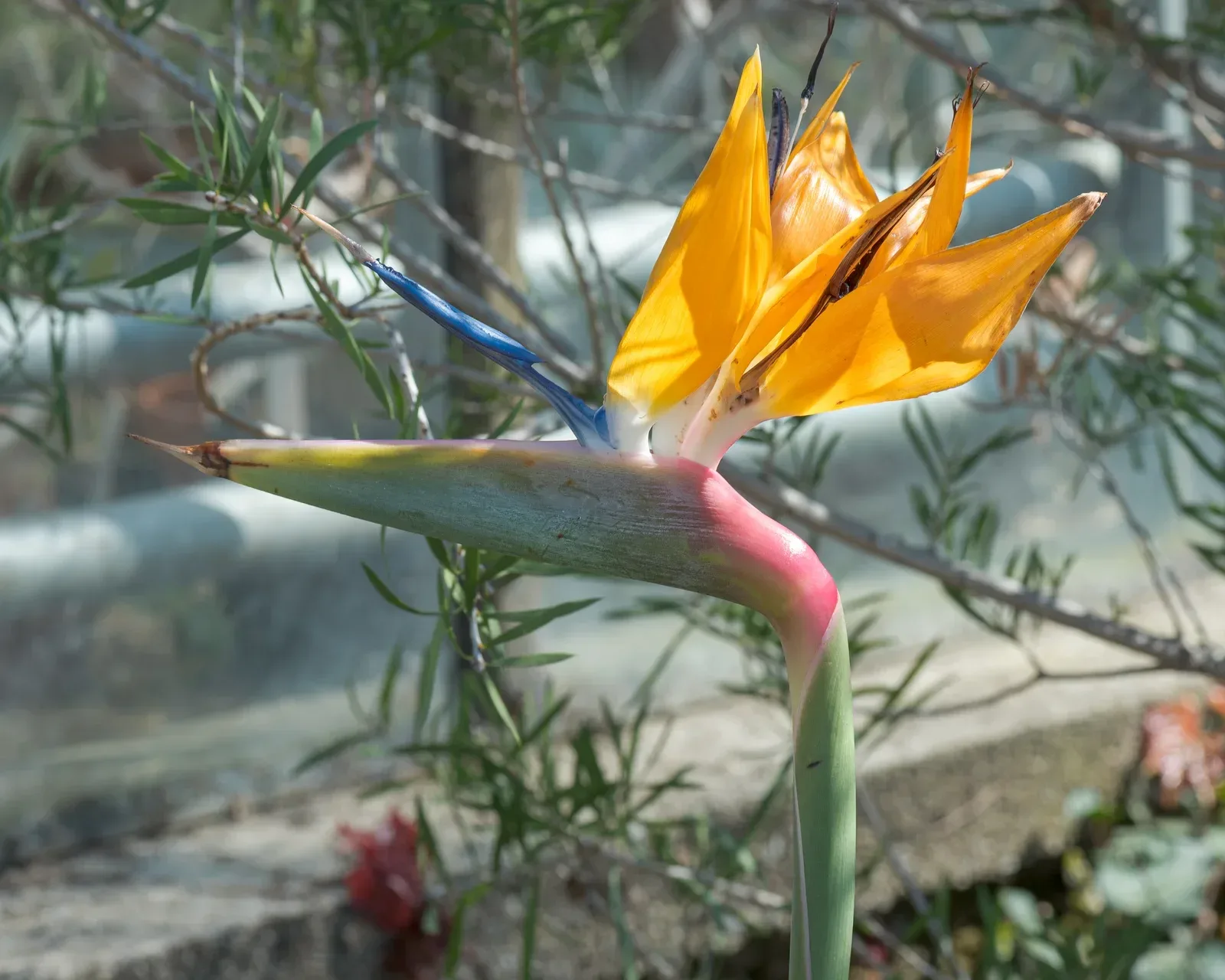
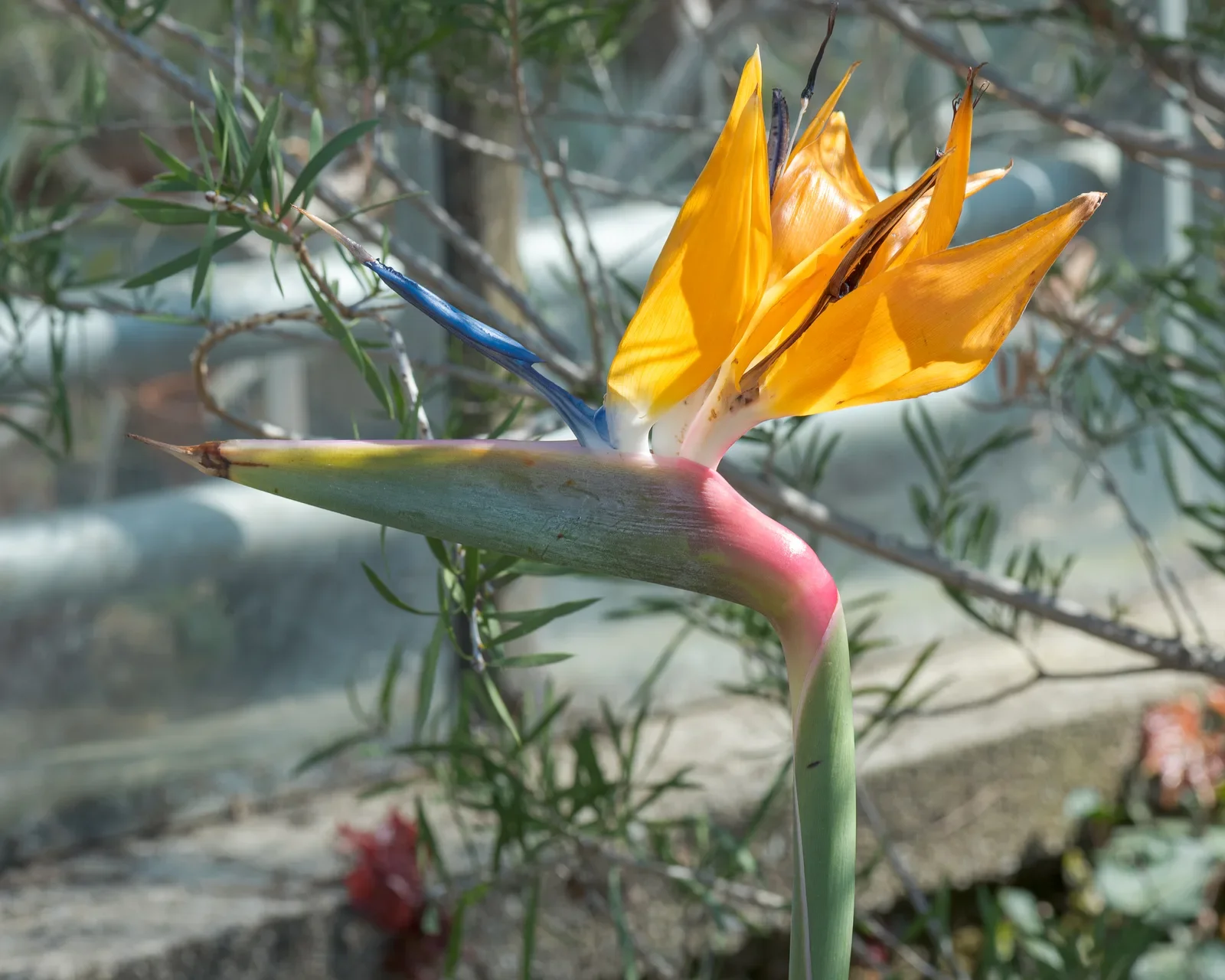
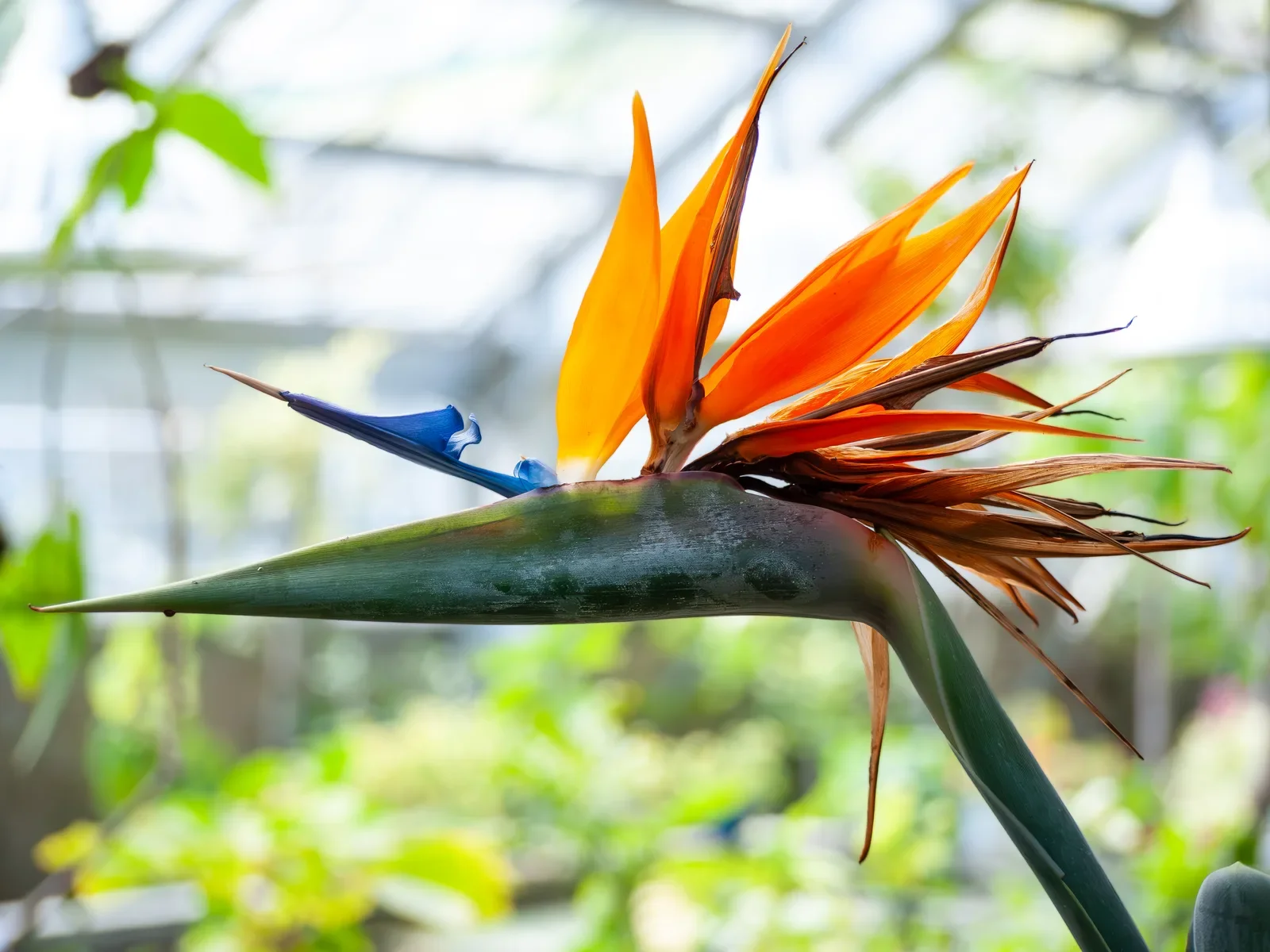
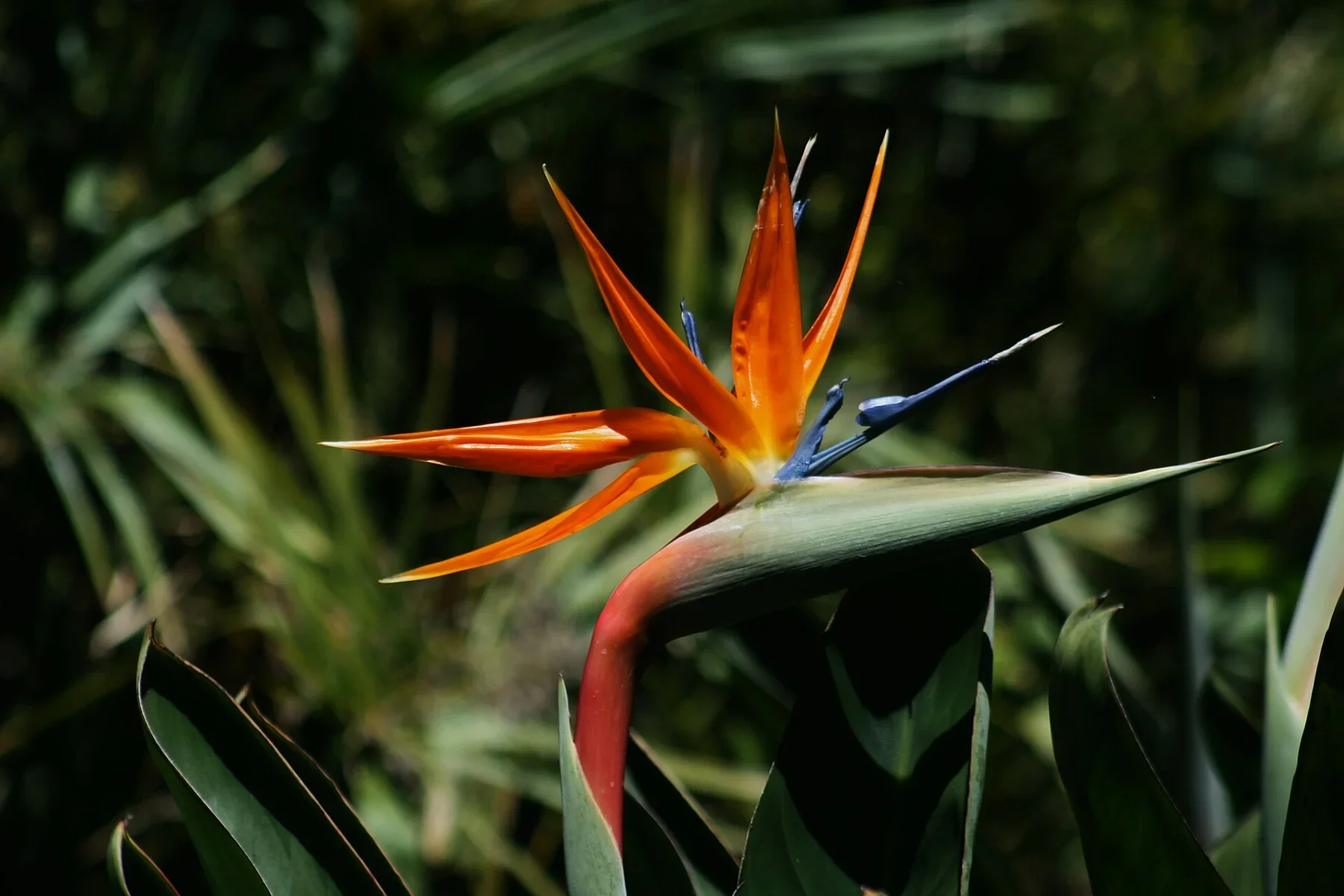
Bird of paradise: Strelitzia reginae makes orange-and-blue blooms and stays smaller than white-flowered S. nicolai. Shop foliage plants are often nicolai. Unrelated Caesalpinia also uses the name bird of paradise and has different safety concerns.
Will bird of paradise flower in a Canadian home?
A mature reginae can flower with excellent light, but young plants may remain foliage plants for years. Introduce direct sun gradually. Natural leaf splits are not always pest damage; tight curling with dry mix is different. Choose a plant that fits your brightest window at adult size. A dark corner will not become suitable with fertilizer. Do not promise blooms on a fixed timetable or confuse a large nicolai with an orange-flowered reginae.
What light does it need in a Canadian winter?
South or west window; direct sun is good. Grow light helps in winter.
Check whether the label names Strelitzia reginae or the much larger S. nicolai. Both can be sold as bird of paradise, but a compact orange-flowering species and a tall white-flowering species create different indoor expectations. Leaves may split naturally along their veins as they mature. A few neat splits do not prove that humidity is dangerously low. Crushed or torn tissue from a doorway is a different issue. Allow enough room for each new leaf to unfurl without rubbing furniture. A floor plant needs light at leaf height, not merely a bright-looking room with a small distant window.
Give the plant as much suitable light as the location can provide, introducing strong direct sun gradually. Canadian winter sun is weaker and shorter than summer sun, while a large canopy may shade its own lower leaves. A grow light can support foliage, but a tiny desk bulb is unlikely to cover a mature specimen effectively. Consider the beam size and the plant's whole spread. Flowering indoors is not assured and depends on maturity and conditions. Buying an oversized pot or a stronger flower fertilizer does not replace the sustained light a mature plant needs to build reserves.
How should you water through the seasons?
Water the root ball evenly and allow the upper layer to dry before the next thorough watering. A large container may have a moist lower zone even when the top feels dry. Use a probe and the history of recent waterings to help judge it. Remove runoff from the saucer, including after a generous summer watering. Newly opened leaves can coincide with increased water use, but a dormant-looking winter plant may need much less. Rolled leaves can reflect more than thirst. Inspect roots, light and temperature if curling continues while the pot is already damp.
What soil or potting mix is best?
Repot only when the root system and container condition make it necessary. Strelitzia roots are substantial and can exert pressure on a tight pot, but this does not justify moving a small plant into a vast tub. Choose a stable draining vessel and an aerated mix with useful moisture retention. Protect the crown and avoid unnecessary root cutting. A large job may require another person to support the plant safely. Plan where drainage water will go before filling a heavy decorative pot. Once it is in place, moving it repeatedly to inspect the base becomes difficult.
When should you fertilize?
Half-strength every 2 to 3 weeks spring to late summer.
Does dry air or humidity matter?
Dust collects readily on the broad blades. Wipe them with a soft damp cloth, supporting the underside to avoid tearing the leaf. Check along the midrib and petiole bases for scale or mealybugs. Dry furnace air can contribute to rough edges, but repeatedly misting a tall plant does little for sustained room humidity. Keep it away from direct vent airflow and cold patio glass. Feed during active growth according to the product directions. A plant receiving limited winter light should not be pushed with heavy fertilizer. Brown margins may involve salts or damaged roots as well as dry air.
What temperatures and winter protection does it need?
Summer outdoors after frost ends.
How should you prune it?
Remove damaged old leaves at base.
What is the best propagation method?
Divide only a mature clump with several shoots and roots on each section. Flowering may pause afterwards. Leaf cuttings do not produce plants. Seed is possible but slow; labelled nursery stock is more practical.
Pruning means removing old or damaged leaf stalks near their base, not cutting the central spear to force branching. Preserve healthy leaves that supply the rhizome. Division requires an established section with its own sound roots and growing points; a single detached leaf is not a new plant. Large clumps are awkward to separate and should not be dismantled merely because the canopy seems wide. Seed propagation is slower and requires patience. For an ordinary home, buying the appropriate species and maintaining its shape is usually more practical than trying to multiply an already oversized floor specimen.
How do you work out the cause?
Curling leaves (thirst); no bloom (low light/young plant); brown edges (dry air).
Is it safe around pets and children?
ASPCA lists Strelitzia reginae as toxic to cats and dogs, particularly fruit and seeds. Do not substitute a Caesalpinia entry. Keep ornamental parts away from children and pets.
A seasonal care calendar for Canada
| Season | What to do |
|---|---|
| Spring | Feed; can move outdoors after last frost. |
| Summer | Full sun outdoors or brightest window. |
| Autumn | Bring in before nights drop under 10 C. |
| Winter | Max light; water less. |
What should you check before buying?
A large indoor planting plan should account for the canopy of fiddle leaf fig, the branching of schefflera and the cane-like form of dracaena marginata. Compare their mature dimensions before buying a second floor specimen beside a strelitzia.
Inspect nursery stock for a firm crown, clean leaf bases and no stale wet smell. Mechanical splits may be acceptable, whereas a soft central spear is not. Measure your doorway and intended lighted space before buying. Winter delivery needs protection for the entire canopy, not just the pot. Avoid plants left on an exposed loading area in freezing weather. Keep seeds, flowers and other plant parts away from pets and children, and retain the exact species name when seeking safety advice. A healthy foliage plant is a reasonable indoor goal even if it never produces the flower shown on its tag.
What space does an opening leaf require?
A new Strelitzia leaf rises as a rolled spear before opening into a broad blade. Keep it clear of shelves, curtains and the ceiling while it develops. Do not pull the roll apart to speed the process. If it catches against a surface, reposition the obstacle or pot carefully rather than bending the spear sharply. Damage at that stage can become a long tear when the blade expands, even if the watering and humidity were otherwise suitable.
Watch: a related growing task
Comments
No comments yet — share what worked in your climate.