| ☀️ Light | Full sun |
|---|---|
| 💧 Water | Moderate (lightly moist) |
| 🪴 Soil | Well-drained garden soil or free-draining potting mix |
| 🐾 Safety | Cats: not verified · Dogs: not verified |
| 📏 Mature size | 2.0 m |
Where It Grows & Climate Tolerance
Pet & Companion Animal Toxicity (Tall Kangaroo Paw)
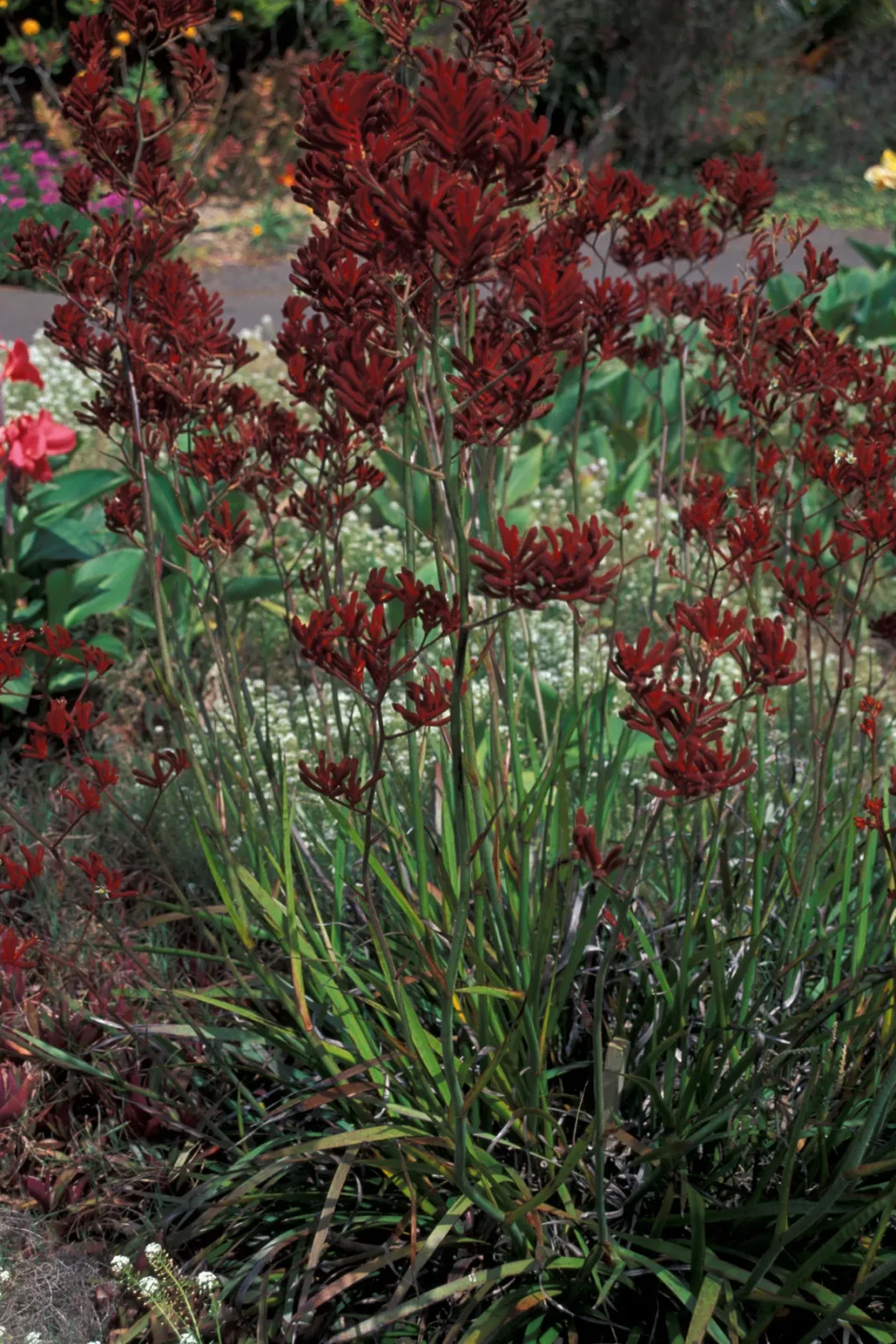
Anigozanthos flavidus is Western Australia’s longest-lived kangaroo paw, blooming Nov–Feb for native honeyeaters across sunny WA, SA, NSW, VIC, and QLD gardens.
Care instructions
Care Guide & Maintenance Routine
Thrives across Australian warm-temperate, Mediterranean, and coastal gardens in full sun to light dappled shade; adaptable from sandy Perth soils to clay loam, with Nov–Feb nectar blooms, Mar–May rhizome division, and late-winter cutback.
Light & Sunlight
Full sun gives peak Nov–Feb flower stem counts across Perth, Adelaide, and Brisbane, while light dappled eucalypt shade is well tolerated.
Watering Schedule
Water newly planted stock while establishing across warmer spring months; once settled, water deeply at ground level during prolonged summer dry spells and never overhead.
Potting Mix & Drainage
Well-drained garden soil or free-draining potting mix
Temperature & Humidity
Hardy across Mediterranean and warm-temperate Australian capitals; heavy frost in Canberra, Hobart, or inland VIC can burn strap leaves—protect pots under eaves June–August.
Native to the extreme south-west corner of Western Australia from Augusta east to Two Peoples Bay and north to Waroona, Tall Kangaroo Paw (Anigozanthos flavidus) is the most adaptable and long-lived species in the family Haemodoraceae, with documented Australian garden specimens thriving for over 30 years.
Clumps of evergreen strap-like foliage grow up to 1 m high and spread up to 2 m wide from a stout 5 cm underground rhizome that allows the plant to re-sprout after fire or seasonal dry spells. Between November and February, upright flowering stems reach roughly 2 m (and up to 3 m in fertile habitats per Florabase WA), bearing velvety tubular blossoms in yellow-green, red, orange, or pink-brown that attract Australian nectar-feeding birds.
Unlike shorter, disease-sensitive kangaroo paws, A. flavidus adapts from coastal Perth sand to heavier Adelaide, Sydney, and Melbourne clay-loams and even tolerates seasonal streamside moisture. Avoid overhead irrigation to keep ink spot fungus (Alternaria alternata) away, collect seed in March–April or divide mature rhizomes from March to May, and shelter container plants from severe inland ACT, Tasmanian, or Victorian winter frosts.
Seasonal rhythm
Seasonal Calendar
| Month | Care Tasks | Seasonal Focus |
|---|---|---|
| Jan | water, inspect | Mid-summer peak bloom across WA, SA, VIC & NSW; water soil directly rather than overhead foliage to deter ink spot. |
| Feb | water, prune | Late summer heat and tail of Nov–Feb flowering; trim faded tall scapes if clumps look untidy. |
| Mar | harvest, propagate | Early Australian autumn; collect ripe seed (Mar–Apr) and start planning clump divisions. |
| Apr | propagate, taper_water | Ideal autumn window (Mar–May) to divide mature rhizomes with a healthy bud per section. |
| May | repot, protect | Finish autumn dividing/repotting across southern states before heavy winter frosts settle in. |
| Jun | protect | Early Australian winter; shelter balcony containers from hard frosts in Melbourne, Canberra, and inland districts. |
| Jul | protect, inspect | Mid-winter check for ink-spot fungal lesions during cool damp weather; keep air circulating. |
| Aug | prune | Late winter reset (ANBG practice): cut back tired or spotted foliage and spent stems to encourage crisp spring shoots. |
| Sep | plant, mulch | Early spring active growth; plant container stock in full sun to dappled light and watch seedlings for snails. |
| Oct | inspect, weed | Mid-spring flower scape emergence; guard soft new shoots against snails and slugs. |
| Nov | water, mulch | Flowering opens from November; refresh open sandy/bark mulch ahead of Australian summer heat. |
| Dec | water, inspect | Early summer nectar display attracting Australian honeyeaters and native birds. |
Diagnostics
Common Problems & Troubleshooting
Alternaria ink spot from cool overhead watering; snail grazing on young seedlings; frost scorch on exposed VIC/ACT/TAS leaves; reduced flowering in heavy tree shade.
Pests & seasonal watch: Protect young seedlings and fresh spring shoots from snails and slugs. Watch damp winter foliage for Alternaria ink-spot lesions; remove blackened leaves and water solely at soil level. Note: velvety flower hairs can irritate sensitive skin or eyes on repeated handling.
Care encyclopedia · 1 guide
Guides & Articles for Tall Kangaroo Paw
Similar Botanical Matches
Grower field notes
Reader Field Notes in Australia
Share how this plant performs in your local Australia climate.