
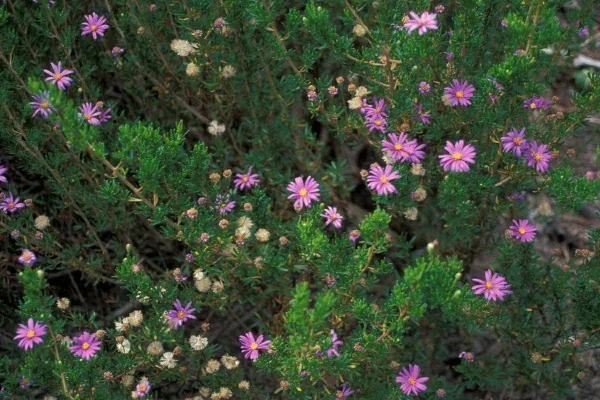
| ☀️ Light | Full sun |
|---|---|
| 💧 Water | Low (allow soil to dry) |
| 🪴 Soil | Adaptable soil with drainage |
| 🐾 Safety | Cats: not verified · Dogs: not verified |
Where It Grows & Climate Tolerance
Pet & Companion Animal Toxicity (Cut-leaf Daisy (Brachyscome multifida) – Australia)
Not yet verified: Toxicity status for cats, dogs, and horses has not yet been confirmed against veterinary poison-control records. Keep out of reach of pets or consult your veterinarian.
A low native daisy from temperate eastern Australia, valued for dense foliage mats and colourful spring-to-summer flowers.
Care instructions
Care Guide & Maintenance Routine
In NSW, Victoria and southern Queensland, grow in sun or part shade. Water during establishment and dry months; deadhead to extend flowering.
Light & Sunlight
Full sun gives best growth; part shade is tolerated.
Watering Schedule
Water new plants until rooted. Established plants usually need only light supplemental water in dry months.
Potting Mix & Drainage
Adaptable soil with drainage
Temperature & Humidity
Expect hot summers from December to February and cooler winters from June to August. Frost may scorch leaves but regrowth is common.
Brachyscome multifida is a perennial groundcover native to temperate parts of southern Queensland, New South Wales and Victoria. It forms a mat of finely divided leaves and produces daisy heads in mauve, purple, pink, white or pale yellow. The strongest flushes are in Australian spring and summer, although scattered flowers may appear at other times. Full sun is best, but part shade is tolerated. The Australian National Botanic Gardens notes tolerance of both heavier clay and sandy loam soils. Once established it needs little extra irrigation except during dry months; newly planted pots need closer checks. Remove spent flowers to encourage further bloom. In cooler districts, foliage can scorch in frost and regrow later. Avoid wetting leaves repeatedly because powdery mildew can develop. Cuttings or rooted layers are more reliable than seed, which may have poor germination. Named cultivars can differ in colour and growth habit.
Seasonal rhythm
Seasonal Calendar
| Month | Care Tasks | Seasonal Focus |
|---|---|---|
| Jan | Routine check | In January, check pots during heat and remove spent daisy heads to sustain flowering. |
| Feb | Routine check | February dry spells may call for light watering of established groundcovers. |
| Mar | Routine check | In March, trim tired stems and assess rooted layers for propagation. |
| Apr | Routine check | April is a suitable planting period in many mild temperate gardens; water in new plants. |
| May | Routine check | In May, reduce irrigation as rainfall increases and clear fallen debris from foliage. |
| Jun | Routine check | June frost can scorch leaves in cool districts; avoid cutting back all protective growth. |
| Jul | Routine check | In July, check for damp foliage and powdery mildew after winter rain. |
| Aug | Routine check | Late August is useful for preparing sunny groundcover beds before spring growth. |
| Sep | Routine check | In September, deadhead early flowers and monitor new plantings for dry soil. |
| Oct | Routine check | October is a strong flowering month; keep foliage airy and water at soil level. |
| Nov | Routine check | In November, deadhead regularly and take firm new-growth cuttings if desired. |
| Dec | Routine check | December heat may dry containers quickly; check soil and give water when needed. |
Diagnostics
Common Problems & Troubleshooting
Powdery mildew can develop on persistently wet foliage; frost may burn leaves temporarily.
Pests & seasonal watch: Powdery mildew is the main concern when foliage stays wet. Give plants airflow and water at soil level when possible.
Care encyclopedia · 1 guide
Guides & Articles for Cut-leaf Daisy (Brachyscome multifida) – Australia
Similar Botanical Matches
Keep exploring
Related plants
Grower field notes
Reader Field Notes in Australia
Share how this plant performs in your local Australia climate.