
| ☀️ Light | Full sun |
|---|---|
| 💧 Water | Low (allow soil to dry) |
| 🪴 Soil | Well-drained garden soil |
| 🐾 Safety | Cats: not verified · Dogs: not verified |
| 📏 Mature size | 80 cm |
Where It Grows & Climate Tolerance
Pet & Companion Animal Toxicity (Sticky Everlasting (Xerochrysum viscosum) – Australia)
Not yet verified: Toxicity status for cats, dogs, and horses has not yet been confirmed against veterinary poison-control records. Keep out of reach of pets or consult your veterinarian.
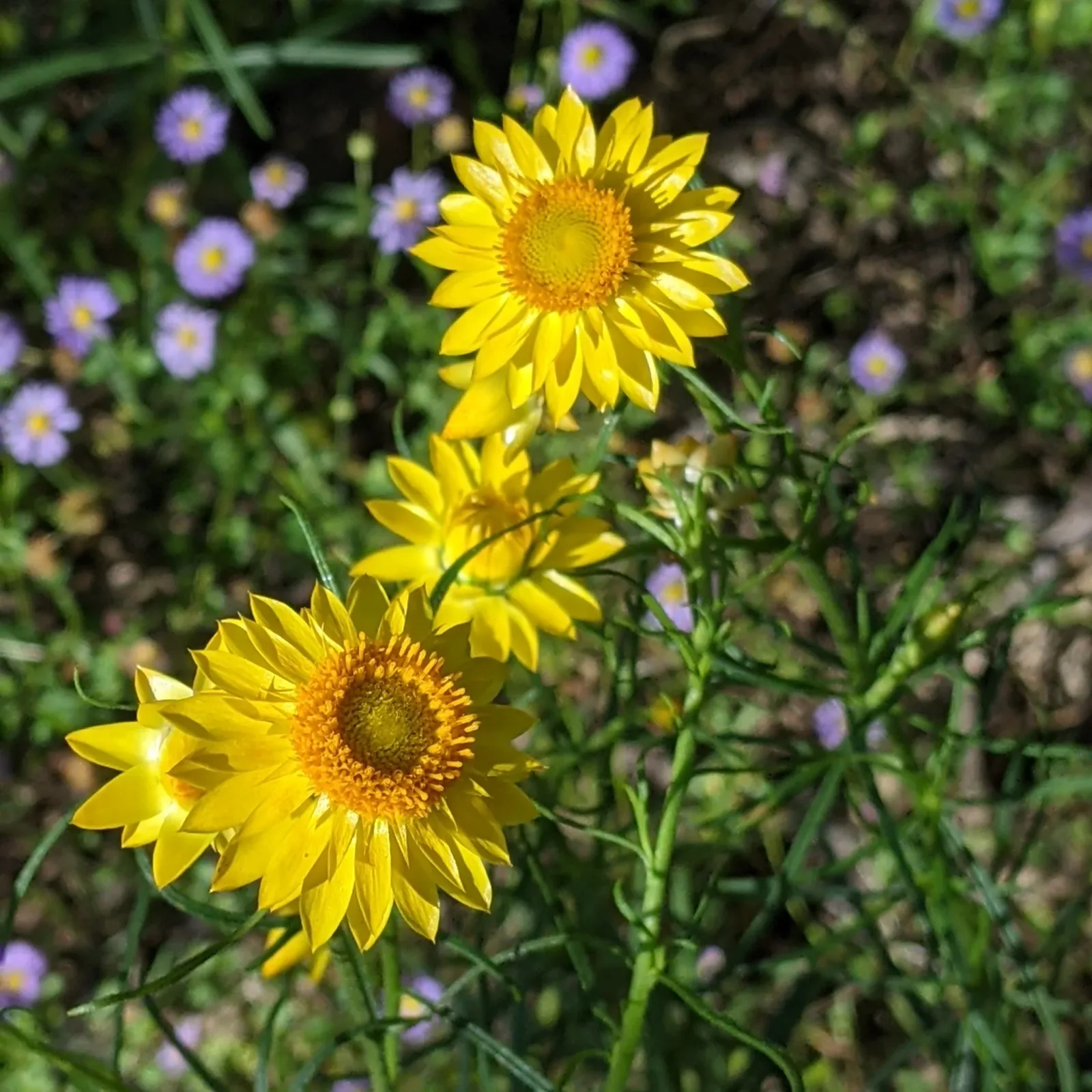
A sun-loving Australian paper daisy with yellow, long-lasting flower heads, mainly in spring and summer.
Care instructions
Care Guide & Maintenance Routine
In temperate NSW, Victoria and the ACT, plant in sun and well-drained soil. Water while establishing and prune after flowering.
Light & Sunlight
Full sun is preferred; shade can make plants short lived.
Watering Schedule
Water young plants during establishment. Established plants tolerate drought, but respond to long dry spells.
Potting Mix & Drainage
Well-drained garden soil
Temperature & Humidity
Southern Hemisphere summer is December–February; winter June–August. Frost may occur inland, but established plants are generally tolerant.
Xerochrysum viscosum is a native Australian perennial paper daisy with erect, branching stems and bright yellow flower heads. The Australian National Botanic Gardens records a main flowering period in spring and summer, sometimes extending into autumn. In NSW, Victoria and the ACT, place it in full sun and soil that drains well. Shade may shorten its life. It can tolerate frost, dry spells and humidity once established, though new plants still need water through dry periods. After flowers finish in late autumn or early winter, prune back to encourage new shoots and a compact shape. Propagation is possible from seed or cuttings; cool stratification may improve some seed germination. The papery heads can be cut and dried. Local rainfall and frost dates vary, so adjust care by district.
Seasonal rhythm
Seasonal Calendar
| Month | Care Tasks | Seasonal Focus |
|---|---|---|
| Jan | Routine check | In January, enjoy yellow flowers and water new plants if soil dries in summer heat. |
| Feb | Routine check | February can bring hot dry spells; check young plants and keep mulch clear of stems. |
| Mar | Routine check | In March, remove spent blooms and collect mature seed only where permitted. |
| Apr | Routine check | April may still bring flowers; plan pruning after the main bloom finishes. |
| May | Routine check | In May, cut back finished stems in mild districts to encourage new shoots. |
| Jun | Routine check | During June, avoid waterlogging in cool wet soil and check young plants after frost. |
| Jul | Routine check | In July, monitor the crown for new growth and keep weeds from crowding it. |
| Aug | Routine check | August is a good time to prepare a sunny, free-draining bed for spring planting. |
| Sep | Routine check | In September, watch for fresh flower buds and water recent plantings as needed. |
| Oct | Routine check | October is often a strong flowering month; cut selected heads for drying. |
| Nov | Routine check | In November, deadhead tired blooms and inspect young shoots for aphids. |
| Dec | Routine check | December heat can dry pots quickly; water after checking the root zone. |
Diagnostics
Common Problems & Troubleshooting
Shade can shorten plant life. Waterlogged soil can weaken roots; aphids and slugs may damage young growth.
Pests & seasonal watch: Inspect young growth for aphids or slugs. Check drainage and light before assuming a pest is responsible for decline.
Similar Botanical Matches
Keep exploring
Related plants
Grower field notes
Reader Field Notes in Australia
Share how this plant performs in your local Australia climate.