| ☀️ Light | Full sun |
|---|---|
| 💧 Water | Low (allow soil to dry) |
| 🪴 Soil | Well-drained garden soil; adaptable to several soil types |
| 🐾 Safety | Cats: not verified · Dogs: not verified |
Where It Grows & Climate Tolerance
Pet & Companion Animal Toxicity (Sweet Bursaria (Bursaria spinosa) in Australia)
A hardy native shrub with fragrant white flowers and often spiny stems. Give it room and water well while young.
Care instructions
Care Guide & Maintenance Routine
Water young plants regularly for their first one to two years. Once settled, prune only as needed and watch for shoots in moist sites.
Light & Sunlight
Choose sun or light shade. Give young plants enough light for steady growth.
Watering Schedule
Water regularly during the first one to two years. Once established, water during long dry spells.
Potting Mix & Drainage
Well-drained garden soil; adaptable to several soil types
Temperature & Humidity
Choose locally suited stock. This native occurs from coastal to subalpine areas, but local forms differ in size and cold response.
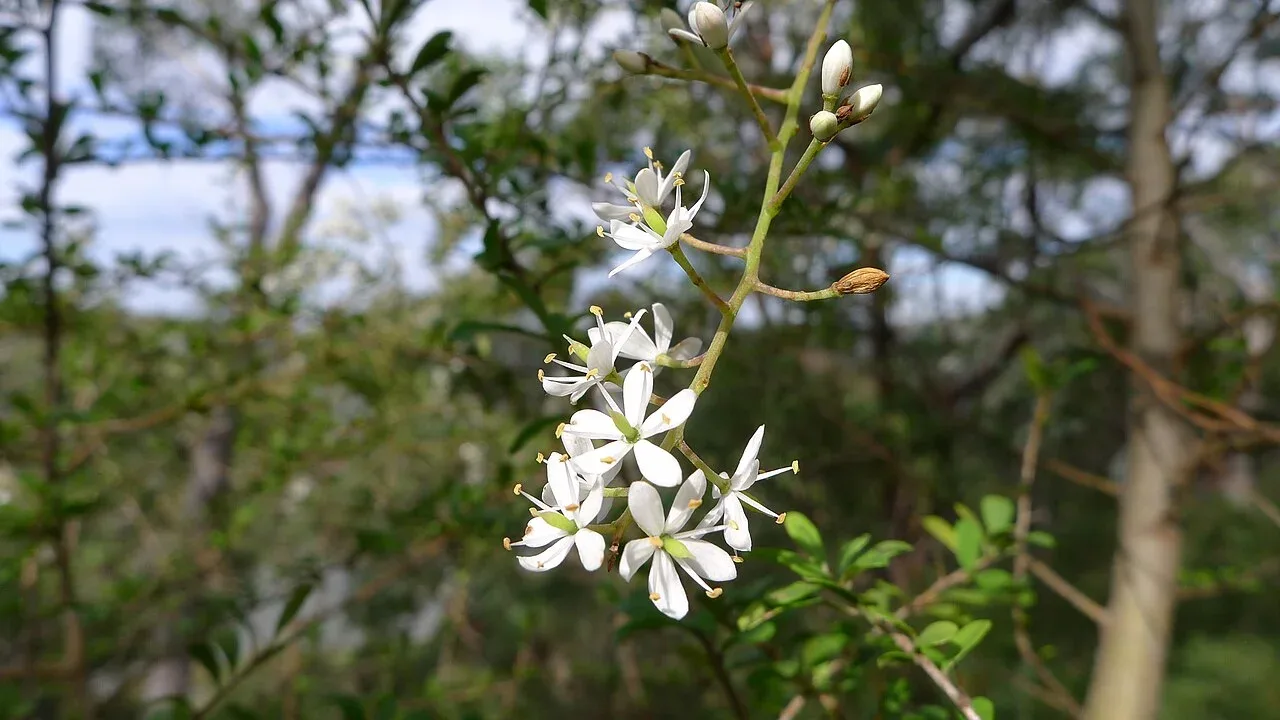
Bursaria spinosa grows naturally across Queensland, New South Wales, Victoria, Tasmania and South Australia. It can be a large shrub or small tree. Its branches are often spiny. White to cream flowers are fragrant and attract butterflies. The seed pods are small and purse-shaped. Size and flowering time vary with climate and local form.
Plant with room around paths and doors. Water young plants regularly for their first one to two years; older plants usually need less attention. Use gloves to prune spiny growth. Watch for scale insects and unwanted root shoots in moist sites. In SA and Tasmania it may be called Christmas Bush, but it is not the NSW Christmas Bush species.
Seasonal rhythm
Seasonal Calendar
| Month | Care Tasks | Seasonal Focus |
|---|---|---|
| Jan | Water young plants in heat and check for new root shoots. | |
| Feb | Keep mulch off the stem and water if soil stays dry. | |
| Mar | Check branches near paths and prune sharp growth if needed. | |
| Apr | In mild areas, plant in a suitable open spot and water to settle roots. | |
| May | Inspect stems for scale insects. | |
| Jun | Water new plants as needed; established shrubs usually need less. | |
| Jul | Check for unwanted shoots in moist ground. | |
| Aug | Plan planting after severe local frosts. | |
| Sep | Refresh mulch around young plants. | |
| Oct | Look for new growth and check the space around the shrub. | |
| Nov | Flower buds may develop; avoid hard pruning. | |
| Dec | Fragrant flowers may appear; timing changes by district. |
Diagnostics
Common Problems & Troubleshooting
Scale insects, unwanted root shoots in moist places and thorny branches beside paths.
Pests & seasonal watch: Scale insects are a reported problem. Check stems and leaves before treating. The plant can spread from roots in moist sites.
Care encyclopedia · 1 guide
Guides & Articles for Sweet Bursaria (Bursaria spinosa) in Australia
Similar Botanical Matches
Grower field notes
Reader Field Notes in Australia
Share how this plant performs in your local Australia climate.