
| ☀️ Light | Medium light |
|---|---|
| 💧 Water | Moderate (lightly moist) |
| 🪴 Soil | Friable, well-aerated, very well-drained soil with leaf compost |
| 🐾 Safety | Cats: not verified · Dogs: not verified |
Where It Grows & Climate Tolerance
Pet & Companion Animal Toxicity (NSW Waratah (Telopea speciosissima) in Australia)
Not yet verified: Toxicity status for cats, dogs, and horses has not yet been confirmed against veterinary poison-control records. Keep out of reach of pets or consult your veterinarian.
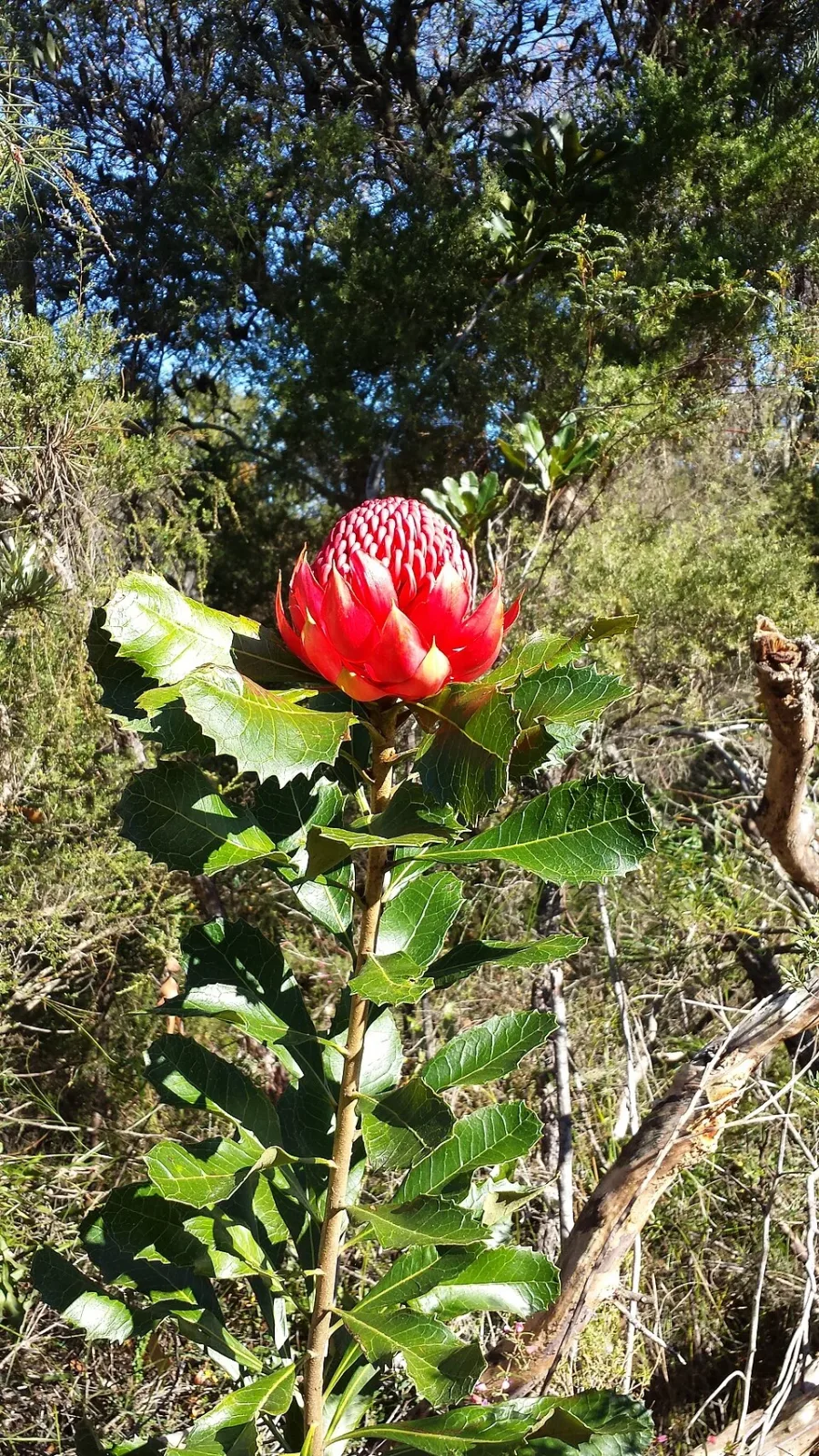
NSW waratah is a large shrub with showy spring flower heads. It is the NSW floral emblem and needs a carefully drained, partly shaded garden position.
Care instructions
Care Guide & Maintenance Routine
In suitable NSW temperate gardens, give morning light, afternoon protection, cool mulched roots and a free-draining bed. Keep moisture steady without saturated soil.
Light & Sunlight
Partial shade or morning sun is preferred; protect flower bracts from strong afternoon sun, especially in exposed sites.
Watering Schedule
Do not let the root zone dry completely in hot periods, but never leave it waterlogged. Adjust irrigation to soil and rain.
Potting Mix & Drainage
Friable, well-aerated, very well-drained soil with leaf compost
Temperature & Humidity
This is a temperate NSW species, not a universal choice for tropical or arid Australia. Protect flower heads from intense afternoon sun and adapt watering to local rain.
Telopea speciosissima grows naturally within about 200 km of Sydney. Red or pink flower heads appear in spring, roughly September to October around Sydney and later in cooler places. Cultivated varieties can differ in colour and flowering time.
Choose a site with open air circulation and at least partial light. Prepare a broad, well-drained planting area rather than a small amended hole in clay. Water during heat and drought but avoid wet feet. After flowering, prune established stems to renew growth, and use low-phosphorus fertiliser if needed. This species is rewarding but can be difficult in unsuitable soils.
Seasonal rhythm
Seasonal Calendar
| Month | Care Tasks | Seasonal Focus |
|---|---|---|
| Jan | Routine check | Keep roots cool with mulch and water deeply in hot dry spells without saturating the bed. |
| Feb | Routine check | Check drainage after summer storms and shield developing plants from harsh afternoon sun. |
| Mar | Routine check | Inspect foliage and plan autumn planting only where drainage is reliable. |
| Apr | Routine check | Plant into a broad free-draining site in suitable mild weather; avoid a small compost-filled clay hole. |
| May | Routine check | Check mulch depth and remove weeds carefully without disturbing shallow roots. |
| Jun | Routine check | Reduce watering during wet winter periods; keep roots aerated. |
| Jul | Routine check | Prepare a low-phosphorus feed for spring if the plant needs it. |
| Aug | Routine check | Watch developing flower buds and keep the root zone evenly moist. |
| Sep | Routine check | Flowers may open around Sydney; protect bracts from harsh afternoon sun. |
| Oct | Routine check | After flowering, prune established stems and remove spent heads if seed is not wanted. |
| Nov | Routine check | Apply suitable low-phosphorus feed as new shoots grow, following the label. |
| Dec | Routine check | Check water during warm weather and maintain airflow around the shrub. |
Diagnostics
Common Problems & Troubleshooting
Root damage or failure in waterlogged soil; bract browning in harsh sun; dry root zone; weak growth in deep shade.
Pests & seasonal watch: Watch flower heads for browning and inspect foliage for damage. Sun exposure can brown bracts; distinguish this from pest or disease before treatment.
Similar Botanical Matches
Keep exploring
Related plants
Grower field notes
Reader Field Notes in Australia
Share how this plant performs in your local Australia climate.