
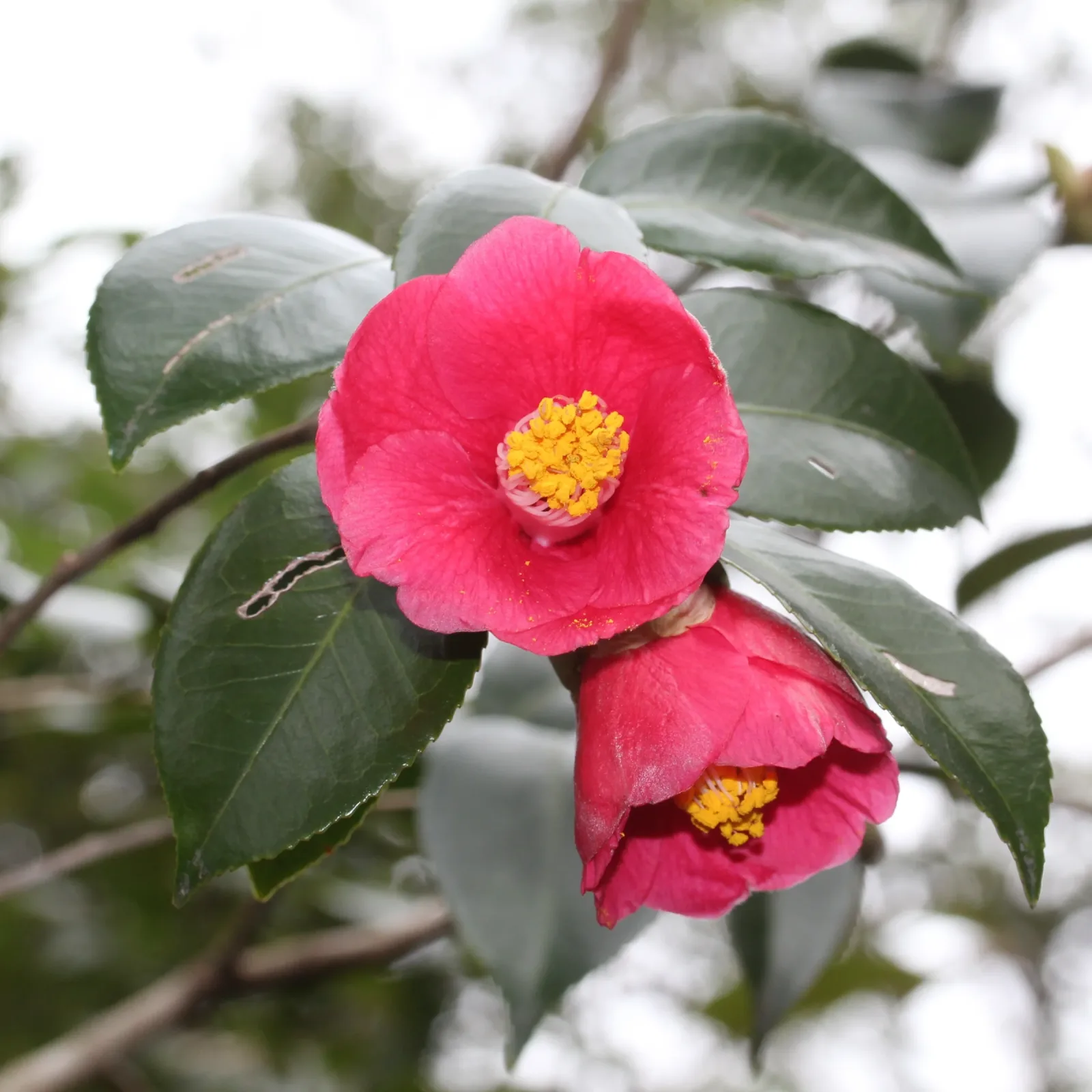
| ☀️ Light | Medium light |
|---|---|
| 💧 Water | Moderate (lightly moist) |
| 🪴 Soil | Acidic, moist but freely draining soil |
| 🐾 Safety | Cats: not verified · Dogs: not verified |
| 📏 Mature size | 10.0 m |
Where It Grows & Climate Tolerance
Pet & Companion Animal Toxicity (Japanese Camellia in Australia)
Not yet verified: Toxicity status for cats, dogs, and horses has not yet been confirmed against veterinary poison-control records. Keep out of reach of pets or consult your veterinarian.
An evergreen flowering shrub for shaded Australian gardens, with winter to early spring blooms.
Care instructions
Care Guide & Maintenance Routine
Give afternoon shade, acidic free-draining soil and water during summer bud formation. Prune after flowers finish.
Light & Sunlight
Part shade or morning light; shelter flowers from harsh afternoon sun.
Watering Schedule
Keep soil evenly moist during establishment and summer bud formation; avoid waterlogging.
Potting Mix & Drainage
Acidic, moist but freely draining soil
Temperature & Humidity
Flowers may suffer frost damage in cold districts; subtropical japonica cultivars need shade from strong sun.
Japanese camellia brings colour to Australian gardens in winter and early spring. Flowering time depends on cultivar and local climate; in subtropical Queensland, early cultivars often bloom from May to July. Choose a spot protected from hot afternoon sun.
Plant in acidic, well-drained soil. Where the soil is alkaline, a large container with suitable potting mix is easier than trying to change an entire garden bed. Water during summer because next season’s flower buds are developing then. Mulch the root zone and keep the main stem uncovered.
Prune after flowering if needed. Inspect leaves for scale and flowers for petal blight. Ensure air movement and drainage, and avoid leaving the root ball soggy.
Seasonal rhythm
Seasonal Calendar
| Month | Care Tasks | Seasonal Focus |
|---|---|---|
| Jan | Routine check | Water deeply during summer dry spells; buds for next bloom develop now. |
| Feb | Routine check | Check mulch and moisture in hot weather. |
| Mar | Routine check | Continue summer watering if dry; avoid overfeeding. |
| Apr | Routine check | Watch developing buds; shelter from hot sun. |
| May | Routine check | Early winter flowers may open in warm districts. |
| Jun | Routine check | Enjoy winter blooms; clear fallen diseased petals. |
| Jul | Routine check | Check flowers and foliage for scale or blight. |
| Aug | Routine check | Many cultivars finish flowering; plan light pruning. |
| Sep | Routine check | Prune after bloom and feed as directed. |
| Oct | Routine check | Mulch and water new spring growth. |
| Nov | Routine check | Check soil moisture as days warm. |
| Dec | Routine check | Keep roots cool and moist in early summer. |
Diagnostics
Common Problems & Troubleshooting
Bud drop from moisture stress; yellow leaves in unsuitable alkaline soil; root rot in poorly drained soil.
Pests & seasonal watch: Look for scale, aphids and petal blight. Brown flowers or yellow leaves need diagnosis before treatment.
Similar Botanical Matches
Keep exploring
Related plants
Grower field notes
Reader Field Notes in Australia
Share how this plant performs in your local Australia climate.