
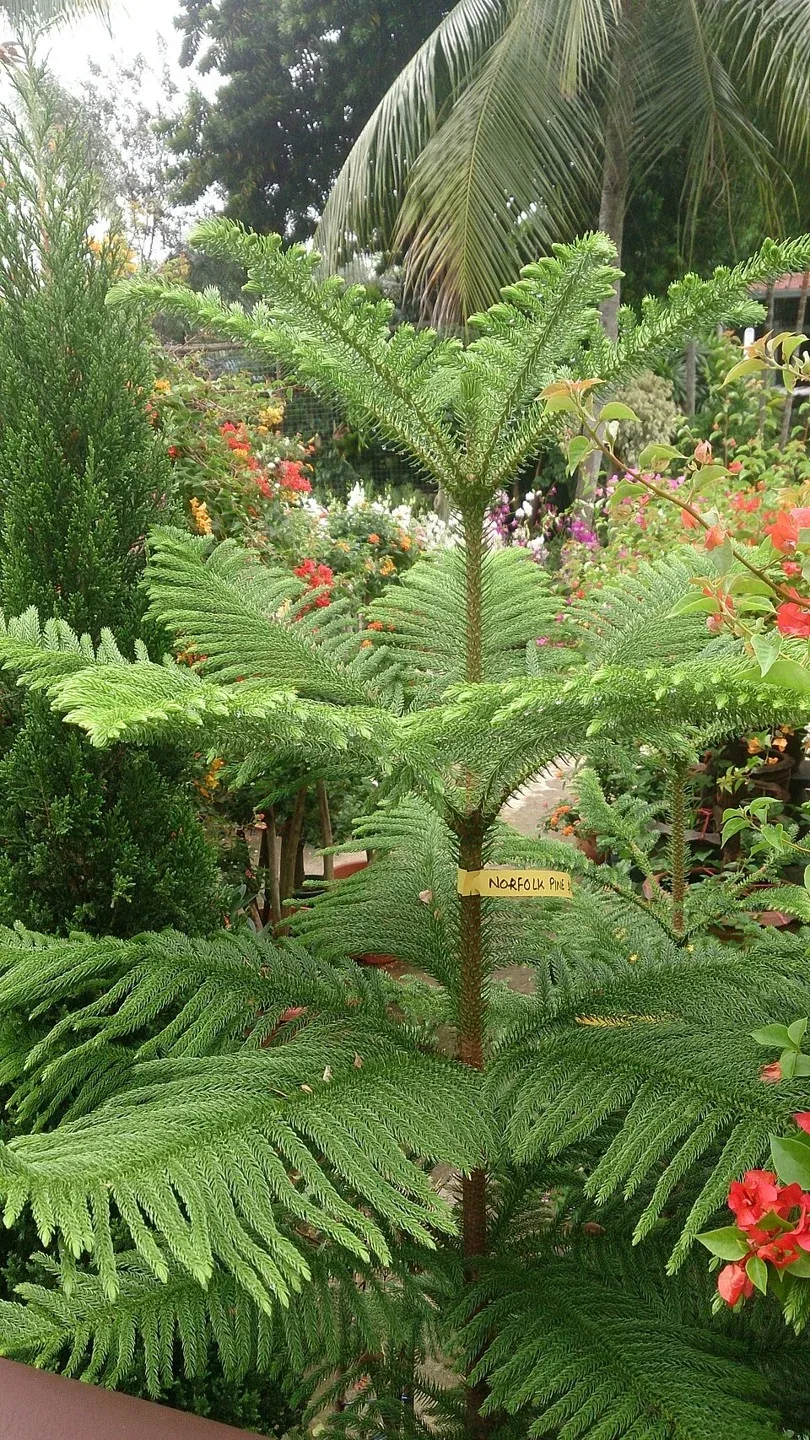
| ☀️ Light | Bright indirect light |
|---|---|
| 💧 Water | Moderate (lightly moist) |
| 🪴 Soil | Porous, slightly acidic potting mix with free drainage |
| 🐾 Safety | Cats: non-toxic · Dogs: non-toxic |
Where It Grows & Climate Tolerance
Pet & Companion Animal Toxicity (Norfolk Island Pine)
Care for a potted Norfolk Island pine indoors or in a sheltered Australian garden. Plan for its mature size before planting outdoors.
Care instructions
Care Guide & Maintenance Routine
In Australia, this Norfolk Island native can grow into a tall outdoor tree in suitable mild areas. Use a container if you want a manageable plant on a veranda or indoors. In frost-prone districts give the pot winter shelter.
Light & Sunlight
Choose a bright room. Gentle direct light can suit an acclimated plant. Turn the pot in small increments for even growth and move it back from hot glass if foliage bleaches.
Watering Schedule
Water thoroughly after the surface starts to dry and drain the saucer. In cool or dim conditions the root ball dries more slowly. Avoid allowing it to remain sodden or bone dry.
Potting Mix & Drainage
Porous, slightly acidic potting mix with free drainage
Temperature & Humidity
A cooler bright room can suit this subtropical tree. Keep the plant frost-free and away from hot indoor vents and abrupt temperature swings.
Room for an outdoor tree
In suitable coastal Queensland or New South Wales, plant in the ground only where the mature canopy and roots have space. Assess wind exposure, drainage and distance from structures. A protected pot is easier to move when weather shifts.
Water pots by season
Pay closer attention in December and January around hot paving. In cool weather check the root ball before filling the watering can. A bright spot under cover can keep winter rain from saturating the mix.
Pet safety
The ASPCA entry for Araucaria heterophylla lists it as non-toxic to cats and dogs. Nursery names such as Australian pine can refer to other species, so confirm the botanical name.
Photo by Mokkie via Wikimedia Commons. CC BY-SA 4.0. Resized and converted to WebP under the same license.
Seasonal rhythm
Seasonal Calendar
| Month | Care Tasks | Seasonal Focus |
|---|---|---|
| Jan | Protect from frost/heat | Check the pot more often in hot spells and empty runoff. |
| Feb | Routine check | Shelter container plants from heat reflected off paving. |
| Mar | Routine check | Check that outdoor pots have clear drains before cooler weather. |
| Apr | Routine check | Ease watering as the mix begins taking longer to dry. |
| May | Protect from frost/heat | Move vulnerable pots under cover in frost-prone districts. |
| Jun | Routine check | Keep potted trees bright and avoid constant cold wet roots. |
| Jul | Routine check | Check foliage near glass for cold contact damage. |
| Aug | Routine check | Prepare fresh mix if a spring repot is needed. |
| Sep | Repot | Repot a root-bound plant as active growth resumes. |
| Oct | Routine check | Acclimate outdoor pots before giving stronger sun. |
| Nov | Routine check | Water thoroughly once the surface starts to dry. |
| Dec | Protect from frost/heat | Rotate container plants and check for drying wind. |
Diagnostics
Common Problems & Troubleshooting
Dry air, uneven moisture or low light can brown tips or cause lower tiers to decline. Lost branches seldom fill back in. Preserve the leader to keep the plant's tiered shape.
Care encyclopedia · 1 guide
Guides & Articles for Norfolk Island Pine

Similar Botanical Matches
Keep exploring
Related plants

Grower field notes
Reader Field Notes in Australia
Share how this plant performs in your local Australia climate.