
| ☀️ Light | Full sun |
|---|---|
| 💧 Water | Moderate (lightly moist) |
| 🪴 Soil | Well-drained garden soil |
| 🐾 Safety | Cats: not verified · Dogs: not verified |
| 📏 Mature size | 25.0 m |
Where It Grows & Climate Tolerance
Pet & Companion Animal Toxicity (Coast Banksia)
Not yet verified: Toxicity status for cats, dogs, and horses has not yet been confirmed against veterinary poison-control records. Keep out of reach of pets or consult your veterinarian.
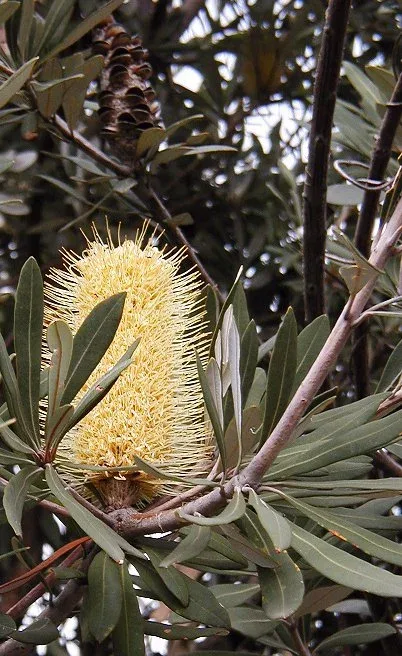
A hardy coastal native tree with pale yellow nectar-rich flower spikes and leaves that are green above, silvery below. Its mature size makes site choice important.
Care instructions
Care Guide & Maintenance Routine
For NSW gardens, choose a sunny, freely draining position with room for a tree. Water new plantings through their first dry spells; keep fertiliser low in phosphorus.
Light & Sunlight
Give a sunny, open outdoor site. Coast banksia can grow much taller than a nursery pot suggests, so allow canopy and root space.
Watering Schedule
Water during establishment, especially in extended dry weather. Once established, base extra watering on rainfall and soil moisture; avoid persistent waterlogging.
Potting Mix & Drainage
Well-drained garden soil
Temperature & Humidity
NSW coastal sites vary in wind, frost and summer heat. ANBG describes the species as frost tolerant; water and shelter new plantings during unusual extremes.
In NSW, coast banksia is found widely from the coast towards the ranges. PlantNET describes a tree 5–25 m high depending on exposure and habitat, so measure the available space before planting. Trees in exposed coastal sites can be smaller than sheltered specimens. The species also occurs in Queensland and Victoria.
The Australian National Botanic Gardens notes this banksia tolerates salt spray and frost. It grows well in coastal gardens, with dark green leaves and silvery undersides. Banksias generally prefer well-drained soil and sun. Avoid a waterlogged planting pocket, especially where heavy clay traps winter rain. Only low-phosphorus fertiliser should be considered when feeding a banksia.
For flowering, NSW PlantNET records a main period from January to June, while ANBG describes late summer to winter. Treat these as regional observations rather than a guaranteed schedule. Pale yellow spikes provide nectar for wildlife. Water establishing plants during dry weather, then let rainfall and soil moisture guide additional watering. Light shaping is possible, but a naturally large tree is unsuitable for a bed that requires constant hard pruning.
Seasonal rhythm
Seasonal Calendar
| Month | Care Tasks | Seasonal Focus |
|---|---|---|
| Jan | Routine check | In NSW summer, watch for pale flower spikes and water a newly planted tree during prolonged dry spells. |
| Feb | Routine check | Late summer can begin the main flowering season; check moisture around young roots without leaving soil soggy. |
| Mar | Routine check | During early autumn, observe nectar-rich flowers and maintain mulch clear of the trunk. |
| Apr | Routine check | In autumn, flowering may continue. Check that rain drains freely from the planting area. |
| May | Routine check | Flowers are still possible in May in NSW; inspect leaves and branches for stress after windy weather. |
| Jun | Routine check | Winter is near the end of the main NSW flowering period recorded by PlantNET. Check drainage after heavy rain. |
| Jul | Routine check | In midwinter, keep mulch off the trunk and avoid wet, compacted soil around young roots. |
| Aug | Routine check | Late winter is a useful time to assess a sunny site with room for the mature tree before spring planting. |
| Sep | Routine check | In spring, plant nursery stock where soil drainage is suitable and water regularly during establishment. |
| Oct | Routine check | As spring warms, check new growth and water young trees through dry spells. |
| Nov | Routine check | Before summer, review tree clearance and avoid heavy pruning to force a large species into a narrow bed. |
| Dec | Routine check | In early summer, watch soil moisture around new plantings and expect flowering times to vary by site. |
Diagnostics
Common Problems & Troubleshooting
Poor growth in poorly drained soil; nutrient problems from unsuitable fertiliser; a tree outgrowing a narrow planting site.
Pests & seasonal watch: If foliage declines, check drainage and site stress before assuming a pest. Use a local horticultural diagnosis before applying treatments.
Similar Botanical Matches
Keep exploring
Related plants
Grower field notes
Reader Field Notes in Australia
Share how this plant performs in your local Australia climate.