
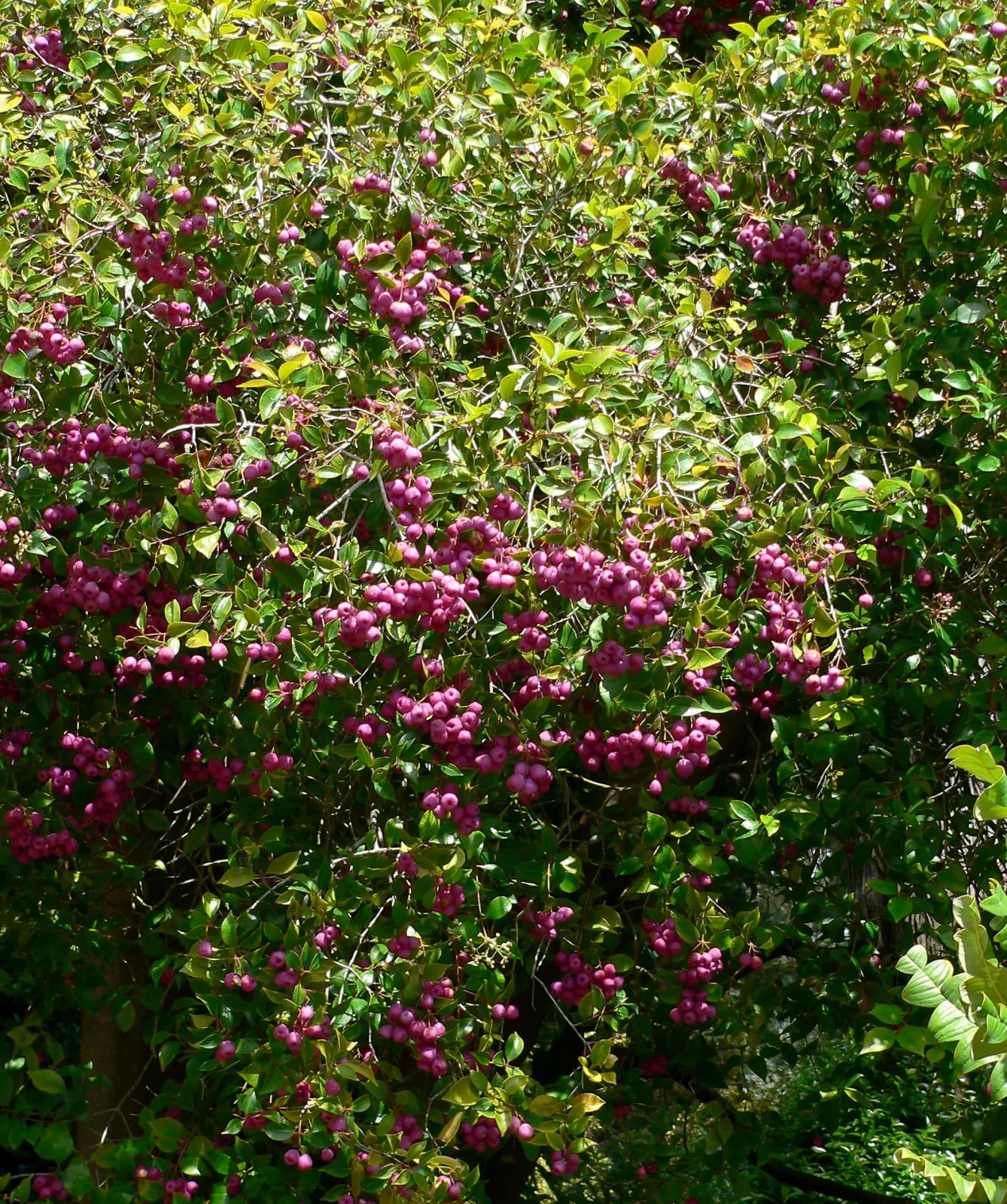
| ☀️ Light | Full sun |
|---|---|
| 💧 Water | Moderate (lightly moist) |
| 🪴 Soil | Fertile, well-drained garden soil with organic matter |
| 🐾 Safety | Cats: not verified · Dogs: not verified |
Where It Grows & Climate Tolerance
Pet & Companion Animal Toxicity (Lilly Pilly (Syzygium smithii) in Australia)
Not yet verified: Toxicity status for cats, dogs, and horses has not yet been confirmed against veterinary poison-control records. Keep out of reach of pets or consult your veterinarian.
Creek lilly pilly is a native evergreen tree often clipped into a screen. Identify the species or cultivar before buying because mature sizes differ widely.
Care instructions
Care Guide & Maintenance Routine
For coastal NSW, eastern Victoria and suitable QLD sites, grow in sun or part shade in well-drained, improved soil. Water new plants during establishment and mulch in hot weather. Protect young plants where frost is likely.
Light & Sunlight
Full sun to partial shade. In hot, dry inland gardens, protect a newly planted specimen from harsh afternoon exposure until established.
Watering Schedule
Water deeply during establishment. Established plants tolerate some dry spells, but prolonged dryness may reduce growth and fruit; pots dry faster.
Potting Mix & Drainage
Fertile, well-drained garden soil with organic matter
Temperature & Humidity
Australian climates vary: check the nursery cultivar and your local frost exposure. In hot inland areas provide establishment water; in colder regions shelter young plants.
In eastern Australian gardens, Syzygium smithii can be grown as a tree or clipped regularly as a hedge. It was formerly named Acmena smithii. White fluffy flowers and pink to mauve fruit may appear, but timing and abundance depend on local conditions and clipping. Do not apply size claims for dwarf lilly pilly cultivars to an unpruned species tree.
Choose a site with room for the intended form, well-drained soil and sun or partial shade. Water until established, then adjust to heat, rainfall and soil moisture. A spring compost mulch helps retain moisture without burying the stem.
Seasonal rhythm
Seasonal Calendar
| Month | Care Tasks | Seasonal Focus |
|---|---|---|
| Jan | Routine check | Check mulch and water young plants during heatwaves; allow soil to drain between deep waterings. |
| Feb | Routine check | Inspect fresh growth for psyllids or scale and water newly planted hedges through summer dry spells. |
| Mar | Routine check | As weather cools, assess soil moisture before watering and avoid clipping during extreme heat. |
| Apr | Routine check | Autumn planting is possible in mild districts; water newly planted trees until roots establish. |
| May | Routine check | Remove fallen fruit where unwanted seedlings are a concern and keep mulch clear of the trunk. |
| Jun | Routine check | In frost-prone districts shelter young plants; reduce watering if cool soil stays wet. |
| Jul | Routine check | Check drainage after winter rain; avoid waterlogging potted lilly pillies. |
| Aug | Routine check | Plan spring planting and pruning after local frost risk has passed. |
| Sep | Routine check | Apply compost around the root zone as spring growth resumes; water in dry spells. |
| Oct | Routine check | Lightly tip-prune new hedge growth if a dense screen is wanted; leave flowering shoots if fruit is desired. |
| Nov | Routine check | Monitor fast spring growth for pests and water during extended warm, dry weather. |
| Dec | Routine check | Summer flowers may appear; keep young plants watered and avoid severe pruning in heat. |
Diagnostics
Common Problems & Troubleshooting
Sparse growth in deep shade; wilt from dry soil; yellowing in waterlogged soil; occasional scale or psyllid damage.
Pests & seasonal watch: Inspect flushes for psyllid distortion and leaves for scale. Syzygium smithii is generally less prone to pimple psyllid than Syzygium australe, but pests still need monitoring.
Similar Botanical Matches
Keep exploring
Related plants
Grower field notes
Reader Field Notes in Australia
Share how this plant performs in your local Australia climate.