
| ☀️ Light | Full sun |
|---|---|
| 💧 Water | Moderate (lightly moist) |
| 🪴 Soil | Well-drained sandy or improved soil with moisture-retaining organic matter |
| 🐾 Safety | Cats: not verified · Dogs: not verified |
Where It Grows & Climate Tolerance
Pet & Companion Animal Toxicity (Midgen Berry (Austromyrtus dulcis) in Australia)
Not yet verified: Toxicity status for cats, dogs, and horses has not yet been confirmed against veterinary poison-control records. Keep out of reach of pets or consult your veterinarian.
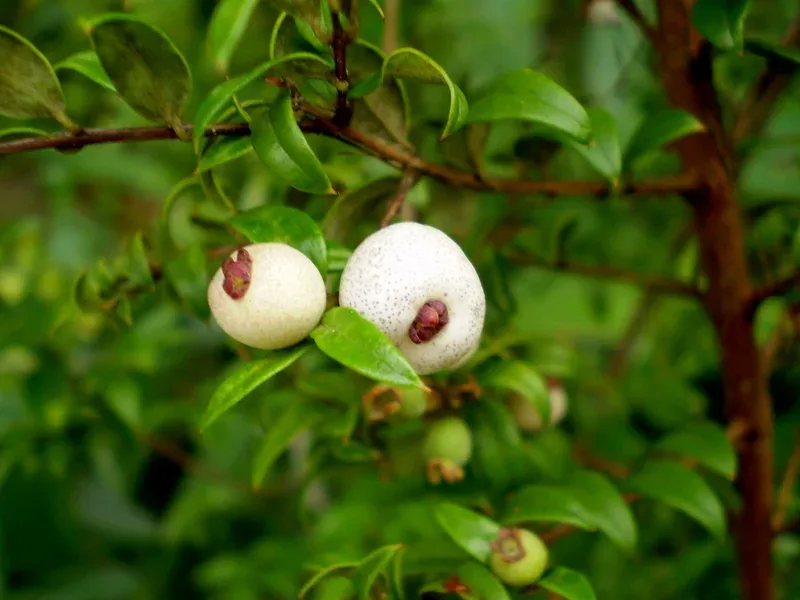
Midgen berry is a spreading east-coast native with small white flowers and sweet pale berries dotted blue-black. Its form changes with sun exposure.
Care instructions
Care Guide & Maintenance Routine
In suitable coastal NSW and southeast QLD gardens, provide well-drained soil that retains moisture. Water in dry spells; choose sun for a denser shrub or shade for a looser groundcover.
Light & Sunlight
Full sun can make a denser low shrub; partial shade gives a more open habit. In hot inland sites, provide some protection from harsh afternoon sun.
Watering Schedule
Maintain an assured moisture supply and water in dry spells; avoid saturated soil. Containers need closer monitoring.
Potting Mix & Drainage
Well-drained sandy or improved soil with moisture-retaining organic matter
Temperature & Humidity
In severe-frost districts, overhead protection is advisable. In hot dry districts, maintain soil moisture and avoid exposed salt winds.
Austromyrtus dulcis naturally occurs from around Valla in NSW to Fraser Island in QLD. In sunny cultivation it can form a low dense spreading shrub; in more shade it is a looser groundcover. White flowers precede sweet speckled berries. Local flowering and fruiting months are climate dependent.
Use a well-drained site with reliable moisture. Mulch around the roots and water during dry spells, especially in pots. Shelter from severe frosts and do not place directly in salt-laden coastal wind. Prune only as needed for shape.
Seasonal rhythm
Seasonal Calendar
| Month | Care Tasks | Seasonal Focus |
|---|---|---|
| Jan | Routine check | Check soil moisture during summer heat and water deeply when needed. |
| Feb | Routine check | Inspect berries as they develop; harvest only ripe correctly identified fruit from unsprayed plants. |
| Mar | Routine check | Top up mulch if soil is drying, while keeping stems clear. |
| Apr | Routine check | In mild districts plant into well-drained soil and water until roots establish. |
| May | Routine check | Check drainage after rain and remove weeds around spreading stems. |
| Jun | Routine check | Provide overhead shelter where severe winter frosts occur. |
| Jul | Routine check | Avoid waterlogging and protect container plants during cold snaps. |
| Aug | Routine check | Plan spring planting where local frost risk has passed. |
| Sep | Routine check | Apply a light compost top-dressing and refresh mulch before warm weather. |
| Oct | Routine check | White flowers may appear in suitable climates; maintain moisture through dry spells. |
| Nov | Routine check | Check new growth for pests or disease and adjust irrigation to rainfall. |
| Dec | Routine check | Shelter young plants from hot wind and monitor pots closely. |
Diagnostics
Common Problems & Troubleshooting
Drying in exposed sandy soil without irrigation; waterlogging in heavy soil; frost damage to exposed plants.
Pests & seasonal watch: The ANBG describes relatively few pest issues in cultivation, but inspect Myrtaceae foliage for disease including myrtle rust. Do not assume immunity.
Similar Botanical Matches
Keep exploring
Related plants
Grower field notes
Reader Field Notes in Australia
Share how this plant performs in your local Australia climate.