| ☀️ Light | Full sun |
|---|---|
| 💧 Water | Moderate (lightly moist) |
| 🪴 Soil | Adaptable garden soil with drainage |
| 🐾 Safety | Cats: not verified · Dogs: not verified |
| 📏 Mature size | 2.0 m |
Where It Grows & Climate Tolerance
Pet & Companion Animal Toxicity (Manuka Tea-tree (Leptospermum scoparium) – Australia)
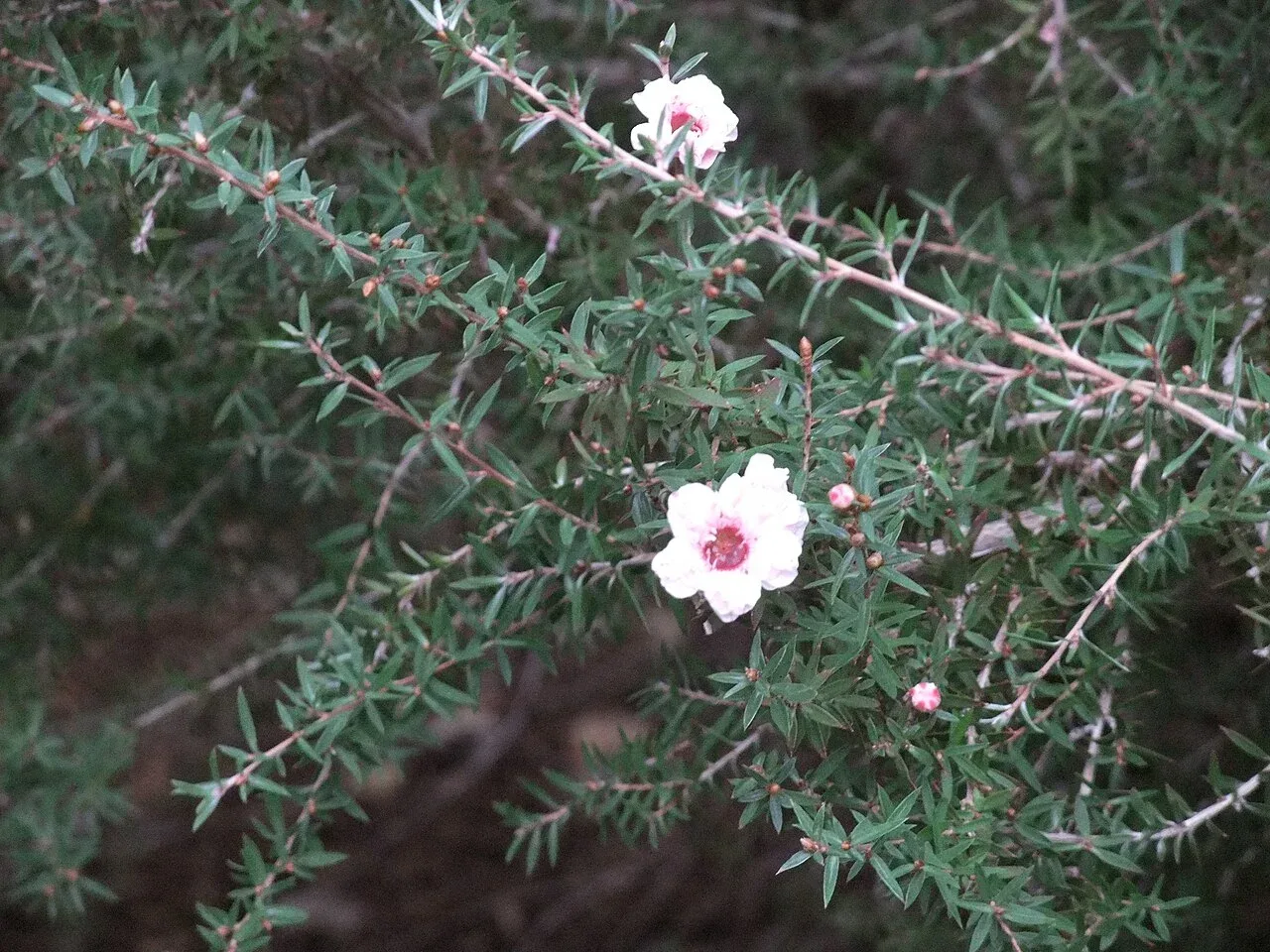
This spring-flowering tea-tree grows naturally in NSW, Victoria and Tasmania. It is usually a compact shrub with white flowers, though cultivars vary.
Care instructions
Care Guide & Maintenance Routine
In temperate eastern Australia and Tasmania, plant where light and drainage suit the selected form, water during establishment and tip prune after bloom.
Light & Sunlight
Full sun is preferred for flowering; this species tolerates some shade.
Watering Schedule
Water new shrubs until established, then follow soil moisture and local rainfall rather than a fixed schedule.
Potting Mix & Drainage
Adaptable garden soil with drainage
Temperature & Humidity
Summer falls December–February and winter June–August. Tasmanian and mainland conditions differ; monitor young plants through local heat or frost.
Leptospermum scoparium grows naturally in New South Wales, Victoria and Tasmania, and also occurs in New Zealand. The Australian National Botanic Gardens describes a usually compact shrub to about 2 m tall and wide. Species flowers are normally white, sometimes pink tinged, opening in spring and early summer; named cultivars can look different. Full sun is preferred for most tea-trees, though this species tolerates shade. In an Australian garden, choose a site with suitable soil and enough room for its spread. Water young shrubs during dry establishment periods and check container drainage. Light tip pruning after flowering helps keep growth dense. Seed or cuttings propagate the species, but cuttings are needed to preserve a named cultivar. Watch leaves for webbing caterpillars and inspect for scale, particularly on cultivars. Do not confuse this species with other plants also called tea-tree.
Seasonal rhythm
Seasonal Calendar
| Month | Care Tasks | Seasonal Focus |
|---|---|---|
| Jan | In January heat, check soil around new tea-trees and water deeply only when drying. | |
| Feb | February is a good time to inspect foliage for webbing caterpillars during warm weather. | |
| Mar | As March cools, check plant shape and plan a suitable site for autumn planting. | |
| Apr | April planting may suit mild districts; water in and monitor the new root zone. | |
| May | In May, assess drainage ahead of winter rain and avoid overwatering containers. | |
| Jun | During June, check for frost damage in exposed inland gardens without hard pruning. | |
| Jul | In July, remove broken branches and keep mulch from touching the stem. | |
| Aug | Late winter is a time to inspect developing buds and scale on branches. | |
| Sep | In September, enjoy spring flowers and avoid pruning stems that are about to bloom. | |
| Oct | October flowers may continue; observe cultivar colour and check for leaf webbing. | |
| Nov | After November bloom, tip prune lightly to encourage a compact bush. | |
| Dec | In December, monitor young shrubs through heat and check foliage for pest stress. |
Diagnostics
Common Problems & Troubleshooting
Leaf webbing and defoliation may indicate caterpillars. Black sooty growth can accompany scale insects.
Pests & seasonal watch: Webbing caterpillars can bind leaves together; scale may be associated with black sooty growth. Identify the problem before treatment.
Similar Botanical Matches
Grower field notes
Reader Field Notes in Australia
Share how this plant performs in your local Australia climate.