| ☀️ Light | Bright indirect light |
|---|---|
| 💧 Water | High (consistently moist) |
| 🪴 Soil | Moisture-retentive container mix with good aeration |
| 🐾 Safety | Cats: non-toxic · Dogs: non-toxic |
Where It Grows & Climate Tolerance
Pet & Companion Animal Toxicity (Majesty Palm)
Find the right light for a majesty palm in Australia. Keep it drained in humid summers and protected in cooler winter districts.
Care instructions
Care Guide & Maintenance Routine
In Australia, try a bright window or a sheltered veranda with filtered light. Humid Queensland conditions can suit the palm, while exposed Melbourne or Canberra patios require cold-weather protection. Strong light through west-facing glass can scorch fronds.
Light & Sunlight
Choose bright indirect light. Introduce gentle direct sun gradually and protect the fronds from sudden intense afternoon exposure.
Watering Schedule
Check the surface and root ball regularly. Water thoroughly when the surface begins to dry and allow excess water to escape. A pot left in collected runoff can develop root rot.
Potting Mix & Drainage
Moisture-retentive container mix with good aeration
Temperature & Humidity
Keep the palm warm with good air movement. Protect from frost, cold draughts, intense heater air and the direct flow from air conditioning.
Hot and stormy summers
Check outdoor containers more often in December and January, but empty their outer pots after storms. Keep new plants out of hot sun until they have acclimated.
Cooler winters in the south
Bring the pot inside before cold nights if you grow it outdoors in the warmer months. Bright filtered winter light helps slow decline. Let the soil guide watering when the mix takes longer to dry.
Pet safety
The ASPCA lists Ravenea rivularis as non-toxic to cats and dogs. Sago palm is a different plant with a very different safety profile.
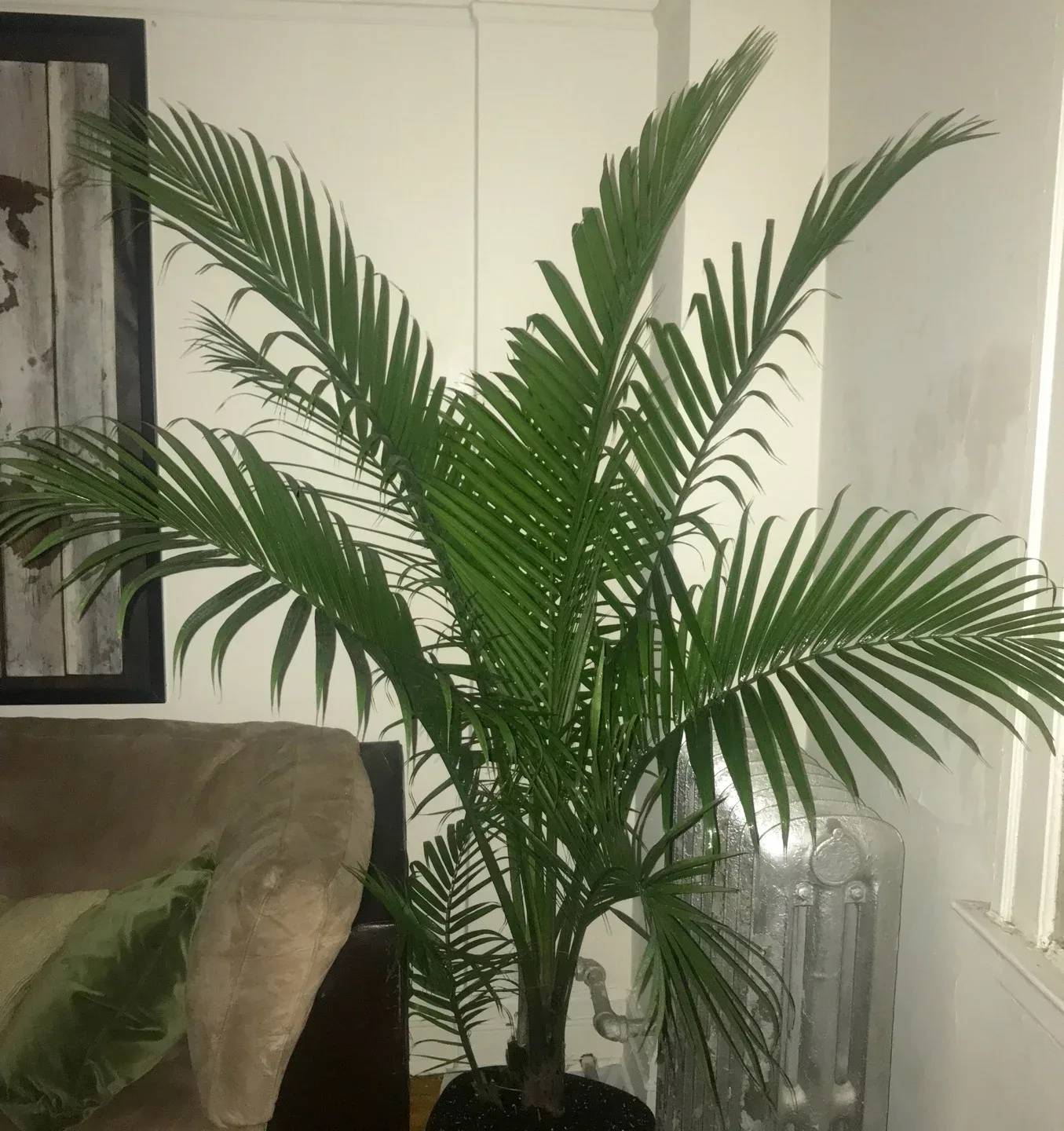
Photo by Glpinagelpinagel via Wikimedia Commons. CC BY-SA 4.0. Resized and converted to WebP under the same license.

Seasonal rhythm
Seasonal Calendar
| Month | Care Tasks | Seasonal Focus |
|---|---|---|
| Jan | protect | Check soil moisture in hot weather and shield pots from afternoon glare. |
| Feb | Empty collected runoff after storms. | |
| Mar | Inspect the undersides of fronds for insects. | |
| Apr | Move pots to brighter shelter as nights cool. | |
| May | protect | Keep the palm away from cold draughts. |
| Jun | Let soil moisture guide watering through winter. | |
| Jul | protect | Check humidity and light near heated rooms. |
| Aug | Inspect slow-growing pots for drainage problems. | |
| Sep | repot | Repot crowded roots once active spring growth begins. |
| Oct | Increase light gradually if moving the pot outdoors. | |
| Nov | Check the mix more often as the weather warms. | |
| Dec | Protect fronds from hot winds and empty the cover pot. |
Diagnostics
Common Problems & Troubleshooting
Brown tips can follow dry air or variable watering. Yellowing in persistently wet soil can indicate root stress. Fine webbing or stippling suggests checking for spider mites.
Care encyclopedia · 1 guide
Guides & Articles for Majesty Palm
Similar Botanical Matches
Grower field notes
Reader Field Notes in Australia
Share how this plant performs in your local Australia climate.