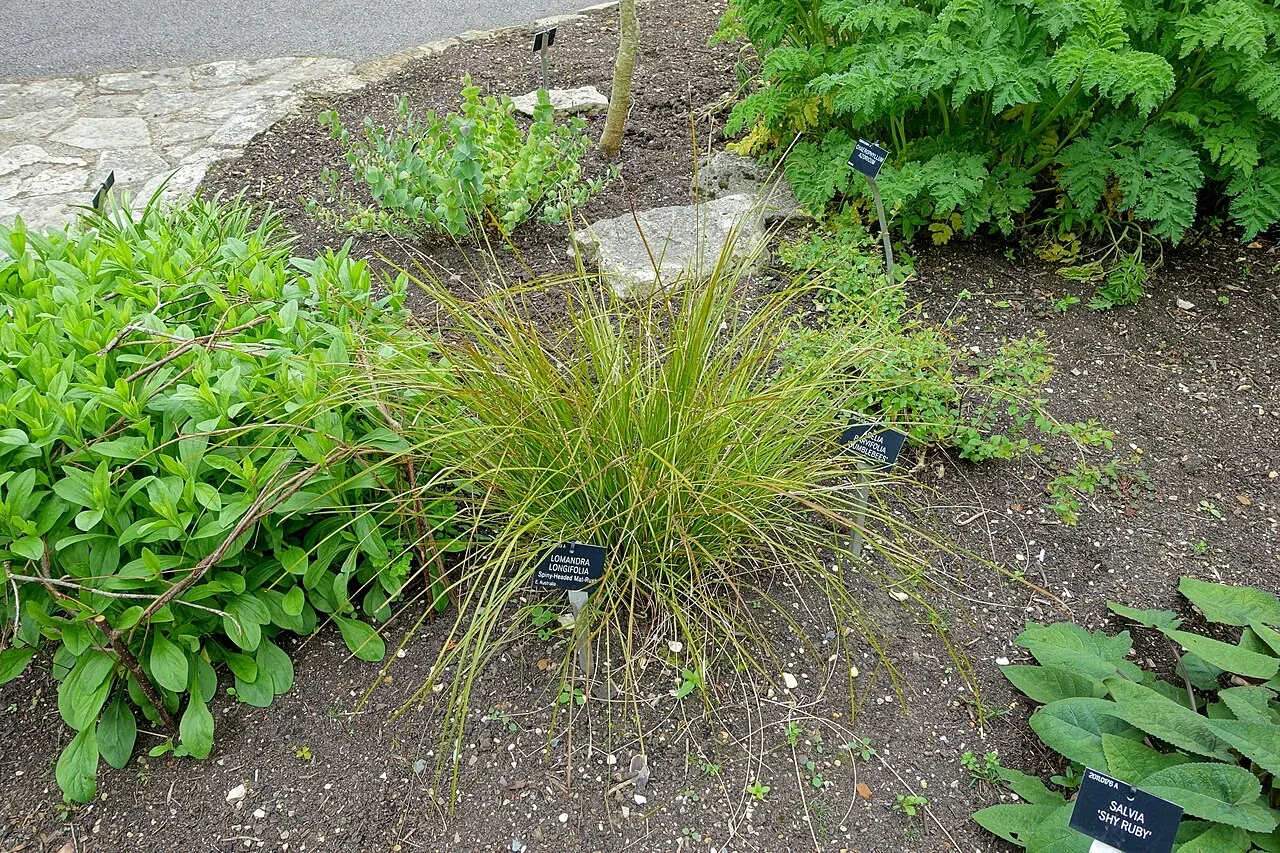
| ☀️ Light | Full sun |
|---|---|
| 💧 Water | Low (allow soil to dry) |
| 🪴 Soil | Adaptable garden soil with good drainage |
| 🐾 Safety | Cats: not verified · Dogs: not verified |
| 📏 Mature size | 1.0 m |
Where It Grows & Climate Tolerance
Pet & Companion Animal Toxicity (Lomandra longifolia – Australian Mat-rush Care)
This eastern Australian mat-rush forms tough, grassy clumps with narrow leaves and spring flowers. It suits sun or part shade in many local gardens.
Care instructions
Care Guide & Maintenance Routine
For NSW, Victoria and Queensland gardens, give new clumps water until established. Mature plants tolerate dry spells; check soil and rainfall before watering.
Light & Sunlight
Full sun to part shade suits the species; growth may be denser where light is adequate.
Watering Schedule
Water newly planted clumps regularly until established. Once rooted, check soil and recent rainfall before irrigating.
Potting Mix & Drainage
Adaptable garden soil with good drainage
Temperature & Humidity
Queensland summer heat and Victorian winter conditions differ. Newly planted clumps need closer monitoring in dry heat; reduce watering in cool wet periods.
Lomandra longifolia grows naturally across much of eastern Australia and is commonly used in native landscaping. It is a clumping perennial, usually about 40 cm to 1 m high, with narrow, strap-like leaves and small spring flowers. A sunny or partly shaded position suits it; it tolerates various soils, periods of drought once established and occasional flooding. These tolerances do not mean a new transplant can be left without water: irrigate while roots spread and adjust to local rainfall. In hot Queensland districts, monitor new plants through dry spells. In cooler Victorian gardens, avoid keeping container roots saturated through winter. Mature clumps can be divided with care, retaining roots and a growing point on each piece. Remove dead foliage and old flower stems as needed. Select locally suitable stock when planting near natural vegetation.
Seasonal rhythm
Seasonal Calendar
| Month | Care Tasks | Seasonal Focus |
|---|---|---|
| Jan | In January heat, check new clumps weekly and water deeply when the root zone is dry. | |
| Feb | Through February, keep mulch off the crown and watch recently divided plants during dry spells. | |
| Mar | As March cools, assess clump size and plan division or new planting in mild districts. | |
| Apr | April is often suitable for planting in temperate areas; water in and suppress nearby weeds. | |
| May | In May, remove spent stems and monitor drainage as cooler weather arrives. | |
| Jun | During June, avoid watering established clumps when winter rain has already moistened soil. | |
| Jul | In July, check winter-damaged leaves and keep the crown free of wet debris. | |
| Aug | Late winter is a good time to inspect new growth and prepare planting sites before spring. | |
| Sep | In September, watch for spring flowers; water young plants if rainfall is low. | |
| Oct | During October flowering, avoid unnecessary hard cutting; observe pollinator activity. | |
| Nov | In November, remove old flower stems after bloom and check containers for crowding. | |
| Dec | December heat can dry new plantings quickly; water according to soil moisture, not a fixed daily routine. |
Diagnostics
Common Problems & Troubleshooting
Poor establishment in dry soil and prolonged waterlogging can cause decline. Browning leaf tips may reflect heat, drought or root stress.
Pests & seasonal watch: Inspect the crown and leaves if growth stalls. Rule out dry roots or waterlogged soil before applying pest controls.
Similar Botanical Matches
Grower field notes
Reader Field Notes in Australia
Share how this plant performs in your local Australia climate.