
| ☀️ Light | Full sun |
|---|---|
| 💧 Water | Moderate (lightly moist) |
| 🪴 Soil | Well-drained loam rich in organic matter; avoid waterlogged ground |
| 🌡️ Temp | -12°C – 42°C |
| 🐾 Safety | Cats: toxic · Dogs: toxic |
| 📏 Mature size | 4.5 m |
Where It Grows & Climate Tolerance
Pet & Companion Animal Toxicity (Fig)
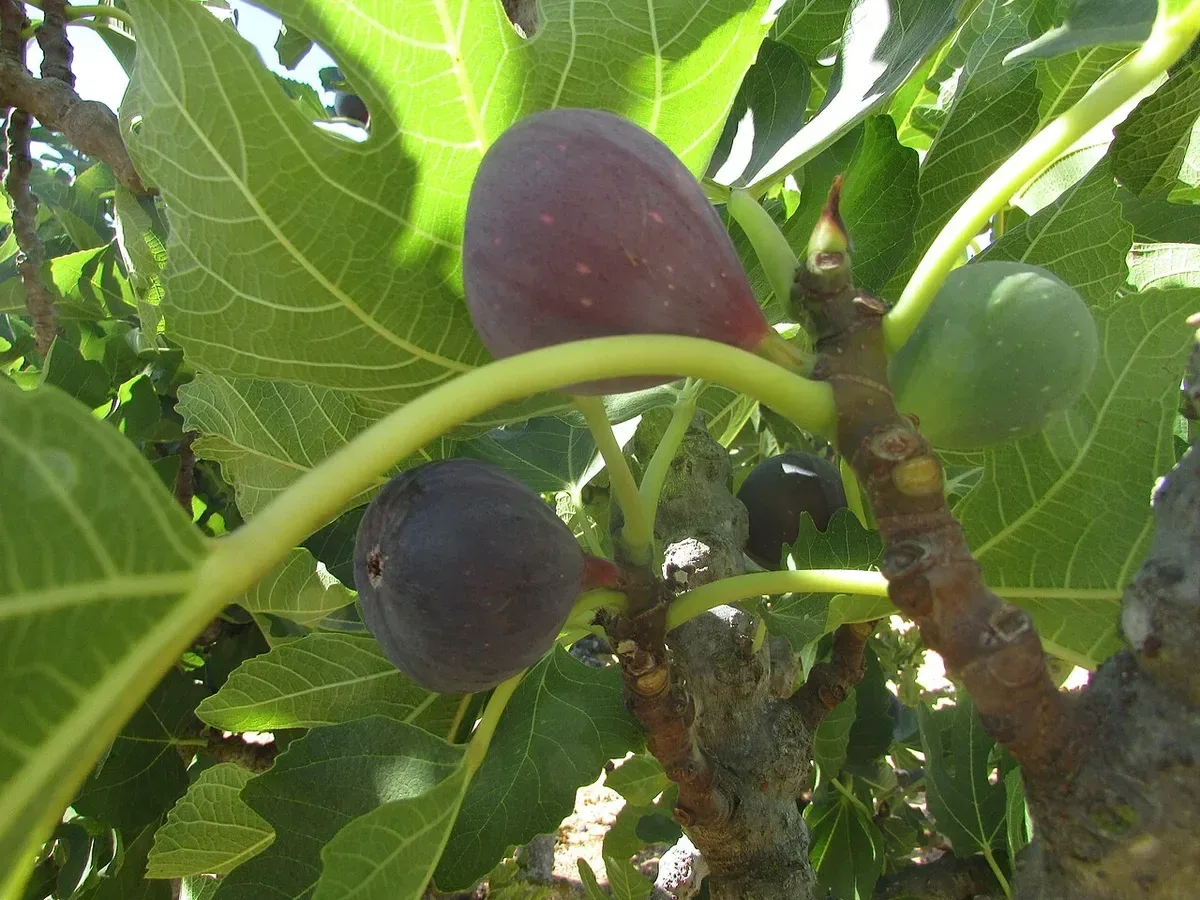
The common fig (Ficus carica) is a deciduous fruit tree or large shrub with big lobed leaves and sweet, soft fruit. It likes full sun, warm summers and good drainage, crops well in a large pot, and in most gardens needs no pollination. The milky sap irritates skin.
Care instructions
Care Guide & Maintenance Routine
Plant in full sun in well-drained soil, or in a large pot to limit root growth. Water regularly while fruit swells and mulch the roots. Prune in the dormant season to keep the tree low and open. Pick fruit when soft and drooping. Wear gloves when pruning, as the sap irritates skin.
Light & Sunlight
NC State lists full sun to partial shade, but fruit ripens best in full sun. The RHS advises a warm, sunny, sheltered spot, ideally against a south- or south-west-facing wall in cooler climates.
Watering Schedule
Keep soil evenly moist while fruit is developing; NC State advises mulching to hold moisture. Irregular watering, followed by heavy watering, can split ripening fruit. Pots dry out quickly in summer.
Potting Mix & Drainage
Well-drained loam rich in organic matter; avoid waterlogged ground
Temperature & Humidity
NC State lists USDA zones 7 to 10 and recommends a south wall or other protected spot in zone 7. Young shoots and the tiny fruitlets for next year's first crop are easily damaged by frost (RHS). Plants handle hot, dry summers well.
About the common fig
The common fig (Ficus carica) is a fast-growing deciduous tree or many-stemmed shrub in the mulberry family. NC State Extension gives its home range as the Mediterranean to Central Asia, and notes the name carica refers to Caria, an old region in south-west Turkey known for figs. Left alone it can reach 3 to 9 m, but in gardens and pots it is easily kept much smaller.
The large, rough, hand-shaped leaves give it a bold look even without fruit. The flowers are hidden inside the developing fig, which is why you never see a fig tree in bloom.
How figs fruit
Most garden figs are common figs, which set fruit without pollination. The RHS calls these fruits parthenocarpic. A tree can carry two crops in a year: an early crop from tiny fruitlets formed at shoot tips the previous season, and a main crop on the current year's shoots. In warm climates both can ripen. In cool climates, the RHS notes that usually only the first crop ripens outdoors.
Varieties
'Brown Turkey' is widely grown and holds an RHS Award of Garden Merit. NC State also lists cold-tolerant types such as 'Chicago Hardy' and 'Brunswick', and compact 'Little Ruby' for pots. Choose a variety known to crop in your climate.
Buying tips
Buy a named variety from a reliable nursery rather than an unnamed seedling. Look for a plant with a healthy root system, no scale insects on the stems and two or three well-placed branches. Figs are sold as potted plants in spring and summer, and young plants can fruit within a year or two.
Where to plant
Full sun is the key to sweet fruit. In cooler places, a warm wall facing the sun gives extra heat, and the RHS suggests training a fig as a fan against such a wall. Shelter from cold wind helps protect shoot tips. Allow room: the roots spread widely and suckers can form thickets.
Soil and roots
Figs need free-draining soil and dislike standing water. NC State recommends organically rich, moist, well-drained soil that is neutral to slightly acidic. The RHS adds an important point: restricting roots, either in a large container or with paving slabs set upright around the root ball, reduces leafy growth and encourages fruit.
Growing in containers
Figs are among the best fruit trees for pots. Start in a pot about 30 to 40 cm wide and move up over the years. Use a loam-based mix with grit. Containers make it easy to give the plant the sunniest spot in summer and move it under cover when cold arrives.
Watering through the year
Growing season
Water steadily while fruit is swelling, and mulch the roots. Big swings from dry to soaked can make ripening fruit split.
Long rainy spells
Ensure good drainage and stop extra watering. Ripe fruit can turn soft and sour in long wet weather.
Dormant season
Trees in the ground need little water once leaves drop. Water pots lightly so the roots never dry out completely.
Feeding
Go easy. An annual mulch of compost or well-rotted manure suits trees in the ground. Potted figs benefit from a potash-rich liquid feed while fruit is swelling, used as the label says. Too much nitrogen means leaves at the expense of fruit.
Pruning
Prune in the dormant season to keep the tree open and at a height you can reach, removing dead, crossing and crowded branches. The RHS also pinches new shoots back to five leaves in early summer to encourage fruit. NC State notes that fruit forms on new wood, so avoid removing every young shoot. Always wear gloves.
Propagation
Hardwood cuttings 20 to 30 cm long, taken while the tree is leafless, root readily in a pot of gritty mix. Layering a low branch or digging up a rooted sucker also works.
Harvesting
Pick figs when soft, fully coloured and hanging down on the stalk. They do not ripen further once picked and keep only a few days. Eat fresh, cook into jam or dry them. Birds enjoy figs too, so a net may be needed.
Troubleshooting
Small fruit falling off
Dry soil, irregular watering, too little sun, or a young tree adjusting. Water evenly and mulch.
Lots of leaves, few figs
Rich soil and unlimited roots. Stop nitrogen feeds and restrict roots.
Rusty spots under leaves
Fig rust, which NC State mentions, appears in humid weather. Clear fallen leaves and improve airflow.
Sticky stems and leaves
Scale insects or mealybugs. Scrape off scale and check the stems often.
Hard green figs at the end of the season
The second crop has no time to ripen. The RHS advises removing any larger than a pea at the end of summer.
Safety and pets
The milky sap irritates skin, and NC State notes the reaction can worsen in sunlight. Wear gloves and long sleeves when pruning or picking, and wash skin afterwards. NC State flags the plant as a problem for pets.
Common mistakes
- Planting in rich soil with unlimited root space.
- Pruning off every new shoot.
- Irregular watering while fruit swells.
- Picking figs before they are soft.
The houseplants fiddle-leaf fig and weeping fig are related species in the same genus but are grown for their leaves, not fruit.
India and Canada in brief
In India the fig is an orchard crop of dry, mild areas, where pruning decides the cropping season. In Canada it takes more effort: a sheltered sunny site where winters are gentle, or a pot that spends the frozen months indoors.
Seasonal rhythm
Seasonal Calendar
A month-by-month calendar for Fig in Global is coming soon. See the light, water and temperature notes above.
Diagnostics
Common Problems & Troubleshooting
Fruit dropping while small from dry soil or poor light; lots of leaves and little fruit from rich soil or unrestricted roots; split fruit after heavy rain; rust spots on leaves in humid weather; frost-killed shoot tips.
Pests & seasonal watch: NC State lists aphids, scale, root-knot nematodes, spider mites and mealybugs, with blight, leaf spots and rust occasionally. Birds, squirrels and wasps take ripe fruit.
Q&A
Frequently Asked Questions
Does a fig tree need a pollinator?
Common figs, which include most garden varieties, set fruit without pollination. NC State notes that in North America the fruit forms without any pollination, and the RHS calls the fruit parthenocarpic.
How do I know when a fig is ripe?
It softens, droops on its stalk, changes to its full colour and may split slightly at the base. Unripe figs do not ripen well once picked.
Why is my fig dropping small fruit?
Often dry soil, sudden heavy watering, poor light or a very young tree. In cool climates, the RHS says small second-crop figs left at the end of summer will not ripen.
Is fig sap harmful?
Yes, it can irritate skin, and NC State notes the reaction can worsen in sunlight. Wear gloves and long sleeves when pruning or picking.
Can I grow a fig in a pot?
Yes. The RHS says figs crop well in containers, and the pot restricts roots, which helps fruiting. Pots can also be moved under cover in winter.
When should I prune a fig?
Do the main pruning when the tree is dormant, then pinch new shoots in early summer. Light pruning keeps it compact and fruiting.
Is a fig tree safe for pets?
Treat it as unsafe. NC State flags common fig as a problem for pets and notes the sap is irritating.
Is the common fig related to the fiddle-leaf fig?
They are in the same genus, Ficus, but are different species. Fiddle-leaf and weeping figs are grown as houseplants and do not produce edible fruit indoors.
Why does my fig have lots of leaves but no fruit?
Usually rich soil, too much nitrogen or roots with unlimited space. The RHS recommends restricting roots to curb leafy growth.
Similar Botanical Matches
Keep exploring
Related plants
Grower field notes
Reader Field Notes in Global
Share how this plant performs in your local Global climate.