
| ☀️ Light | Full sun |
|---|---|
| 💧 Water | Low (allow soil to dry) |
| 🪴 Soil | Well-drained garden soil |
| 🐾 Safety | Cats: not verified · Dogs: not verified |
| 📏 Mature size | 12.0 m |
Where It Grows & Climate Tolerance
Pet & Companion Animal Toxicity (Old Man Banksia (Banksia serrata) – Australia)
Not yet verified: Toxicity status for cats, dogs, and horses has not yet been confirmed against veterinary poison-control records. Keep out of reach of pets or consult your veterinarian.
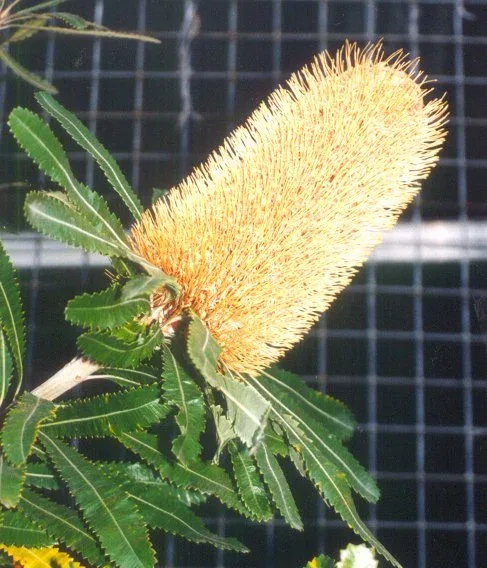
This eastern Australian banksia bears distinctive serrated leaves and large greenish-yellow flower spikes. Give it a sunny, free-draining site.
Care instructions
Care Guide & Maintenance Routine
In temperate NSW and Victoria, plant in full sun and ensure good drainage. Establish with water, then monitor dry periods. Use low-phosphorus fertiliser only if needed.
Light & Sunlight
Plant in a sunny open position for strong flowering.
Watering Schedule
Water young plants while roots establish. For mature plants, check soil moisture; avoid wet roots and adjust to local rainfall.
Potting Mix & Drainage
Well-drained garden soil
Temperature & Humidity
Summer runs December to February; winter June to August. This species tolerates frost, but young plants still need protection during unusual local extremes.
Old Man Banksia (Banksia serrata) is a distinctive eastern Australian native shrub or tree. The Australian National Botanic Gardens describes cultivated plants at roughly 2–12 m, with greenish-yellow flower heads opening over a broad summer-to-winter period. Flower timing changes by district and weather, so watch the plant rather than assuming a single month. In temperate New South Wales and Victoria, give it full sun and a well-drained planting site; it adapts to several soil types provided the roots do not remain wet. Water young plants until established, then adjust irrigation to rainfall and soil moisture. It is frost tolerant in suitable settings. Banksias are sensitive to excess phosphorus, so avoid general high-phosphorus feeds and use a labelled low-phosphorus native fertiliser only if a need is identified. Light pruning after flowering can maintain shape. Allow sufficient room for a mature specimen and select locally appropriate nursery stock near bushland.
Seasonal rhythm
Seasonal Calendar
| Month | Care Tasks | Seasonal Focus |
|---|---|---|
| Jan | Routine check | In January, monitor young banksias through heat and water deeply if the root zone dries. |
| Feb | Routine check | February can be hot; keep mulch clear of the trunk and check drainage after summer storms. |
| Mar | Routine check | As March cools, inspect flower spikes and plan autumn planting in suitable temperate gardens. |
| Apr | Routine check | Plant in mild April weather where appropriate; water in and avoid fertiliser at planting unless indicated. |
| May | Routine check | May is often a flowering month; leave nectar-rich spikes for visiting wildlife. |
| Jun | Routine check | In June, check winter drainage and avoid watering when rainfall has already wetted the root zone. |
| Jul | Routine check | July frosts may occur inland; monitor young plants and remove only damaged growth. |
| Aug | Routine check | In August, inspect developing buds and prepare a sunny site with free-draining soil. |
| Sep | Routine check | September brings spring growth; check for stress before applying any low-phosphorus feed. |
| Oct | Routine check | After flowering in October, lightly shape if needed without cutting heavily into old wood. |
| Nov | Routine check | In November, check mulch and soil moisture ahead of summer heat. |
| Dec | Routine check | December may bring flowers and hot spells; water newly planted banksias based on soil dryness. |
Diagnostics
Common Problems & Troubleshooting
Waterlogged roots can cause dieback. Excess fertiliser, especially phosphorus, may damage sensitive banksias.
Pests & seasonal watch: Watch for dieback after prolonged wet soil; improve drainage and seek diagnosis rather than assuming an insect problem.
Similar Botanical Matches
Keep exploring
Related plants
Grower field notes
Reader Field Notes in Australia
Share how this plant performs in your local Australia climate.