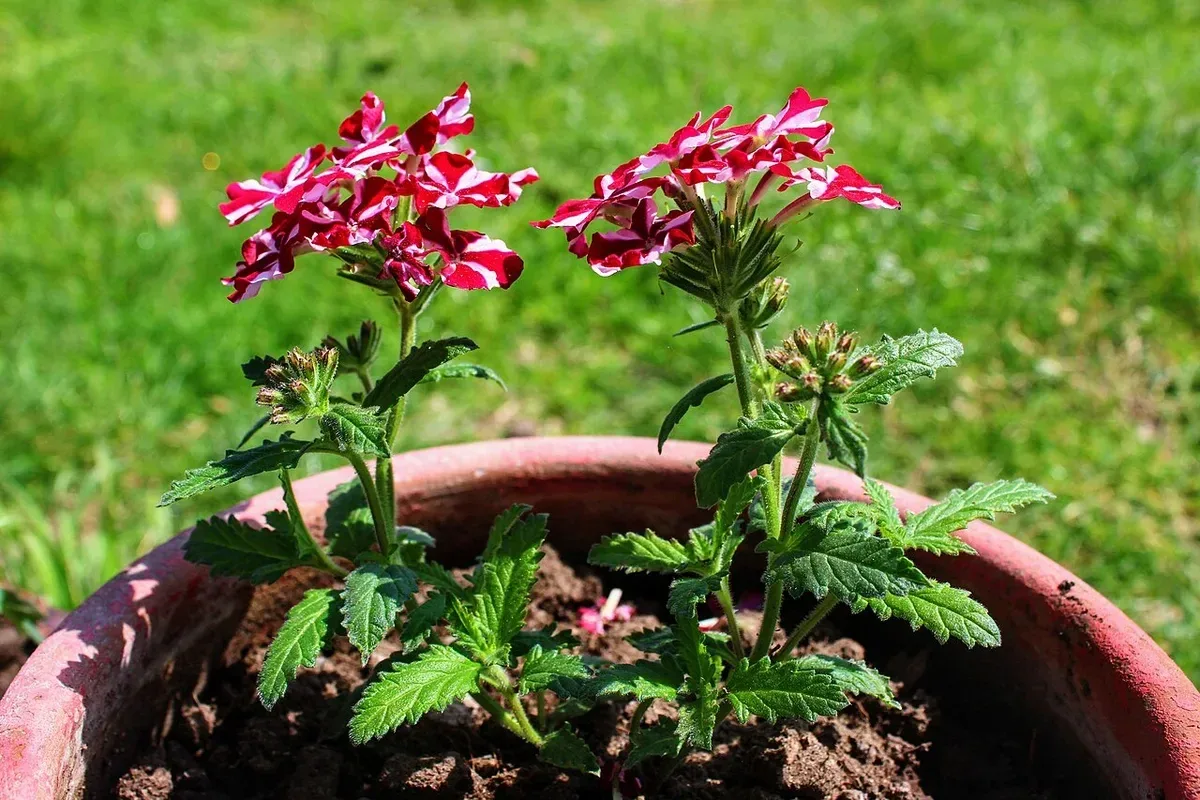
| ☀️ Light | Full sun |
|---|---|
| 💧 Water | Moderate (lightly moist) |
| 🪴 Soil | Well-drained garden soil or potting mix; not soggy |
| 🌡️ Temp | 0°C – 38°C |
| 🐾 Safety | Cats: not verified · Dogs: not verified |
| 📏 Mature size | 30 cm |
Where It Grows & Climate Tolerance
Pet & Companion Animal Toxicity (How to Grow Verbena in India)
Verbena is a winter and spring flower on most of the Indian plains. SKUAST-Jammu lists it among winter annuals sown in September and October and transplanted in October and November, spaced 45 by 45 cm. Hill gardens in Shimla, Mussoorie and Ooty get their verbena show from May to September instead.
Care instructions
Care Guide & Maintenance Routine
Sow in nursery trays in September or October, or buy seedlings in November. Plant in full sun in well-drained mitti, 45 cm apart. Water every 7 to 10 days in winter, as SKUAST-Jammu suggests for annuals, and more often from March. Deadhead weekly. Expect plants to fade in May heat.
Light & Sunlight
NC State, the RHS and Wisconsin Horticulture all call for full sun. In shade, plants flower poorly and are more prone to powdery mildew.
Watering Schedule
NC State notes garden verbenas are fairly drought tolerant once established but that overwatering causes root rot. The RHS says pots and baskets need regular watering, sometimes daily in hot weather, when the mix is dry 2.5 cm down; border plants need water only in long dry spells. Avoid wetting the flowers and leaves.
Potting Mix & Drainage
Well-drained garden soil or potting mix; not soggy
Temperature & Humidity
Tolerates the cool nights of a northern winter, and light January frost may only mark leaves. Plants fade when May temperatures pass about 38 to 40°C. Monsoon rain and humidity rot plants left in open beds.
Verbena in Indian gardens
Verbena is a staple of winter flower shows and municipal beds from Chandigarh to Bengaluru. Bicolour pinks and purples with white eyes are especially popular, and trailing types fill hanging baskets on Mumbai and Pune balconies.
SKUAST-Jammu guidance
SKUAST-Jammu's floriculture package lists verbena among winter annuals sown in September and October and transplanted in October and November, gives Verbena × hybrida a height of 20 to 40 cm, and spaces medium annuals such as verbena 45 by 45 cm. Its general advice: raise seedlings in beds of equal parts garden soil, sand and well-rotted manure or vermicompost, transplant in the evening or on cloudy days, and irrigate every 7 to 10 days in winter and every 4 to 5 days in summer. Hill gardens follow a summer calendar for these flowers instead.
Region by region
- Delhi, Punjab, Haryana, UP, Rajasthan: sow in October; flowers from January to April. Frost in January can mark leaves.
- Bengaluru, Pune, Hyderabad: mild weather gives the longest season, from December into May.
- Gujarat and central India: plant in November; flowering fades as April heat builds.
- Mumbai, Chennai, Kolkata: grow in pots and baskets from November to March; humid heat brings mildew.
- Shimla, Nainital, Darjeeling, Ooty: sow in March and plant after frost for summer flowers.
Gamlas and baskets
For a 10 to 12 inch gamla or a hanging basket, use mitti, sand and vermicompost in equal parts. Baskets dry out fast on windy balconies; check them every morning.
Mildew in winter mornings
Foggy December and January mornings in the north encourage powdery mildew. Water at the base, not over the leaves, and do not crowd the bed.
Heat and the monsoon
Most plants decline from late April. Take cuttings in February, keep them in shade through the summer and under cover in the rains, or simply sow fresh after IMD's normal monsoon withdrawal from Delhi around 25 September.
A typical north Indian season
In Delhi or Lucknow, seed sown in the last week of September sprouts within about a week in the warm days, and seedlings go into beds around Diwali. By Christmas the first clusters open. Through Lohri and Basant the bed is at its best, and a weekly snip of spent heads keeps it going until Holi. In March the sun gets stronger, gamlas need water every four or five days, and a liquid feed helps. By the end of April, loo winds scorch the plants and most gardeners pull them out.
Terrace and balcony tips
- On a hot chhat, group pots together so they shade each other's roots.
- Raise gamlas on bricks so water drains freely in the rains.
- Pair purple verbena with yellow genda in winter beds for strong contrast.
- In Kerala, Konkan and Bengal, grow in baskets under a roof edge so rain does not soak the plants.
Questions from Indian growers
- Is verbena the same as lantana? No. Both are in the same family, but lantana is a woody shrub.
Seasonal rhythm
Seasonal Calendar
| Month | Care Tasks | Seasonal Focus |
|---|---|---|
| Jan | prune, harvest | Lohri cold: blooms in the north; snip spent clusters, water at the base. |
| Feb | harvest | Basant panchami: flower-show peak. Take cuttings for next year. |
| Mar | feed, harvest | Holi season: watering every 4 to 5 days. Feed gamlas and baskets. |
| Apr | harvest, protect | Afternoon glare: shade baskets. Hills: plant out after frost. |
| May | protect | Loo and 40°C days: plants fade on the plains; keep cuttings in shade. |
| Jun | protect | Hill stations: full bloom. Plains: move cuttings under the chajja. |
| Jul | protect | Barsaat: cuttings dry and sheltered. |
| Aug | protect | Hills: deadhead. Plains: get nursery beds ready. |
| Sep | sow | Sow in trays of mitti, sand and khad as the rains end. |
| Oct | sow, plant | Dussehra to Diwali: transplant at dusk, 45 cm apart. |
| Nov | plant | Plant hanging baskets; pinch tips once. |
| Dec | harvest, protect | First flowers. Foggy mornings: watch for mildew. |
Diagnostics
Common Problems & Troubleshooting
Powdery mildew in shade, crowding or humid weather; root rot in soggy soil; fewer flowers if not deadheaded; straggly growth by late summer; frost kill in autumn.
Pests & seasonal watch: Powdery mildew in foggy December and January mornings. Aphids and thrips on buds in February and March. Red spider mites on hot terraces in April. Root rot in waterlogged gamlas. Ask the local KVK or a nursery before spraying.
- Root rot — Roots turn brown and mushy in soil that stays wet.
- Leggy — Long weak stems with big gaps between small leaves, leaning to the window.
- Spider mites — Fine webbing and pale speckled leaves, worse in dry heated rooms.
- Thrips — Silvery streaks and twisted new leaves, sometimes with black specks of frass.
- Aphids — Clusters of small soft insects on new tips, often sticky.
- White powder — A white powdery film on leaves, usually in still, humid air with dry soil at the roots.
- Overwatering — Soil stays wet, leaves yellow or droop, and the pot feels heavy.
- No flowers — A flowering houseplant stays leafy and will not bloom.
Q&A
Frequently Asked Questions
How do I keep verbena flowering?
Full sun and deadheading. NC State notes garden verbenas bloom all season if faded flowers are removed. Feed container plants with a potassium-rich liquid fertiliser, as the RHS advises.
Why does my verbena have white powder on the leaves?
Often powdery mildew, which the RHS lists as an occasional problem. It is worse in shade, crowding and humid weather. Thin the planting and avoid wetting the leaves.
How often should I water verbena?
Pots and baskets when the mix is dry 2.5 cm down, which may be daily in hot weather, according to the RHS. Border plants need water only in long dry spells. NC State warns overwatering causes root rot.
Is verbena an annual or perennial?
Bedding verbenas are treated as annuals. The RHS notes most are killed by the first frosts. Some species, such as V. bonariensis, are short-lived perennials in mild climates.
Can I grow verbena from cuttings?
Yes. The RHS notes cuttings taken in late summer can be overwintered frost-free and grown on the following year.
What is Verbena bonariensis?
A tall, airy species, 90 to 180 cm, with small purple clusters on wiry stems. Wisconsin Horticulture notes it is hardy in zones 7a to 11b and self-seeds.
Does verbena attract butterflies?
Yes. The RHS and Wisconsin Horticulture both note verbenas are popular with butterflies, bees and other pollinators.
When should I sow verbena in India?
SKUAST-Jammu groups verbena with winter annuals sown in September or October and transplanted in October or November, spaced 45 by 45 cm.
Is verbena safe for pets?
Not verified. There is no ASPCA entry for verbena, and NC State lists no poison information for garden verbena.
Similar Botanical Matches
Grower field notes
Reader Field Notes in India
Share how this plant performs in your local India climate.