
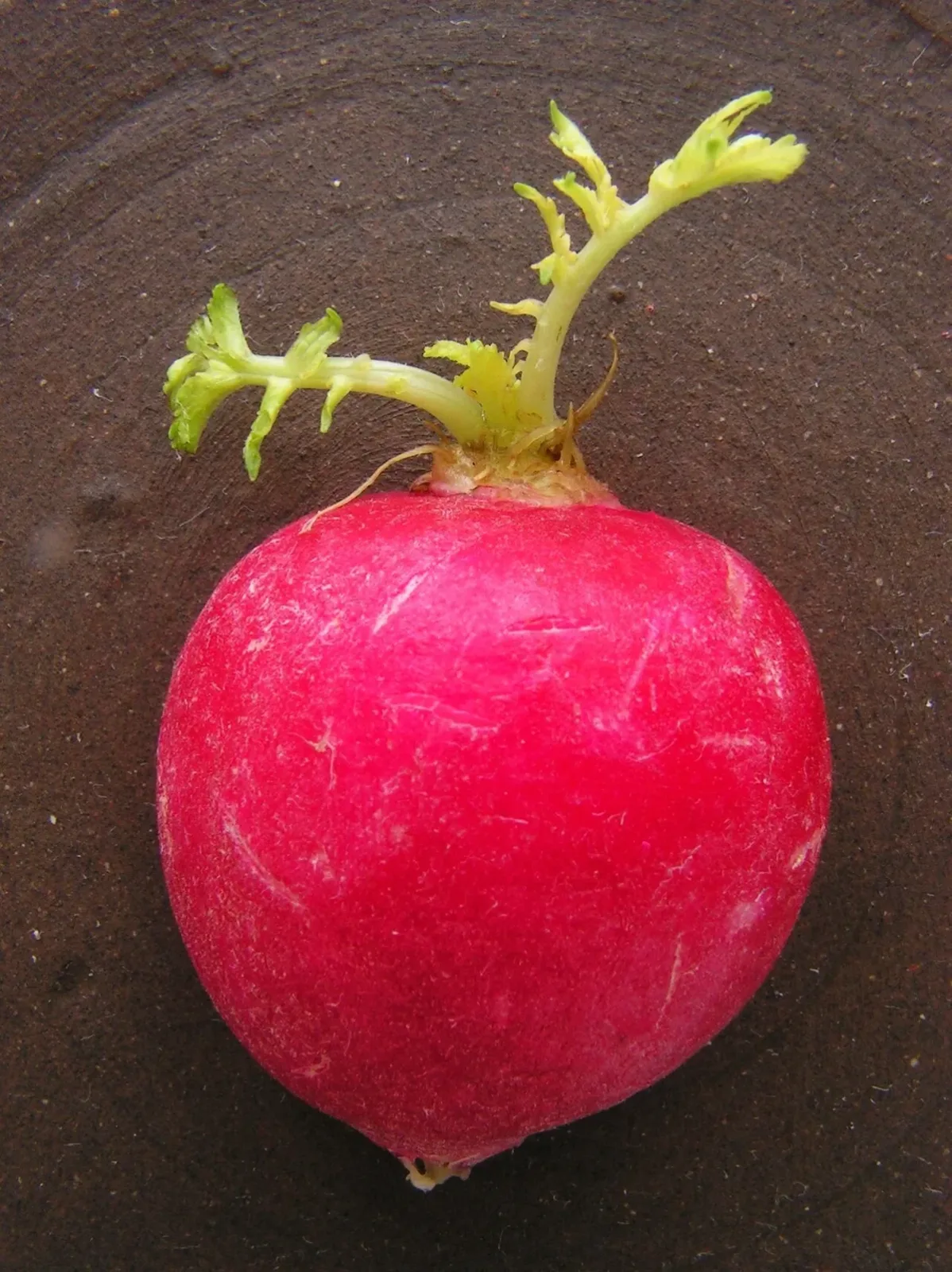
| ☀️ Light | Full sun |
|---|---|
| 💧 Water | Moderate (lightly moist) |
| 🪴 Soil | Light, friable, stone-free sandy loam rich in humus; pH about 6 to 7 |
| 🌡️ Temp | 5°C – 25°C |
| 🐾 Safety | Cats: not verified · Dogs: not verified |
| 📏 Mature size | 30 cm |
Where It Grows & Climate Tolerance
Pet & Companion Animal Toxicity (How to Grow Mooli (Radish) in India)
Not yet verified: Toxicity status for cats, dogs, and horses has not yet been confirmed against veterinary poison-control records. Keep out of reach of pets or consult your veterinarian.
Mooli is the easiest rabi vegetable for an Indian chhat or balcony: sown after the rains in Punjab, UP and Bihar, in June and July in Himachal and the Nilgiris (TNAU), and pulled for parathas, kachumber and saag within weeks.
Care instructions
Care Guide & Maintenance Routine
Plains: sow from September as the rains retreat, a fresh row every two or three weeks until January. Hills: June to July (TNAU). Deep, loose, stone-free soil or a tall grow bag, steady moisture, thinning early. Pull roots young before March heat makes them pithy and sharp.
Light & Sunlight
The RHS recommends full sun. NC State lists full sun to partial shade. In warm weather, light afternoon shade helps keep plants from bolting.
Watering Schedule
NC State says consistent moisture is needed for good flavour. Uneven watering, with dry spells followed by heavy watering, causes split or woody roots. Water lightly and often on light soils.
Potting Mix & Drainage
Light, friable, stone-free sandy loam rich in humus; pH about 6 to 7
Temperature & Humidity
NHB says radish gives the best flavour, texture and size at 10 to 15°C, and that long days and heat cause bolting and pithy, pungent roots. A Ludhiana or Lucknow winter suits it; light frost on January nights rarely harms it. Rising heat in March ends the plains season.
Mooli in Indian homes and kitchen gardens
Mooli is the vegetable that makes winter feel like winter in North Indian kitchens: grated into parathas in Amritsar, sliced with lemon and chaat masala in Lucknow, and cooked with its leaves as saag in Bihar. Across the country it goes by many names: mullangi in Tamil and Telugu, mula in Bengali and Marathi, moolangi in Kannada and mullangi in Malayalam. Long white Asian mooli dominates Indian markets, but small red salad radishes grow just as easily in pots.
Buying seed in India
Packets in agri-input shops on the edge of every mandi town, and on online seed stores, print a germination percentage and a test or packing date. Pick the freshest batch, since stale mooli seed comes up in gaps. Pusa and Japanese White types fill the shelves in the North; ask the shopkeeper for a short, quick type if you are sowing in a balcony tray rather than a terrace bed.
Sowing by region
- Punjab, Haryana, Delhi, UP: start sowing in September once the monsoon withdraws (IMD's normal date for Delhi is about 25 September) and sow a short row every two or three weeks until January.
- Bihar, West Bengal and Odisha: NHB lists West Bengal and Bihar among the main radish-growing states. Sow after the rains, from September to December.
- Karnataka, Tamil Nadu, Telangana: TNAU gives September sowing in the plains. Bengaluru's mild weather allows a longer sowing window.
- Kerala, Konkan, coastal Andhra: sow in the cooler, drier months after the monsoon, on raised beds.
- Himachal, Uttarakhand, Kashmir, Nilgiris: TNAU recommends June to July sowing in the hills.
Loo, monsoon and fog
From April, the loo over Rajasthan, Haryana and Delhi turns any leftover mooli woody and fiery. In June and July, cloudbursts flatten seedlings and rot roots in Mumbai, Kolkata and Guwahati. Spend those months sieving out kankar and brick bits, mixing gobar khad or vermicompost with river sand, and stacking empty grow bags. In December and January, dense fog across the Indo-Gangetic belt slows growth but does little harm; Shimla, Manali and Srinagar gardeners pause until spring.
Terrace, chhat or balcony
Long mooli needs depth, so use a tall grow bag, a cut-down paint bucket with drainage holes or a raised bed on the chhat. Red salad radish fits a shallow tray on a flat balcony that gets four or five hours of winter sun; a grill-side railing planter works too. For pot sizes and depth, see our radish in pots guide, and for other rabi crops, winter vegetables in pots and carrots in pots.
From bed to kitchen
Pull one test root early in December before shoulders get thick and spongy. Mooli ke patte, the tender greens, go into saag, bhurji or stuffed parathas, so harvest the whole plant rather than just the root. A plant that bolts in February can be left to flower for bees, and NC State notes some varieties grow edible pods.
Recognising problems
- Aphids: grey-green clusters under leaves in January, often with ants running over them.
- Painted bug: small black bugs with orange markings on seedlings in Punjab and Haryana; leaves wilt and yellow.
- Flea beetles: tiny shot holes in seedling leaves; the beetles jump when disturbed.
- Alternaria blight: brown spots with rings on leaves in damp weather.
- Pithy or forked roots: heat, irregular watering or stones in the soil.
Readers' questions
- Why is my mooli very sharp? Heat or delayed harvest.
- Can it be grown in Chennai or Kochi? Yes, in December and January, on raised beds, with quick types.
- Dog or cat? ASPCA has no entry, so we list it as not verified.
Seasonal rhythm
Seasonal Calendar
| Month | Care Tasks | Seasonal Focus |
|---|---|---|
| Jan | Sow, Harvest | Amritsar, Meerut, Kanpur: pull mooli for parathas and drop another short row. Bengaluru, Hyderabad: harvesting. Shimla, Srinagar: frozen beds. |
| Feb | Sow, Harvest | Indo-Gangetic belt: last main sowing, quick types only. Chennai: harvest before the heat. Kullu, Mussoorie: polytunnel sowing only. |
| Mar | Harvest | Plains: clear beds before Holi warmth makes roots spongy. Himachal and Uttarakhand: sowing opens as frost lifts. |
| Apr | Sow | Rajasthan, Gujarat, Vidarbha: too hot; red radish in shade at most. Darjeeling, Ooty: sow salad radish. |
| May | Sow, Harvest | Hill terraces: sow and pull. Plains: loo season; sieve out kankar, mix vermicompost. |
| Jun | Sow | Hill stations: main sowing (TNAU: June to July). Kerala and Mumbai: rains arrive, no plains sowing. |
| Jul | Sow | Hills: keep sowing. Delhi, Patna, Kolkata: cloudbursts rot seed; wait. |
| Aug | Harvest | Nilgiris and Kumaon: harvest. Plains: refill tall grow bags, loosen chhat beds. |
| Sep | Sow | Northern plains: main sowing as the monsoon withdraws (TNAU: September). Fresh row every two or three weeks. |
| Oct | Sow, Harvest | After Dussehra: sow again; first red radishes pulled. Earth up mooli shoulders that poke out. |
| Nov | Sow, Harvest | Diwali-to-December stretch: pull mooli sown in September (40 to 60 days, NHB). Keep sowing. |
| Dec | Harvest | Fog weeks in Punjab, UP and Bihar: growth slows, roots stay crisp. Tamil Nadu: harvest and sow. Hills: stored roots. |
Diagnostics
Common Problems & Troubleshooting
Roots not swelling (crowding, shade or too much nitrogen); split roots from uneven watering; pithy, woody, very hot roots from heat, age or bolting; forked roots in stony or compact soil; shot-hole leaves from flea beetles.
Pests & seasonal watch: Aphids and caterpillars on leaves through the winter. Flea beetles leave shot holes. NHB lists Alternaria blight, white rust and bacterial root rot, which spread in wet spells, so avoid waterlogged beds.
- Yellow leaves — Leaves fade from green to yellow, often starting at the bottom.
- Drooping — Stems and leaves hang limp even though the plant was recently fine.
- Aphids — Clusters of small soft insects on new tips, often sticky.
- White powder — A white powdery film on leaves, usually in still, humid air with dry soil at the roots.
- Leaf spot — Brown or tan spots with a yellow halo, sometimes with tiny dots in the centre.
- Underwatering — Soil is bone dry and leaves are crispy, curled or dull.
- Nutrient shortage — Overall pale growth, or yellowing between veins, on a plant that is otherwise watered well.
- Tired mix — Water races down the inside of the pot and the root ball stays dry, or the mix is a hard brick.
Q&A
Frequently Asked Questions
How long does radish take to grow?
NC State says salad radishes can be ready in 3 to 6 weeks. NHB gives 25 to 30 days for temperate types and 40 to 60 days for Asian (mooli) types.
Why are my radishes all leaves and no root?
Usually crowding, too little sun, warm weather or too much nitrogen. Thin seedlings early to about 5 cm apart and grow in full sun in cool weather.
Why are my radishes hot and woody?
Heat, age and bolting. NHB says high temperatures and long days make roots hard, pithy and pungent. Pull them on time and sow in cooler weather.
Why do my radishes crack?
Uneven watering. A dry spell followed by heavy watering or rain makes roots split. Keep the soil evenly moist.
Can I grow mooli in a pot?
Yes, in a deep grow bag or container. Our guide on growing radish in pots covers depth and mix in detail.
What are the small holes in radish leaves?
Neat shot-holes usually mean flea beetles. A fine row cover put on right after sowing keeps them off.
Can I eat radish leaves and flowers?
Yes. NC State notes the leaves and flowers are edible, and some varieties grow edible seed pods.
When should I sow radish in India?
TNAU recommends September in the plains and June to July in the hills. In the northern plains, sowing continues through the cool months.
How do I store radishes?
Remove the leaves and refrigerate. NC State says small roots keep 1 to 2 weeks; large ones like daikon can last up to two months.
Similar Botanical Matches
Keep exploring
Related plants
Grower field notes
Reader Field Notes in India
Share how this plant performs in your local India climate.