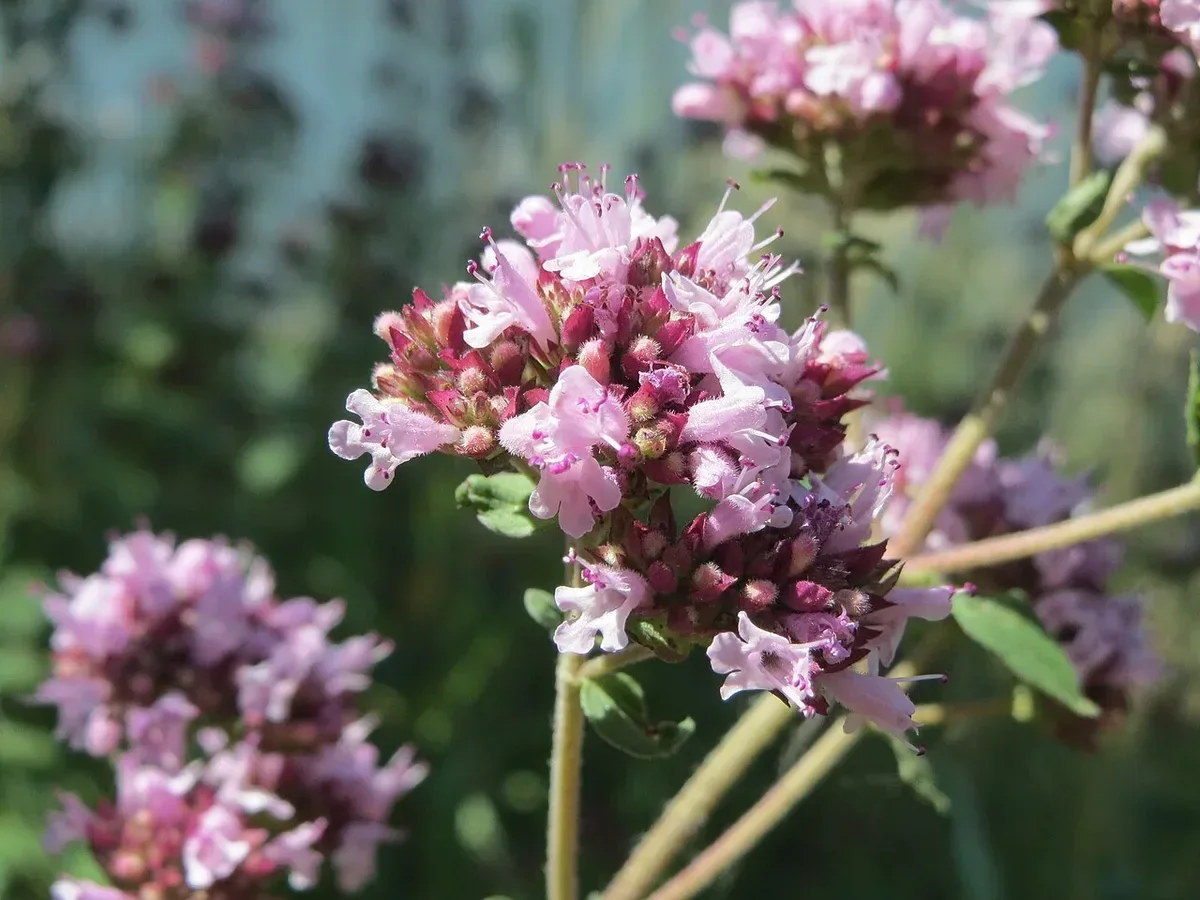
| ☀️ Light | Full sun |
|---|---|
| 💧 Water | Low (allow soil to dry) |
| 🪴 Soil | Poor to average, gritty, well-drained soil or loam-based potting mix with added grit |
| 🌡️ Temp | -29°C – 38°C |
| 🐾 Safety | Cats: toxic · Dogs: toxic |
| 📏 Mature size | 60 cm |
Where It Grows & Climate Tolerance
Pet & Companion Animal Toxicity (How to Grow Oregano in India)
Oregano grows wild in the temperate Himalaya, so the hills suit it best. In the plains it is a winter-to-spring pot herb that needs a dry, sunny spot and real shelter from monsoon rain.
Care instructions
Care Guide & Maintenance Routine
Plains: plant or sow in October and November, harvest from December to April, then keep the pot dry and lightly shaded through May and June. Before the rains arrive, move it under a sunshade or chhajja. Hills: plant in March and April and pick through summer.
Light & Sunlight
NC State Extension and the RHS both call for full sun. Golden-leaved forms such as 'Aureum' scorch in strong sun, and NC State suggests some shade for them in the hottest part of the day. Indoors it needs the brightest window you have or a grow light.
Watering Schedule
NC State lists dry to medium moisture with good drainage and says oregano tolerates drought. Let the top of the soil dry out between waterings. Pots need water more often than beds, but never leave them standing in a saucer.
Potting Mix & Drainage
Poor to average, gritty, well-drained soil or loam-based potting mix with added grit
Temperature & Humidity
Hardy to frost and snow in the hills; the top dies back in winter in Shimla, Srinagar and Gangtok and regrows in spring. In the plains, cold nights in December and January cause no harm. The risk is the combination of 40°C-plus heat in May and wet, humid monsoon weather.
Oregano in Indian gardens
The Spices Board of India notes that oregano grows wild in the temperate Himalaya from Kashmir to Sikkim and records the Hindi names sathra and mirzanjosh. Few home gardeners use those words today; most people meet it as the dried herb on pizza. On a sunny Indian terrace it behaves well for about eight months of the year, and the trick is getting it through the rainy season.
Not the same as ajwain patta
Many nurseries in Mumbai, Chennai and Kolkata sell a thick, fuzzy-leaved plant as "oregano" or "Cuban oregano". That is Indian borage, Coleus amboinicus, called ajwain patta or karpuravalli. It loves humidity. True oregano has small, flat leaves on thin, wiry stems.
Season by region
- Delhi NCR, Punjab, Haryana, Uttar Pradesh, Rajasthan: plant in October once the monsoon has withdrawn (IMD's normal date for Delhi is about 25 September; Jaipur 23 September). Pick from December to April. During the May loo, shift the pot to morning sun only.
- Maharashtra, Telangana, Karnataka: Pune and Bengaluru winters are mild and dry, so plants can stay productive from November to May. In Hyderabad, April heat is hard on it, so move the pot to light shade.
- Kerala, Goa, coastal Karnataka and Konkan: heavy rain from early June (IMD normal onset: Kochi 1 June, Goa 5 June, Mumbai 11 June) and high humidity rot the roots. Grow it under a roof overhang or treat it as a November-to-April pot.
- Himachal, Uttarakhand, Kashmir, Darjeeling, Sikkim: plant in March or April after the hard frosts; it grows through summer and dies back in winter.
- Ooty, Kodaikanal, Munnar: cool most of the year, but the southwest monsoon is very wet, so a raised bed or a pot under cover works better than open ground.
Mix and pot for Indian conditions
Garden soil from most Indian cities is either sticky clay or very sandy. For oregano, combine garden soil, coarse sand and a little vermicompost in equal parts, and add brick pieces or gravel at the bottom of a terracotta gamla. Avoid deep plastic grow bags in the rains; they hold water.
Getting through June to September
Stop feeding by May. Cut the plant back by a third before the rains to open it up. Move it where rain cannot fall on it but light still reaches it, and water only when the pot feels light. A plant that survives to October will spring back once the air dries.
Using your harvest
Cut stems in the dry, sunny days of February and March, when flavour is strong. Tie small bunches and hang them indoors under a fan, away from direct sun, then crumble the leaves into a glass jar.
Common questions
- Can I grow it from a seed packet bought online? Yes. Sow in a seedling tray in October in the plains, pressing the tiny seed onto the surface. Expect plants to vary in flavour.
- Our cat sits in the herb corner; is that a problem? ASPCA lists oregano as toxic to cats and dogs, so keep it on a stand or railing planter.
Seasonal rhythm
Seasonal Calendar
| Month | Care Tasks | Seasonal Focus |
|---|---|---|
| Jan | harvest | Northern plains: steady picking from winter pots. Bengaluru and Pune: plants growing well in dry, mild weather. |
| Feb | feed, harvest | Light feed for pots in Delhi, Lucknow and Jaipur. Best month for cutting bunches to dry. |
| Mar | plant, harvest | Hills of Himachal and Uttarakhand: plant out after hard frost. Plains: big harvest before flowering. |
| Apr | plant, prune | Kashmir and Darjeeling: plant and divide. Plains: trim flower stems and give morning-sun spot. |
| May | protect | Loo winds across Rajasthan, Punjab and UP: shift pots to light shade and water at dawn. |
| Jun | prune, protect | Cut back by a third and move under cover as IMD onset dates approach (Kerala early June, Mumbai mid-June). |
| Jul | protect | Peak rains: keep pots off the floor and water only when the gamla feels light. Hills: harvest. |
| Aug | harvest, protect | Watch for root rot in Kolkata, Mumbai and Goa. Hill gardens: cut stems to dry before flowering. |
| Sep | protect | Rains withdraw from Delhi and Jaipur late in the month. Hills: plants begin to slow down. |
| Oct | sow, plant | Main planting month in the northern plains and Deccan. Sow seed in trays; repot divisions in fresh gritty mix. |
| Nov | plant | Late planting in Chennai, Hyderabad and coastal Andhra once humidity drops. Hills: plants go dormant. |
| Dec | harvest | First pickings from October plants in Punjab and Delhi. Kodaikanal and Ooty pots stay green. |
Diagnostics
Common Problems & Troubleshooting
Root rot and collapse in waterlogged soil; leggy, pale growth in shade; bland flavour from rich soil or heavy feeding; spider mite speckling on indoor plants; woody, bare centre on old clumps.
Pests & seasonal watch: Spider mites on terrace pots in hot, dry April and May. Aphids on new shoots in February. Root rot from July to September in Mumbai, Kochi, Kolkata and other high-rainfall cities if pots stay wet.
- Yellow leaves — Leaves fade from green to yellow, often starting at the bottom.
- Drooping — Stems and leaves hang limp even though the plant was recently fine.
- Root rot — Roots turn brown and mushy in soil that stays wet.
- Leggy — Long weak stems with big gaps between small leaves, leaning to the window.
- Spider mites — Fine webbing and pale speckled leaves, worse in dry heated rooms.
- Aphids — Clusters of small soft insects on new tips, often sticky.
- Overwatering — Soil stays wet, leaves yellow or droop, and the pot feels heavy.
Q&A
Frequently Asked Questions
Which oregano is best for cooking?
NC State calls Greek oregano (Origanum vulgare subsp. hirtum) the standard culinary oregano. Ornamental types such as 'Aureum' are milder. Taste a leaf before you buy.
When should I harvest oregano?
Pick sprigs any time from late spring to autumn. Flavour is strongest just before the plant flowers, which is the best time to cut a larger bunch for drying.
How do I dry oregano?
Cut stems in the morning once dew has dried, tie small bunches and hang them in a dry, airy, shaded place. Strip the leaves when crisp and store them in an airtight jar.
Why is my oregano dying in the pot?
The most common cause is wet roots. Oregano needs fast drainage, so use a gritty mix, a pot with holes and water only when the top of the soil is dry.
Can I grow oregano indoors?
Yes, on a very bright, sunny windowsill or under a grow light. Indoor plants grow more slowly and need less water in winter.
Is oregano safe for pets?
ASPCA lists oregano (Origanum vulgare hirtum) as toxic to dogs, cats and horses. Signs are usually mild vomiting and diarrhea. Keep pots where pets cannot chew them.
Is oregano the same as marjoram?
No. Sweet marjoram is Origanum majorana, a related but more tender plant with a sweeter, milder taste.
Does oregano come back every year?
Yes, it is a perennial. In cold winters the top dies back and new shoots grow from the base in spring, provided the soil was not waterlogged.
Why does my oregano have no flavour?
Common seed-grown oregano can be mild. Shade, rich soil and heavy feeding also dull the taste. Grow Greek oregano in full sun and lean soil, and harvest just before flowering, when NC State says flavour is best.
Similar Botanical Matches
Grower field notes
Reader Field Notes in India
Share how this plant performs in your local India climate.