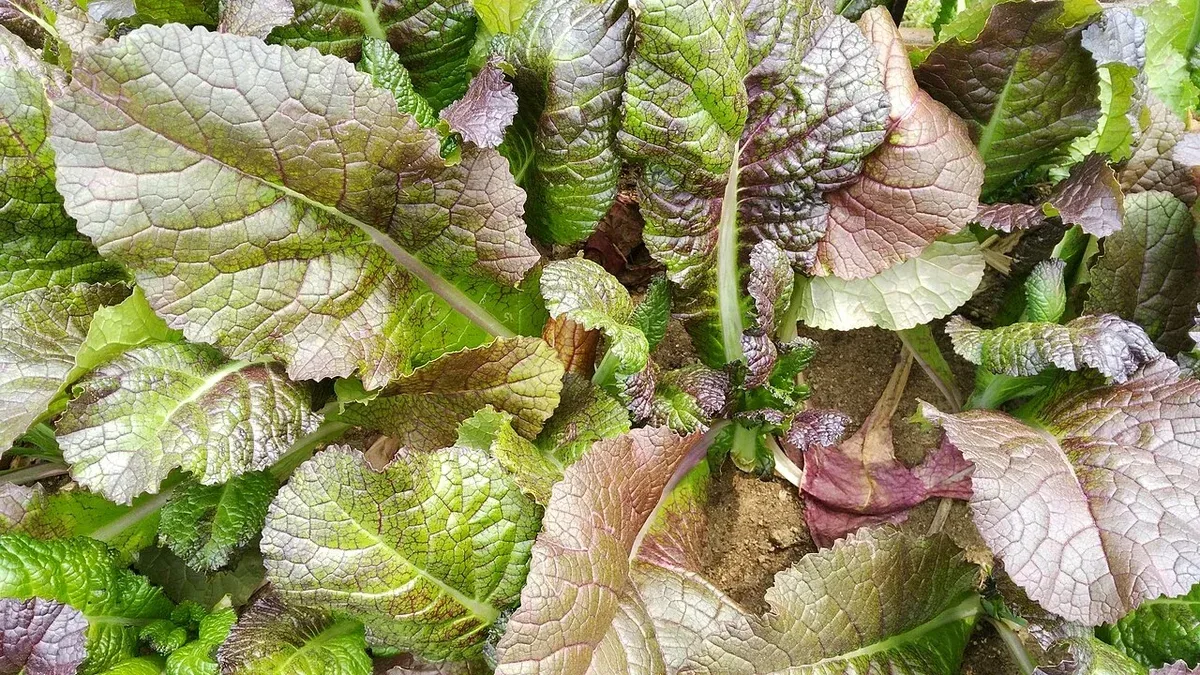
| ☀️ Light | Full sun |
|---|---|
| 💧 Water | Moderate (lightly moist) |
| 🪴 Soil | Rich, moist, well-drained loam with plenty of organic matter |
| 🌡️ Temp | -5°C – 27°C |
| 🐾 Safety | Cats: not verified · Dogs: not verified |
| 📏 Mature size | 45 cm |
Where It Grows & Climate Tolerance
Pet & Companion Animal Toxicity (How to Grow Mustard Greens (Sarson Saag) in India)
Mustard greens are a winter staple across north and east India and the Himalaya. An ICAR Indian Horticulture article notes they are widely grown for home use in Punjab, West Bengal, Assam and the Himalayan states, sown after the rains and picked from November to February.
Care instructions
Care Guide & Maintenance Routine
On the plains, sow from October to January in sunny beds or gamlas with plenty of khad. In the hills, sow right after the monsoon. Keep the soil moist, thin seedlings, and pick outer leaves from about five weeks. Sow every two to three weeks; stop when March heat makes plants bolt.
Light & Sunlight
NC State lists full sun to part shade and notes some shade is welcome as the weather turns hot, especially for baby greens.
Watering Schedule
NC State recommends consistently moist soil and watering early in the day so leaves dry before night, which reduces fungal disease. Moisture stress makes the leaves spicier and unpleasantly strong.
Potting Mix & Drainage
Rich, moist, well-drained loam with plenty of organic matter
Temperature & Humidity
Frost tolerant once established; ICAR reports leaf mustard surviving severe frost in the Uttarakhand hills. On the plains, the crop bolts quickly once March and April days exceed about 27 to 30°C.
Mustard greens in Indian kitchen gardens
For many families in Punjab, sarson ka saag with makki di roti is the dish of winter, and in Assam lai xaak and in Sikkim rayo saag are everyday greens. A small bed or a few gamlas give fresh leaves from November until the heat arrives.
Himalayan landraces
An ICAR Indian Horticulture article by Mishra, Bhatt and Dubey describes leaf mustard (B. juncea var. rugosa) grown for generations in the high hills of Kumaon and Garhwal as 'Chinese sarson', with broad, dark green leaves and thick white midribs. 'Hathikan', with light green leaves, is grown in the Jaunsar area and nearby Himachal, and 'Badshahi' has purple leaves. The article notes that Pusa Sag-1 was developed by the IARI regional station at Katrain, and that a purple Badshahi selection gives its first picking 35 to 40 days after sowing.
Frost in the hills
The same article notes that during severe frost in the hills, leaf mustard is often the only vegetable still growing. Harvest in Uttarakhand runs from November to late January or February.
Sowing by region
- Punjab, Haryana, Delhi, western UP: sow from early October to December; pick through February.
- Bihar, West Bengal, Odisha, Assam: sow from October as the soil dries after the rains.
- Uttarakhand, Himachal, Sikkim, Darjeeling: sow in September after the monsoon.
- Bengaluru, Pune, Hyderabad: sow November to January; the season is shorter.
- Chennai, Kochi, Mumbai: grow small sowings in December and January for baby leaves; it bolts quickly in heat.
Gamla and khad
A wide gamla or grow bag 20 cm deep, filled with mitti and one third compost or gobar khad, holds four to six plants. Keep it in full winter sun.
From patch to saag
A traditional pot of saag needs a lot of leaves, so a 3 by 1 metre bed is more useful than a single gamla. Cut leaves when they are about the size of your palm, tear out tough midribs, and mix in some bathua or palak for a milder taste. Leaves picked after a cold night in January cook sweeter.
Aphids in January
Mustard aphid (mahu) builds up on leaves and flower stalks in cool, dry weather from late December. Wash colonies off with a strong jet of water and pick leaves often. Ask the local KVK before using any spray on a leaf crop.
End of the season
From March, plants bolt as days warm. Pull them or let a few flower and set seed for next winter. After IMD's normal monsoon withdrawal from Delhi around 25 September, the beds are ready again.
Questions from Indian growers
- Is it the same plant as the mustard oil crop? Same species, different types; leaf varieties are bred for tender leaves.
Seasonal rhythm
Seasonal Calendar
| Month | Care Tasks | Seasonal Focus |
|---|---|---|
| Jan | harvest | Pick outer leaves steadily. Wash aphids off leaf undersides. |
| Feb | sow, harvest | Last sowings on the northern plains. Harvest in the hills. |
| Mar | harvest | Final harvest before bolting. Save seed from a few plants. |
| Apr | harvest | Collect dry seed pods. Clear beds. |
| May | protect | Too hot to grow on the plains; store seed dry. |
| Jun | protect | Off season. Prepare compost for the next crop. |
| Jul | protect | Monsoon: keep seed packets dry. |
| Aug | sow | High hills: first sowings late in the month. |
| Sep | sow | Hills: main sowing after the rains. Plains: prepare beds. |
| Oct | sow | Northern and eastern plains: main sowing; thin seedlings. |
| Nov | sow, harvest | Sow again for succession. First pickings in the hills. |
| Dec | sow, harvest | Regular picking. Watch for aphids as weather turns dry. |
Diagnostics
Common Problems & Troubleshooting
Bolting and bitter, tough leaves in heat or long days; small holes in seedling leaves from flea beetles; aphid colonies under leaves; slug damage in damp weather; poor germination in cold, wet soil.
Pests & seasonal watch: Mustard aphid (mahu) from late December to February on the northern plains. Flea beetles and caterpillars on young sowings in October. Painted bug on seedlings in warm spells. Ask the local KVK before using any spray on leafy vegetables.
- Yellow leaves — Leaves fade from green to yellow, often starting at the bottom.
- Aphids — Clusters of small soft insects on new tips, often sticky.
- White powder — A white powdery film on leaves, usually in still, humid air with dry soil at the roots.
- Leaf spot — Brown or tan spots with a yellow halo, sometimes with tiny dots in the centre.
- Underwatering — Soil is bone dry and leaves are crispy, curled or dull.
- Nutrient shortage — Overall pale growth, or yellowing between veins, on a plant that is otherwise watered well.
Q&A
Frequently Asked Questions
When should I sow mustard greens?
In cool weather. NC State notes it does best in spring and fall and bolts in summer heat. On the Indian plains that means October to February; in Canada, early spring and late summer.
Why are my mustard greens so spicy?
Heat and dry soil. NC State notes temperature and moisture stress make the flavour spicier and unpleasantly strong. Keep the soil moist and harvest young.
Can I grow mustard greens in a pot?
Yes. A pot or trough 20 cm deep is enough. Sow thinly and keep the mix moist.
How do I stop them bolting?
You can only delay it. Sow in cool seasons, keep plants watered, give light shade as weather warms, and sow every two to three weeks so a young crop is always coming.
What are the tiny holes in the seedling leaves?
Often flea beetles, which NC State lists as a common pest. Slugs and caterpillars also make holes. Look under leaves and at night before deciding on a cause.
Are these the same as the mustard grown for seed?
Same species, Brassica juncea, but leaf types are selected for broad, tender leaves. Seed types are grown for oil and condiment mustard.
Do mustard greens survive frost?
Many do. NC State notes curly-leaved types tolerate frost better, and ICAR reports leaf mustard surviving severe frost in the Uttarakhand hills.
How soon can I harvest?
Baby leaves in about three to four weeks. ICAR reports first leaf picking 35 to 40 days after sowing for a purple-leaved selection in Uttarakhand.
Is it safe for pets?
Not verified. There is no ASPCA entry for mustard greens, and NC State tags the plant as a problem for horses. Keep pets from grazing on it.
Similar Botanical Matches
Grower field notes
Reader Field Notes in India
Share how this plant performs in your local India climate.