
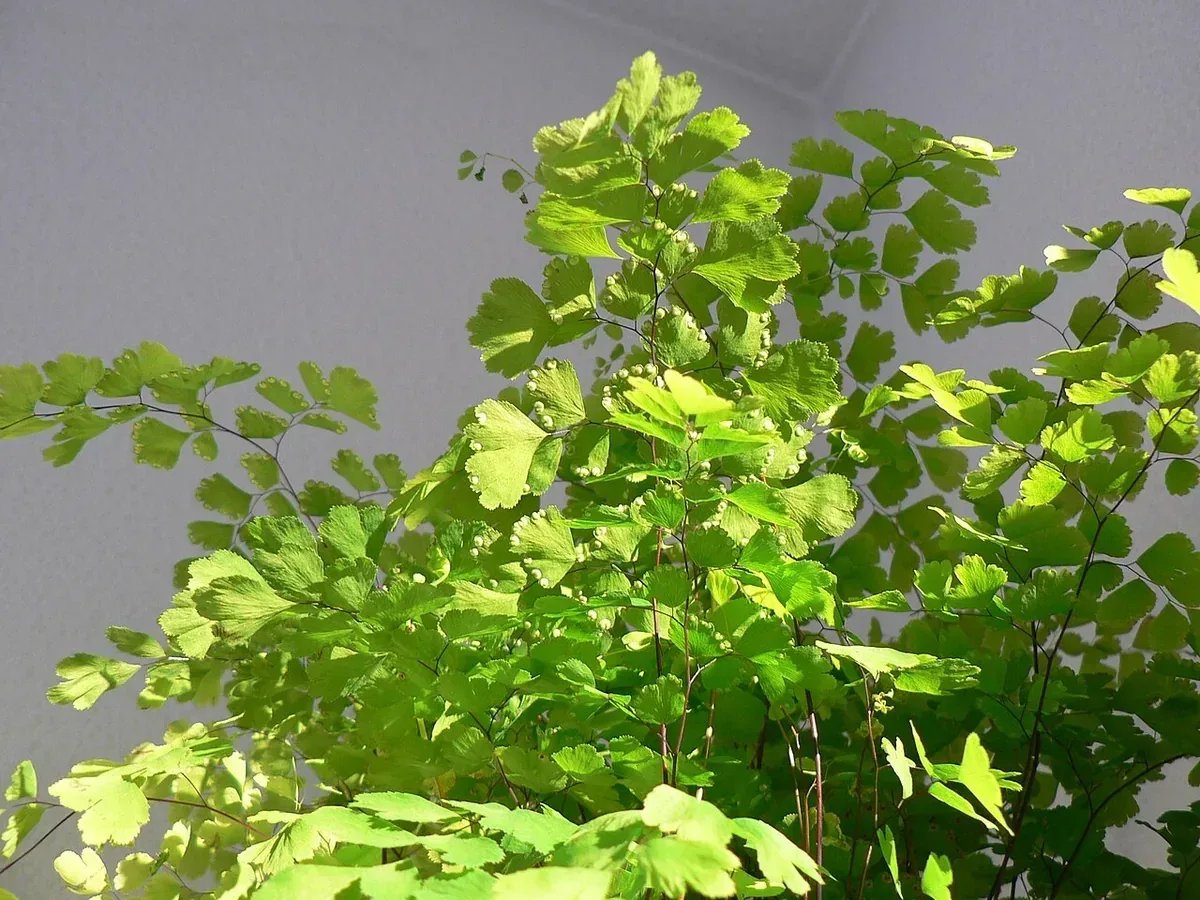
| ☀️ Light | Bright indirect light |
|---|---|
| 💧 Water | High (consistently moist) |
| 🪴 Soil | Moisture-retentive, slightly acidic houseplant mix with good drainage |
| 🌡️ Temp | 10°C – 24°C |
| 🐾 Safety | Cats: not verified · Dogs: not verified |
| 📏 Mature size | 60 cm |
Where It Grows & Climate Tolerance
Pet & Companion Animal Toxicity (Maidenhair Fern Care in India)
Not yet verified: Toxicity status for cats, dogs, and horses has not yet been confirmed against veterinary poison-control records. Keep out of reach of pets or consult your veterinarian.
Maidenhair fern is easy on a shaded veranda in Kerala, Goa, Kolkata or the hills, and a real test in a Delhi or Jaipur flat in May. The monsoon is its best season almost everywhere in India; the loo is its worst.
Care instructions
Care Guide & Maintenance Routine
Coast, East and hills: shaded veranda or north-facing balcony, mix kept evenly damp. Northern plains: bathroom or the most humid indoor room from April to June, pebble tray, daily soil check. Winter in the North and hills: indoors above 10°C (NYBG), away from blowers.
Light & Sunlight
The RHS recommends bright, indirect light. NC State lists partial shade to shade and notes it loses vigour in too much shade or full sun. NYBG suggests a north window or a short distance from an east or west window.
Watering Schedule
NC State says the roots should not be allowed to dry out. NYBG warns that letting the root ball dry and then soaking it is a common cause of failure; water moderately so the mix stays evenly moist, letting only the top 2 to 3 cm dry. Water less in winter.
Potting Mix & Drainage
Moisture-retentive, slightly acidic houseplant mix with good drainage
Temperature & Humidity
NYBG says not to let it fall below 10°C, with 16 to 21°C typical indoors. December and January nights in Punjab, UP and the hills drop below that, so bring it in. Above 24°C NYBG suggests a pebble tray and misting; on 40°C-plus days in Delhi or Nagpur keep it in the coolest, dampest room.
Maidenhair in Indian homes
During the monsoon you can find wild maidenhair ferns clinging to damp walls, wells and stone steps in hill towns from Shimla to Shillong and along the Western Ghats. That is the clue to growing the nursery kind at home: it wants shade, moisture at the roots and moist air around the fronds. Many Indian readers know the name Hansraj from Ayurveda; that refers to Adiantum ferns, mainly native species such as A. capillus-veneris, not specifically the delta maidenhair sold in nurseries.
Buying
Most city nurseries and online plant stores stock it in small plastic pots or hanging baskets. Pick a plant with plenty of new curled fronds at the base and no crisp, grey patches. Buy between July and February. A fern bought in May and carried home in a hot car or courier van often crisps within a week.
Region by region
- Kerala, Goa, Konkan, coastal Karnataka: a shaded veranda or north-facing balcony suits it all year. In the monsoon, keep it under a roof so pots do not stay waterlogged.
- Kolkata, Bhubaneswar, Guwahati: humid air helps. The main risks are rhizome rot in August and drying out in the short, dry spring.
- Bengaluru, Pune, Hyderabad: mostly indoors or in deep shade, with a pebble tray from March to May.
- Delhi NCR, Punjab, Haryana, Rajasthan, UP: the hardest region. From April to June, the loo and 40°C-plus afternoons dry fronds in hours. Keep it in a bathroom with a window, or the coolest room with a tray of wet pebbles. In December and January, keep it inside and away from blowers.
- Shimla, Mussoorie, Darjeeling, Shillong: outdoors in shade from April to October; indoors in winter, when nights fall below NYBG's 10°C limit.
Monsoon is the good season
IMD's normal monsoon dates are about 1 June in Kochi, 11 June in Mumbai, 16 June in Patna and 27 June in Delhi. Once the rains arrive, ferns that looked half dead in May push out new fronds. Water a little less, empty saucers and keep pots off the ground.
Coolers, ACs and humidity
A desert cooler in a North Indian flat raises humidity, which helps, but the direct blast tears fronds; place the fern across the room. A split AC dries the air, so keep the pebble tray filled. Grouping it with other ferns and a money plant on a shelf creates a small humid pocket.
Balcony or indoors?
A north- or east-facing balcony with a solid roof is ideal in the South and East. West-facing balconies are too hot from noon. Indoors, choose a bright spot with no direct sun.
Identifying problems
- Crisp, greyish fronds: usually one forgotten watering during a May heatwave, or a cooler blowing straight at it. Snip them at soil level; the rhizome resprouts once the rains arrive.
- Mealybugs: white fluff at the base of stems.
- Snails: chewed fronds and slime trails after rain.
- Rhizome rot: black, mushy base in soggy mix.
Reader questions
- Is it the same as Hansraj? Related, but do not use a nursery plant as medicine.
- Cat or dog at home? There is no ASPCA entry for it, so we mark pet safety as not verified.
- Can it grow on a damp compound wall like the wild ones in Mussoorie? In the hills and on the Konkan coast, a shaded, moss-covered wall sometimes works; in Delhi it will not.
Seasonal rhythm
Seasonal Calendar
| Month | Care Tasks | Seasonal Focus |
|---|---|---|
| Jan | Protect from frost/heat | Delhi, Chandigarh, Shimla: inside and above 10°C, well away from heaters. Kochi and Goa: water when the top 2 cm dries. |
| Feb | Protect from frost/heat | North: still cool. Deccan air turns dry, so put out a pebble tray. Konkan coast: steady new fronds. |
| Mar | Fertilize, Repot | Before Holi, divide clumps whose rhizomes crowd the surface. Half-strength feeding starts. Hills: wait until April. |
| Apr | Fertilize, Protect from frost/heat | Delhi, Bhopal, Nagpur: into a bright bathroom, soil checked every day. South: shade from heat. Hills: outdoors in shade. |
| May | Protect from frost/heat | Toughest month across the North: loo and dry heat. Pebble tray, daily checks. Mumbai: pre-monsoon humidity helps. |
| Jun | Fertilize | Rains reach Kerala and the Konkan; fronds push out again. Delhi: dry until about 27 June. |
| Jul | Fertilize | Monsoon across India: the best growth of the year. Water a little less and keep pots draining. |
| Aug | Protect from frost/heat | Wettest weeks: torch checks for snails, tip out soggy saucers. Meghalaya and Assam: raise pots. |
| Sep | Fertilize, Repot | Last feed. Divide clumps in Bengaluru and Chennai. North: humid, healthy growth. |
| Oct | Protect from frost/heat | After the rains, northern air dries quickly; refill pebble trays. Hill homes: bring pots inside. South: pot up divisions. |
| Nov | Protect from frost/heat | North and hills: keep back from cold windows. Chennai's northeast monsoon: water less. |
| Dec | Protect from frost/heat | Room heaters in Lucknow and Patna dry the air; keep the fern across the room. South and coast: slower growth, evenly damp. |
Diagnostics
Common Problems & Troubleshooting
Crispy brown fronds from dry air or a dry root ball; pale, bleached fronds in direct sun; yellowing and rot in soggy, cold mix; sudden collapse near heaters, AC or open windows.
Pests & seasonal watch: Usually pest-free. Mealybugs at the base in dry pre-monsoon weeks. Snails grazing outdoor pots in the rains, and rhizome rot in soggy mix. Avoid oily sprays and leaf shine.
- Yellow leaves — Leaves fade from green to yellow, often starting at the bottom.
- Brown tips — Leaf tips and edges turn dry, brown and papery.
- Drooping — Stems and leaves hang limp even though the plant was recently fine.
- Root rot — Roots turn brown and mushy in soil that stays wet.
- Mealybugs — White cottony clumps in leaf joints, often with sticky honeydew.
- Overwatering — Soil stays wet, leaves yellow or droop, and the pot feels heavy.
- Underwatering — Soil is bone dry and leaves are crispy, curled or dull.
- Sun scorch — Bleached or crispy patches on the side that faces strong sun.
- Cold damage — Dark, water-soaked or blackened patches after a cold night or an AC blast.
- Pale leaves — Whole leaves look washed out, not spotted.
Care encyclopedia · 2 guides
Guides & Articles for Maidenhair Fern Care in India
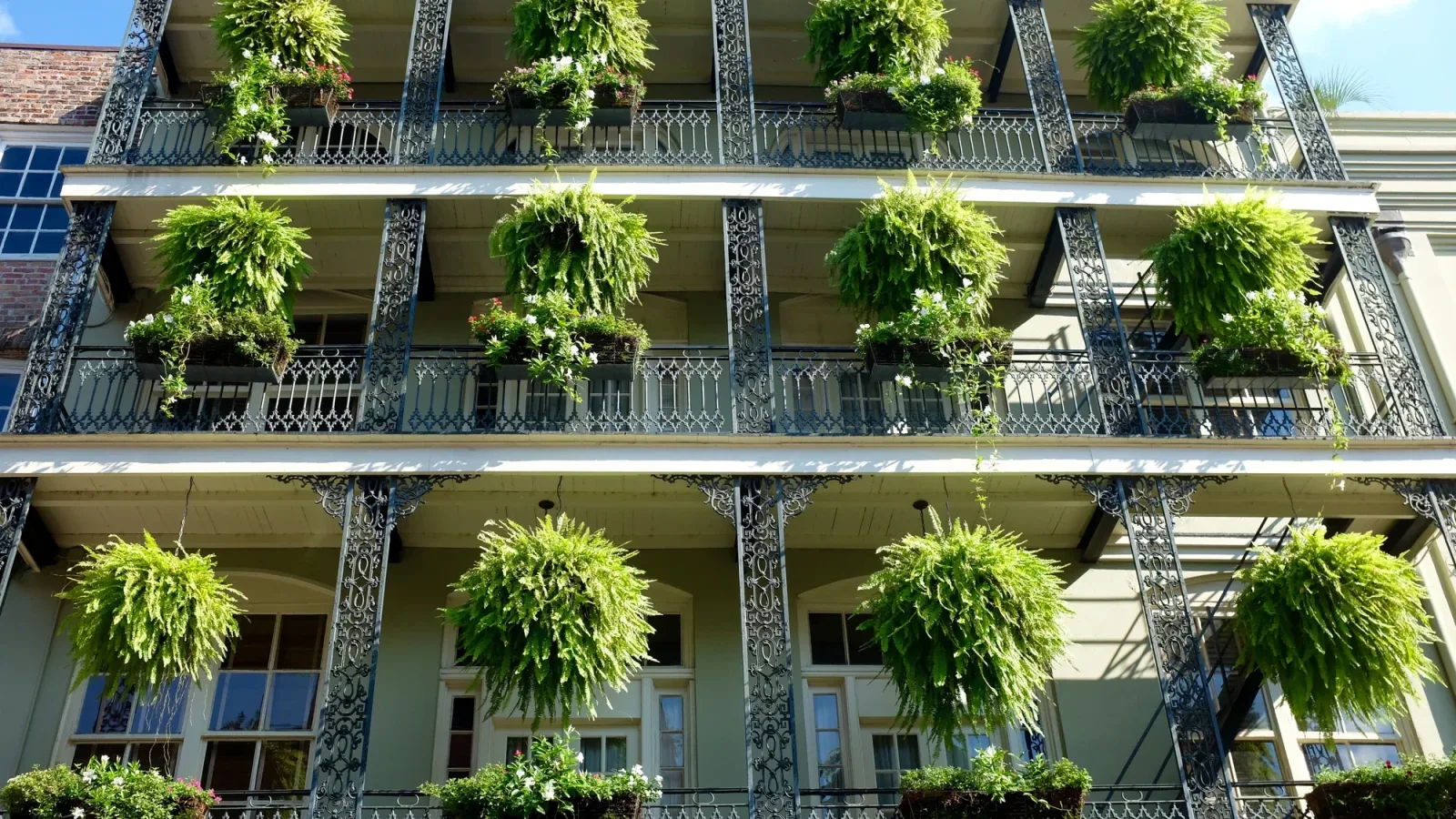
12 Plants for a North-Facing Balcony in India, From Bright Shade to Deep Cover
Look up from the pot. A railing with open sky, a shelf under a chajja and a windy corner suit different plants. Here is what to grow in each spot.
Read guide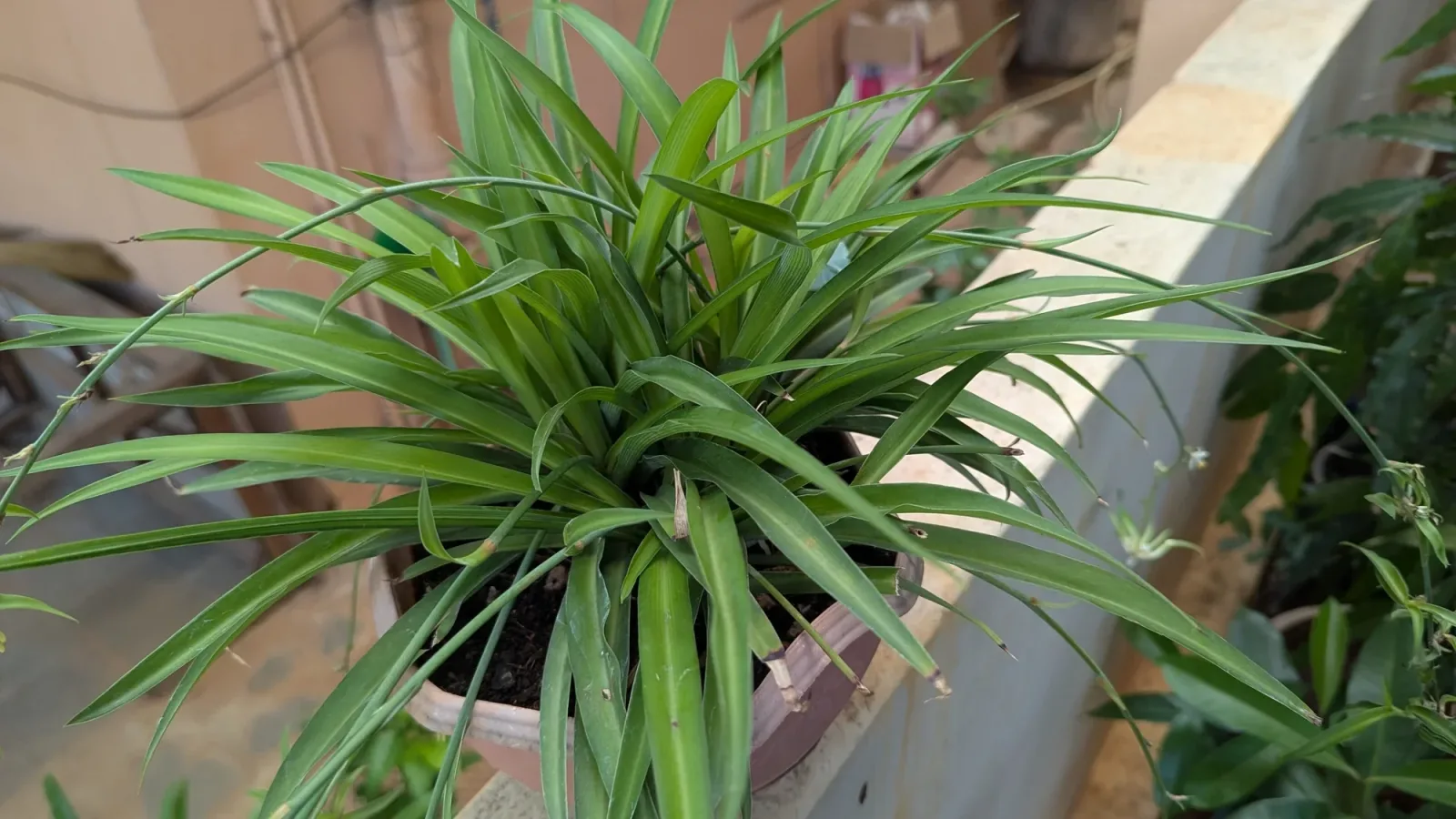
11 Best Indoor Hanging Plants for Indian Homes (and Where Each One Grows Best)
For a first hanging pot, money plant, spider plant and inch plant (zebrina) are the easiest in Indian homes. Here are 11 trailing plants, with light, watering, pet-safety and region notes.
Read guideQ&A
Frequently Asked Questions
Why is my maidenhair fern drying up?
The two usual causes are dry air and a root ball that dried out between waterings. NYBG says low humidity is the most common cause of failure.
Can a crispy maidenhair fern come back?
Often yes. Cut off the dead fronds, keep the mix evenly moist and raise humidity. If the rhizome is firm, new fronds usually appear within weeks.
How much humidity does a maidenhair fern need?
NYBG recommends more than 60 percent. A hygrometer helps you check. Terrariums, glass cloches, pebble trays and humidifiers all help.
How often should I water a maidenhair fern?
Keep the mix evenly moist. Let only the top 2 to 3 cm dry before watering again, and never let the whole pot dry out.
Is maidenhair fern safe for cats?
ASPCA has no listing for Adiantum and NC State lists no poison information, so we mark it as not verified. Keep it away from pets that chew plants.
Can maidenhair fern take direct sun?
No. Direct sun bleaches and crisps the fronds. Bright, indirect light from a north or east window suits it.
Is maidenhair fern the same as Hansraj?
Hansraj is the traditional Indian name for Adiantum ferns, mainly native species. The houseplant sold in nurseries is usually Adiantum raddianum, a tropical American species.
Should I mist my maidenhair fern?
Misting raises humidity only for minutes. A pebble tray, humidifier or terrarium works better. NYBG suggests daily misting only when temperatures go above about 24°C, alongside a pebble tray.
When should I repot it?
In early spring, and only when dark roots appear at the soil surface. NYBG suggests this is roughly every two years.
Similar Botanical Matches
Keep exploring
Related plants
Grower field notes
Reader Field Notes in India
Share how this plant performs in your local India climate.