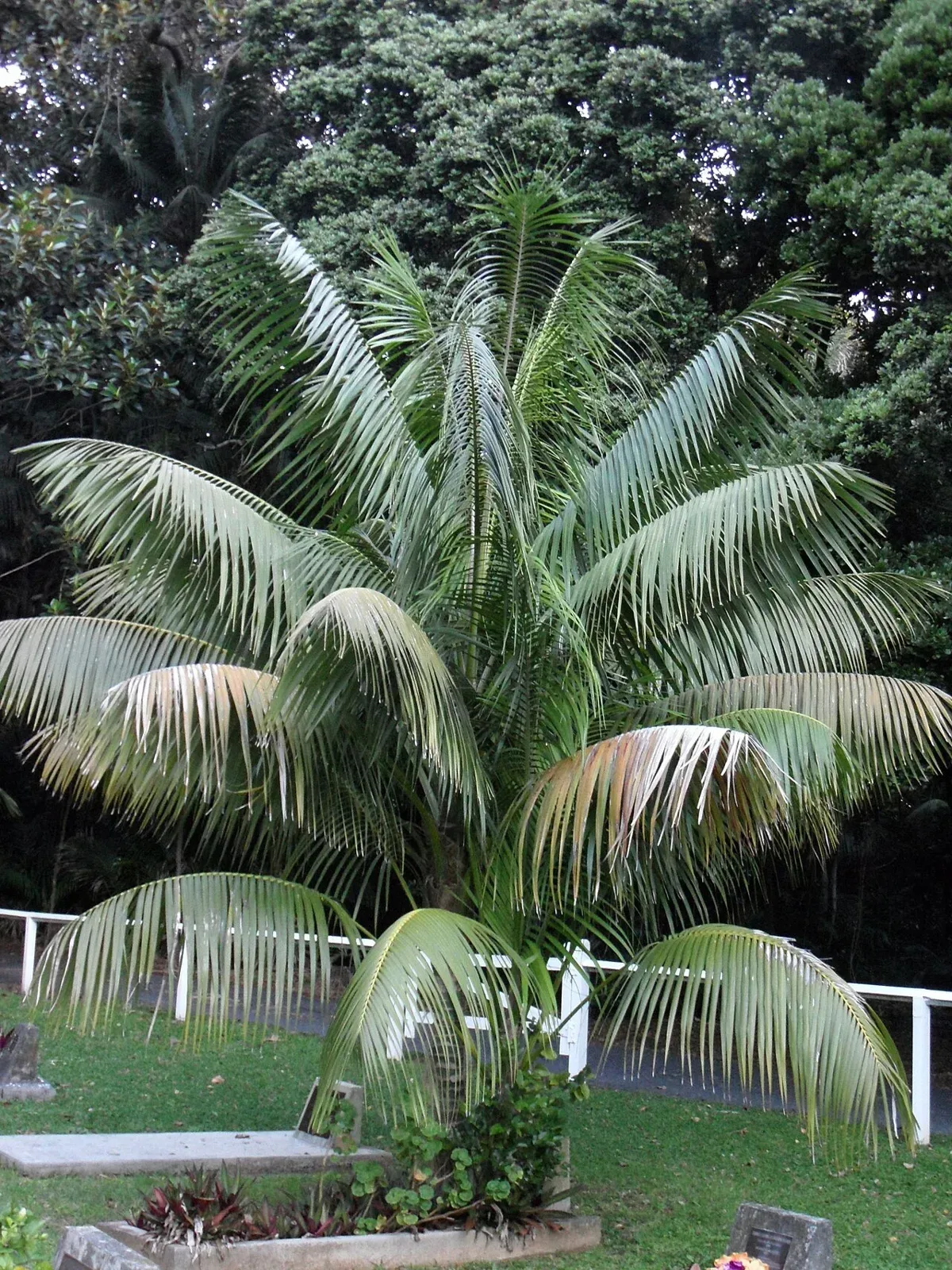
| ☀️ Light | Medium light |
|---|---|
| 💧 Water | Moderate (lightly moist) |
| 🪴 Soil | Well-drained, humus-rich potting mix with bark |
| 🌡️ Temp | 5°C – 38°C |
| 🐾 Safety | Cats: non-toxic · Dogs: non-toxic |
| 📏 Mature size | 2.5 m |
Where It Grows & Climate Tolerance
Pet & Companion Animal Toxicity (Kentia Palm Care in Indian Homes)
Kentia palm is a premium indoor palm in Indian cities, valued for handling dim corners, air-conditioned offices and lobbies better than areca palm. It grows slowly and needs careful watering in the monsoon.
Care instructions
Care Guide & Maintenance Routine
Keep near a bright window without direct sun. Water when the top 3 to 5 cm of mix are dry, roughly weekly in summer and much less in the monsoon. Keep away from AC vents. Feed lightly from March to September. Shield from afternoon sun on balconies.
Light & Sunlight
NC State Extension notes kentia palm needs little light and tolerates low light indoors, though moderate light gives better growth. The RHS advises bright light with protection from the sun. Direct midday sun scorches the fronds indoors.
Watering Schedule
NC State recommends a well-drained, humus-rich mix that does not dry out completely. Water thoroughly when the top 3 to 5 cm are dry, and empty the saucer. Constantly wet mix causes root rot.
Potting Mix & Drainage
Well-drained, humus-rich potting mix with bark
Temperature & Humidity
No frost risk indoors. Keep away from AC vents. On the northern plains, outdoor pots need shade during May and June heatwaves; in hill towns such as Shimla or Darjeeling, keep it indoors in winter, away from cold windows.
Kentia palm in Indian homes
Kentia palm has become a favourite for flats, offices and hotel lobbies in Indian cities. It is pricier than the common areca palm, but it keeps its looks in lower light and in air-conditioned rooms, and its dark green, drooping fronds give a polished look. ASPCA lists it as non-toxic to dogs and cats, which matters in many households.
Kentia or areca?
Most "palms" sold at Indian nurseries are areca palm (Dypsis lutescens), which forms clumps of yellow stems and needs bright light. Kentia has a single dark green trunk per seedling, deeper green fronds that arch and droop, and slower growth. If the label says Howea forsteriana, it is kentia.
Light in Indian flats
An east-facing window or a spot 1 to 2 m back from a south or west window suits it. In Delhi, Jaipur or Ahmedabad, afternoon sun through glass in April and May scorches fronds; draw a sheer curtain. Office palms under tube lights survive for a long time but grow very little.
Watering through the Indian year
- March to June: water when the top few centimetres are dry, about weekly in Delhi or Hyderabad; more often on a bright balcony.
- Monsoon (June to September): humid air and cloudy days slow drying. In Mumbai, Kochi or Kolkata, check before every watering; many palms rot in these months.
- October to February: water less in the north as nights cool. In Chennai and Bengaluru, keep to the summer routine.
Air conditioning and dust
Cold, dry air from split AC units browns tips and invites spider mites. Keep the palm at least 2 m from the indoor unit and away from its airflow. Delhi NCR's winter smog leaves a grey film on the leaflets; a monthly sponge bath clears it.
Outdoors in shade
NC State notes kentia tolerates heat, humidity and rain outdoors if kept out of direct sun. In Bengaluru, Goa and Kerala it can sit on a shaded verandah year-round. Bring it in during heatwaves on the northern plains.
Mix and pots
Use a well-drained mix of garden soil, coarse sand or perlite, cocopeat and leaf mould or vermicompost, in a pot with holes. Avoid planters without drainage, a common cause of failure in Indian offices.
Ordering online
Many Indian buyers order kentia from online nurseries. Parcels spend days in transit, so unpack at once, stand the palm in shade, and give a drink only if the mix feels dry. Wait a month before shifting it to a new gamla; transplant shock on top of courier stress often kills it.
City notes
- Bengaluru and Pune: mild weather suits kentia best; a covered balcony or verandah works most of the year.
- Chennai and coastal Andhra: heat and humidity are fine, but keep it shaded and well ventilated.
- Lucknow, Chandigarh and Patna: loo winds in May and cold nights in January both call for an indoor spot.
- Guwahati and Shillong: long rains mean a gritty mix and a gamla with large holes.
When mixing soil, a handful of well-rotted khad or vermicompost is plenty; a palm in a gamla does not need rich mitti.
Seasonal rhythm
Seasonal Calendar
| Month | Care Tasks | Seasonal Focus |
|---|---|---|
| Jan | protect | North: water less in cold weather; keep away from heaters and drafty doors. |
| Feb | protect | Wipe winter dust off fronds in Delhi NCR. South: normal watering. |
| Mar | feed, repot | Start light feeding. Repot root-bound palms. |
| Apr | feed, protect | North: shield from afternoon sun through glass. Check for spider mites. |
| May | protect | Heatwave month on the plains: keep indoors away from hot windows. |
| Jun | protect | Monsoon arrives in Kerala and Mumbai: reduce watering. |
| Jul | protect | Check soil before every watering; watch for leaf spot in humid cities. |
| Aug | feed, protect | Kolkata and Mumbai: ensure drainage. Light feed if growing. |
| Sep | feed | Last feed of the season as rains withdraw from the north. |
| Oct | protect | Trim fully brown fronds. Wipe leaves before the festival season. |
| Nov | protect | Delhi NCR and Punjab: keep away from smoky, dusty open windows. |
| Dec | protect | North: water sparingly. Hills: move pots back from cold glass. |
Diagnostics
Common Problems & Troubleshooting
Brown leaflet tips on older fronds, which NC State links to potassium deficiency; brown tips from dry air or salts; yellow lower fronds from overwatering; scorch patches in direct sun; slow decline when roots sit wet.
Pests & seasonal watch: Spider mites in dry AC rooms and dusty Delhi winters; mealybugs and scale year-round; root rot and leaf spot during the monsoon when pots stay wet.
- Brown tips — Leaf tips and edges turn dry, brown and papery.
- Root rot — Roots turn brown and mushy in soil that stays wet.
- Mealybugs — White cottony clumps in leaf joints, often with sticky honeydew.
- Spider mites — Fine webbing and pale speckled leaves, worse in dry heated rooms.
- Scale — Hard or soft brown bumps stuck to stems and leaf ribs, often with sticky honeydew.
- Overwatering — Soil stays wet, leaves yellow or droop, and the pot feels heavy.
- Sun scorch — Bleached or crispy patches on the side that faces strong sun.
- Nutrient shortage — Overall pale growth, or yellowing between veins, on a plant that is otherwise watered well.
Q&A
Frequently Asked Questions
Can kentia palm grow in low light?
It tolerates lower light than most palms. NC State notes it requires little light and has a record of surviving low light. Growth is faster in bright, indirect light.
Why are the leaf tips turning brown?
NC State says potassium deficiency is the most serious problem, showing as dead tips on older fronds. Dry air, fertiliser salts and irregular watering also brown tips. Use a palm fertiliser and water evenly.
How often should I water a kentia palm?
When the top 3 to 5 cm of mix feel dry. That may be weekly in summer and every two to three weeks in winter, depending on light and room temperature. Never leave it standing in water.
What is the difference between kentia and areca palm?
Kentia (Howea forsteriana) has a single trunk, dark green fronds and slow growth, and tolerates lower light. Areca palm (Dypsis lutescens) forms clumps of yellowish stems with lighter green, more upright fronds and needs brighter light.
Why is my kentia growing so slowly?
Slow growth is normal. NC State calls it slow-growing and notes plants grow faster when potted singly rather than in groups.
Can I split a pot of kentia palms?
Several seedlings are often sold together, but NC State notes it is not a suckering palm. Separating them damages roots, so most growers leave the group intact.
Is kentia palm safe for cats and dogs?
Yes. ASPCA lists kentia palm as non-toxic to dogs and cats, and NC State tags it non-toxic for cats, dogs and horses.
Should I cut off brown fronds?
Cut fronds only when they are fully brown, close to the trunk. Never cut the central growing point.
How big does kentia palm get?
Indoors it usually stays 2 to 3 m over many years. The RHS gives 8 to 12 m for plants growing in the ground in a suitable climate.
Similar Botanical Matches
Grower field notes
Reader Field Notes in India
Share how this plant performs in your local India climate.