| ☀️ Light | Full sun |
|---|---|
| 💧 Water | Moderate (lightly moist) |
| 🪴 Soil | Fertile, well-drained soil |
| 🌡️ Temp | -30°C – 35°C |
| 🐾 Safety | Cats: non-toxic · Dogs: non-toxic |
| 📏 Mature size | 1.8 m |
Where It Grows & Climate Tolerance
Pet & Companion Animal Toxicity (How to Grow Hollyhock (Gulkhaira) in India)
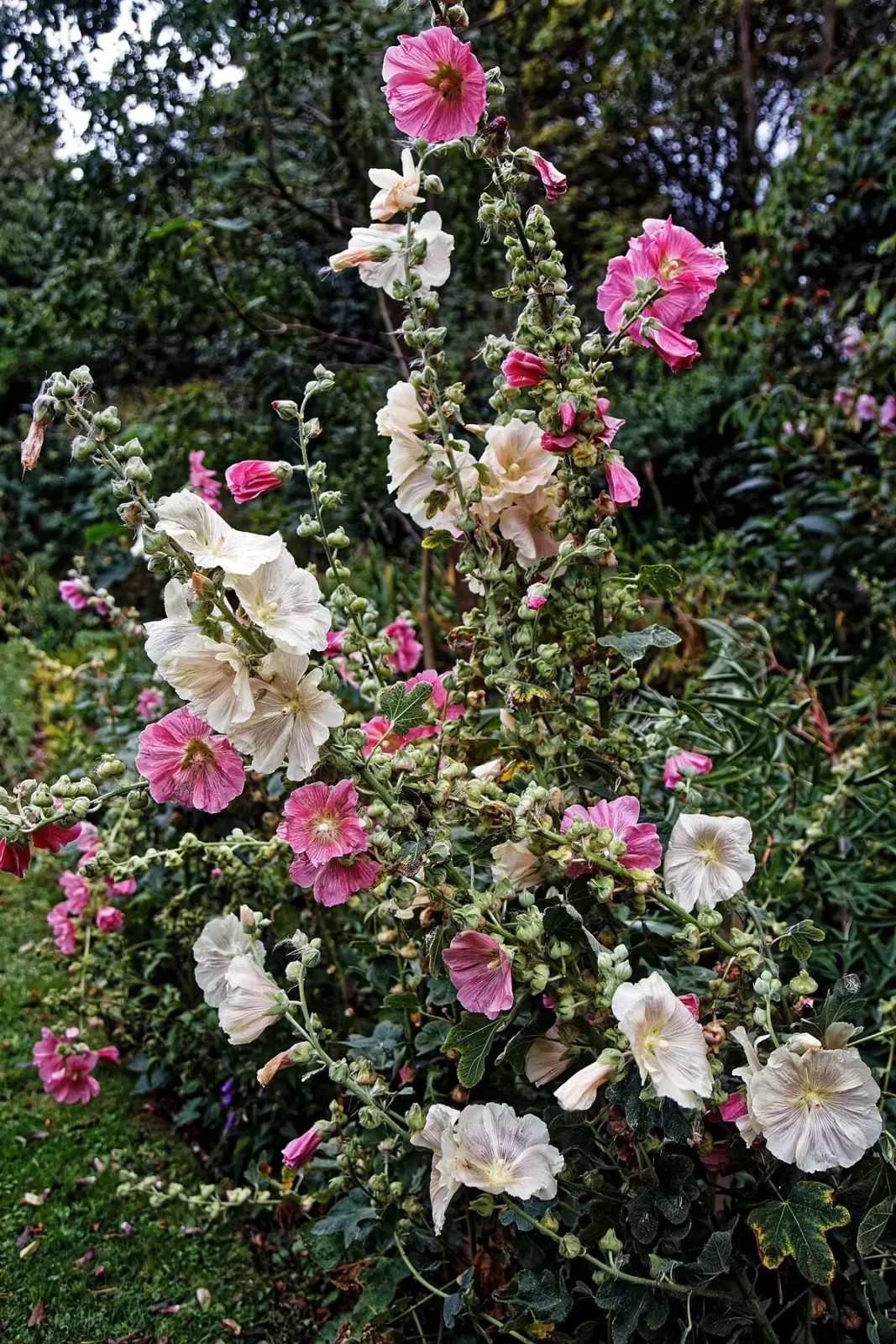
Hollyhock, known in Hindi and Urdu as gulkhaira, is a winter-sown flower on the north Indian plains and a summer flower in the hills. SKUAST-Jammu lists it with winter annuals sown in September or October. Tall spikes flower from February to April before the heat sets in.
Care instructions
Care Guide & Maintenance Routine
On the plains, sow seed in September or October and transplant in October or November into a sunny kyari along a wall, in well-drained mitti with gobar khad. Water every week or so in winter and more often in March. Stake the spikes against spring winds and collect seed before the barsaat.
Light & Sunlight
RHS recommends full sun for the tallest spikes. NC State lists full sun to partial shade. In very hot climates, a little afternoon shade is tolerated.
Watering Schedule
RHS advises keeping the top 15 cm of soil damp but not soggy for young plants in their first few months; after that, plants in the ground need water only in long dry or hot spells. Water at the base to keep leaves dry and limit rust.
Potting Mix & Drainage
Fertile, well-drained soil
Temperature & Humidity
Fully hardy, so pala does no harm to winter rosettes. Flowering ends when the loo arrives in April and May on the plains. In the hills, plants survive winter snow and flower in summer.
Gulkhaira in Indian gardens
Hollyhock is grown across north India as a winter-sown flower. SKUAST-Jammu lists it among winter annuals sown in September and October and transplanted in October and November, and notes that in the hills annuals are grown in summer. On the plains, plants sown in autumn behave like annuals, growing a rosette through winter and flowering in spring before the heat. The dried flowers, sold as gulkhaira, also appear in traditional Unani remedies, but this guide covers only growing.
SKUAST-Jammu practice for winter annuals
SKUAST-Jammu raises winter annuals in raised nursery beds of garden soil, sand and well-rotted FYM or vermicompost, sown in lines and covered with 0.5 to 1 cm of mix. Seed germinates in five to eight days in winter, and seedlings are ready to transplant 28 to 35 days after sowing. It spaces tall annuals at about 60 by 45 cm and gives light watering every seven to ten days in winter. Because hollyhock forms a taproot, many gardeners sow two or three seeds directly in each spot instead.
Region by region
- Punjab, Haryana, Delhi, UP, Rajasthan, MP: sow in late September or October; flowers from February to April.
- Bengaluru, Pune, Hyderabad: sow from September to November; flowers in the dry season.
- Kolkata, Mumbai, Chennai: difficult; humidity brings rust and the cool season is short.
- Shimla, Srinagar, Mussoorie, Darjeeling: sow in spring; flowers in summer, and plants may live for a few years.
Where to plant in an Indian home
Hollyhock is too tall for most balconies. Plant it along a sunny boundary wall, beside the gate or at the back of a kitchen garden kyari, where it gets at least six hours of winter sun. A wall also shelters spikes from the dusty winds of March.
Rust in Indian gardens
Orange spots on leaves appear in humid spells and late in the season. Pick off affected leaves, water at the base, and destroy old plants after seed collection instead of leaving them standing through the barsaat. If rust is severe, consult the nearest KVK before spraying.
A typical season in Jaipur
Seed goes in after Navratri. Rosettes grow slowly through the cold of December and January. The first spikes rise after Basant Panchami and are in full colour by Holi. By mid-April the loo browns the leaves; pods are left to dry, seed is collected and stored in a paper packet for next autumn.
Saving seed for next year
Leave two or three healthy spikes standing after flowering. Once the round, button-like pods turn brown and papery in April, snip them, dry them on a newspaper under a chajja for a week, and rub out the flat seeds. Store them in a paper packet in a dry tin until Navratri.
Questions from Indian growers
- Can I grow gulkhaira in a gamla? Only dwarf types do well, in a deep 14 to 16 inch pot with a stake.
Seasonal rhythm
Seasonal Calendar
| Month | Care Tasks | Seasonal Focus |
|---|---|---|
| Jan | protect | Lohri: rosettes growing slowly; pala causes no harm. |
| Feb | protect | Basant: first spikes rising; tie in to a cane. |
| Mar | harvest | Holi: full flowering along walls; remove rusty leaves. |
| Apr | harvest | Late spikes; pods start to dry before the loo. |
| May | sow, harvest | Collect seed on the plains; hills sow after frost. |
| Jun | plant | Hills: transplant seedlings; plains beds cleared. |
| Jul | protect | Barsaat: destroy old plants to limit rust. |
| Aug | protect | Hills: flowering; stake against monsoon winds. |
| Sep | sow | Plains: prepare kyaris along a sunny wall. |
| Oct | sow | After Navratri: sow two or three seeds per spot. |
| Nov | plant | Diwali: thin or transplant at 60 by 45 cm. |
| Dec | feed | Water every week or so; a little gobar khad. |
Diagnostics
Common Problems & Troubleshooting
Orange rust pustules on leaf undersides; leaf spots; holes chewed by slugs, caterpillars and beetles; spikes blown over in wind; plants dying out after two or three years; no flowers in the first year from seed.
Pests & seasonal watch: Rust in humid spells, leaf-eating caterpillars and beetles in spring, spider mites in dry March heat, and slugs on seedlings in hill gardens. Check with the nearest KVK before any spray goes on.
- Yellow leaves — Leaves fade from green to yellow, often starting at the bottom.
- Drooping — Stems and leaves hang limp even though the plant was recently fine.
- Root rot — Roots turn brown and mushy in soil that stays wet.
- Spider mites — Fine webbing and pale speckled leaves, worse in dry heated rooms.
- Aphids — Clusters of small soft insects on new tips, often sticky.
- Leaf spot — Brown or tan spots with a yellow halo, sometimes with tiny dots in the centre.
- Brown spots — Scattered brown blotches on the leaf blade, not only the tip.
- No flowers — A flowering houseplant stays leafy and will not bloom.
Q&A
Frequently Asked Questions
Are hollyhocks annual, biennial or perennial?
NC State describes them as biennial to annual; RHS calls them short-lived perennials that flower in the second year after sowing. Most plants decline after two or three years.
Why are there orange spots on my hollyhock leaves?
That is hollyhock rust. Wisconsin Horticulture notes it spreads by wind and water splash and overwinters in plant debris. Remove infected leaves, avoid sprinklers, space plants and clear debris in autumn.
Are hollyhocks safe for pets?
Yes. ASPCA lists hollyhock as non-toxic to dogs, cats and horses.
Why didn't my hollyhock flower this year?
Plants from seed usually flower only in their second year. RHS notes they flower in the second year after sowing.
Do hollyhocks need staking?
In windy gardens, yes. RHS advises staking stems in a windy spot.
Should I cut hollyhocks back after flowering?
RHS advises cutting spikes to the ground after flowering, unless you want seed.
Do hollyhocks self-seed?
Yes. NC State notes they reseed. Let some seedlings grow on to replace old plants.
Can you eat hollyhock flowers?
RHS notes the petals can be added to salads or crystallised for cake decorations. Only eat flowers that have not been sprayed.
How far apart should I plant hollyhocks?
RHS spaces them 60 cm apart.
Similar Botanical Matches
Grower field notes
Reader Field Notes in India
Share how this plant performs in your local India climate.