
| ☀️ Light | Full sun |
|---|---|
| 💧 Water | Moderate (lightly moist) |
| 🪴 Soil | Fertile, well-drained, sandy loam; pH 6.0 to 6.5 |
| 🌡️ Temp | 4°C – 35°C |
| 🐾 Safety | Cats: toxic · Dogs: toxic |
| 📏 Mature size | 1.2 m |
Where It Grows & Climate Tolerance
Pet & Companion Animal Toxicity (How to Grow Gladiolus in India)
Gladiolus, sold in mandis as glad and grown from kand (corms), is a winter cut flower across north India. Ludhiana's Punjab Agricultural University schedules the main sowing for September and October, with fortnightly batches from mid-August to mid-December, so spikes reach Diwali, wedding-season and Basant markets.
Care instructions
Care Guide & Maintenance Routine
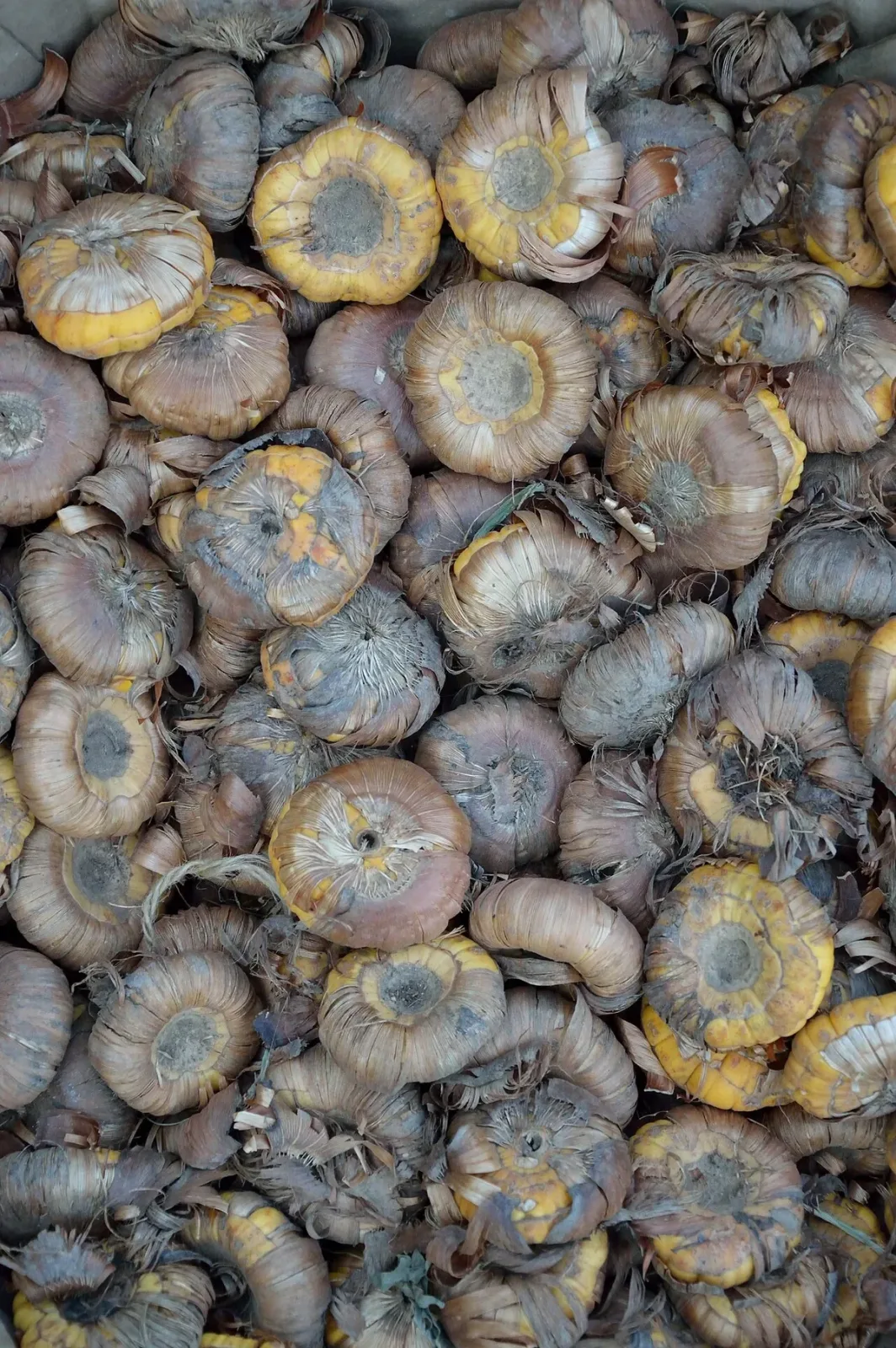
Set the kand 30 by 20 cm apart and 7 to 10 cm deep in sandy, well-drained mitti with gobar khad. Irrigate every 7 to 10 days from October to February and every 4 to 5 days in March and April, as Ludhiana advises. Chadhao mitti (earth up) at the 4 to 6 leaf stage. Dig the kand 8 to 10 weeks after cutting and keep them in a cold store.
Light & Sunlight
NC State recommends full sun with shelter from strong wind. PAU notes most varieties need at least 8 hours of light a day; spike quality is better in long days, while corm and cormel production improves in short days.
Watering Schedule
Keep soil evenly moist while plants grow; NC State warns against letting the soil dry out. PAU notes the stage just after sprouting and the 4 to 6 leaf stage are very sensitive to water shortage, and advises stopping irrigation 4 to 6 weeks before lifting corms.
Potting Mix & Drainage
Fertile, well-drained, sandy loam; pH 6.0 to 6.5
Temperature & Humidity
Sweet spot: daytime up to 25°C, nights up to 16°C, which on the plains means Dussehra to Holi. January pala scorches florets in Punjab, Haryana and western UP fields; cover rows with a thin sheet on clear, still nights. Kand kept in a godown or almirah shrivel when May loo arrives.
Gladiolus in Indian gardens
PAU describes gladiolus as an important cut flower grown in almost every Indian state. On the northern plains it fits between grain crops, and many home gardeners grow a few rows for Diwali to Holi bouquets.
PAU recommendations
PAU's ornamental crops package gives optimum temperatures of up to 25°C by day and 16°C at night. The main planting window is September to October, with staggered planting every 10 to 15 days from mid-August to mid-December. For an early crop, Punjab growers plant in July and August and cut in October and November; PAU lists Punjab Glance and Punjab Lemon Delight as most suitable for this.
Varieties
- Punjab Glad-3 (2019): bright yellow, about 103 cm spike, 17 florets, flowers in about 105 days.
- Punjab Glad-1 (2013): orange with a yellow centre.
- Punjab Pink Elegance (2010): soft pink with a magenta spot, flowers in about 86 days.
- White Prosperity, Nova Lux, Suchitra and Sylvia: older varieties that PAU also lists.
Region by region
- Punjab, Haryana, Delhi, western UP: plant September to November; spikes from December to March.
- Bihar, eastern UP, West Bengal: plant October to November once fields drain after the rains.
- Maharashtra, Karnataka, Telangana: mild winters allow planting from October to December.
- Kashmir, Himachal, Uttarakhand, Darjeeling: SKUAST-Jammu notes that in the hills such crops are grown in summer; plant corms in March and April after frost.
Earthing up
PAU advises two or three hoeings and earthing up soil 10 to 15 cm high at the 4 to 6 leaf stage, when plants are 15 to 20 cm tall, to keep spikes from lodging.
Storing corms through the Indian summer
PAU notes that May heat dries out corms kept at room temperature. Lift them as the leaves yellow, wash and grade them, dry them in shade for 7 to 10 days, and keep them in gunny or mesh bags in cold storage at 4 to 7°C until September. A home fridge's vegetable drawer can hold a small number, kept away from fruit.
A home gardener's season in Punjab or Delhi
Take corms out of cold storage in early September and let them sit in shade for a few days so the shoots wake up. Dig a bed with gobar khad, form ridges if the soil is heavy, and plant the first batch after Pitru paksha. Keep planting a small row every fortnight until early December. The first spikes open around Diwali from early batches, the main show comes in January and February, and the last spikes are cut around Holi. In April, as the leaves yellow, dig the kand before the loo sets in.
Gamla growing
On a chhat or balcony, a deep 14 to 16 inch gamla holds five or six kand. Use mitti, sand and khad in equal parts, place it where it gets full winter sun, and tie the spikes to a bamboo stake once buds show.
Questions from Indian growers
- Can I plant in the monsoon? Only in well-drained raised beds, for the early crop PAU describes. Waterlogging rots corms.
Seasonal rhythm
Seasonal Calendar
| Month | Care Tasks | Seasonal Focus |
|---|---|---|
| Jan | Harvest | Lohri and Maghi: cut spikes at first light when the bottom floret opens. |
| Feb | Fertilize, Harvest | Basant panchami bouquets; nali irrigation every 7 to 10 days. |
| Mar | Harvest | Phagun to Holi: paani every 4 to 5 days; check leaves for thrips. |
| Apr | Plant out, Harvest | Baisakhi: dig kand as leaves turn pila. Pahad: sow after pala. |
| May | Protect from frost/heat | Shade-dry kand a week, then jaali bags to the cold store before loo. |
| Jun | Protect from frost/heat | Kand stay in cold store. Shimla, Mussoorie: stake the spikes. |
| Jul | Plant out | Ludhiana early crop: sow on mends (ridges) despite barsaat. |
| Aug | Plant out | Janmashtami: start fortnightly batches on raised kyaris. |
| Sep | Plant out | Pitru paksha ends: main sowing, 30 by 20 cm, 7 to 10 cm deep. |
| Oct | Plant out, Fertilize | Navratri to Diwali: keep sowing every 10 to 15 days; first nitrogen split. |
| Nov | Protect from frost/heat | Kartik: mitti chadhao at the 4 to 6 leaf stage. |
| Dec | Plant out, Harvest | Last kand in by mid-December; early spikes for shaadi season. |
Diagnostics
Common Problems & Troubleshooting
Corm rot in wet soil; yellowing and wilting from Fusarium; streaked, deformed flowers from thrips; spikes falling over in wind; no flowers from small corms or shade; corms shrivelling in warm storage.
Pests & seasonal watch: Thrips silver the leaves and blotch florets as Phagun warms. Fusarium wilt and kand rot travel with nali water and infected stock, so Ludhiana advises clean kand and curing before storing. Botrytis spots spikes on kohra (fog) mornings. Ask the nearest KVK before spraying.
- Yellow leaves — Leaves fade from green to yellow, often starting at the bottom.
- Drooping — Stems and leaves hang limp even though the plant was recently fine.
- Root rot — Roots turn brown and mushy in soil that stays wet.
- Spider mites — Fine webbing and pale speckled leaves, worse in dry heated rooms.
- Thrips — Silvery streaks and twisted new leaves, sometimes with black specks of frass.
- Aphids — Clusters of small soft insects on new tips, often sticky.
- Grey mould — Fuzzy grey mould on faded flowers, damaged leaves or soft stems.
- No flowers — A flowering houseplant stays leafy and will not bloom.
Q&A
Frequently Asked Questions
How deep should I plant gladiolus corms?
PAU advises 7 to 10 cm, depending on corm size. AAFC suggests 10 to 15 cm for large corms in Canadian gardens. Deeper planting helps tall spikes stand up.
How long do gladiolus take to flower?
PAU notes spikes appear 60 to 120 days after planting, depending on the variety.
How do I get gladiolus flowers over a longer period?
Stagger planting. PAU advises planting at 10 to 15 day intervals, and AAFC suggests intervals of two or three weeks.
When should I cut gladiolus for a vase?
PAU advises cutting when the lowest floret is fully open for local use, or when the lowest one to three florets show colour for longer keeping. Cut early in the morning or in the evening and put the spike in water straight away.
Do I need to dig up gladiolus corms?
In cold climates, yes. AAFC notes gladiolus is not hardy enough to overwinter outdoors in most of Canada. On the Indian plains, corms dry out in summer heat, so PAU advises cold storage until the next planting season.
How should I store gladiolus corms?
Dry them in shade, remove the old corm and discard any with rot, then store at 2 to 7°C in a dry, ventilated place, as AAFC and PAU advise.
Why are my gladiolus flowers streaked and brown?
Often gladiolus thrips, which NC State lists among its common pests. Viruses can also streak flowers, as Wisconsin Horticulture notes. Check closely before treating.
Do gladiolus need staking?
Tall cultivars often do. The University of Saskatchewan notes glads are prone to breaking in wind and recommends planting in clumps and staking. PAU earths up plants at the 4 to 6 leaf stage.
Is gladiolus toxic to pets?
Yes. ASPCA lists gladiola as toxic to dogs, cats and horses, with the corm the most toxic part.
Similar Botanical Matches
Keep exploring
Related plants
Grower field notes
Reader Field Notes in India
Share how this plant performs in your local India climate.