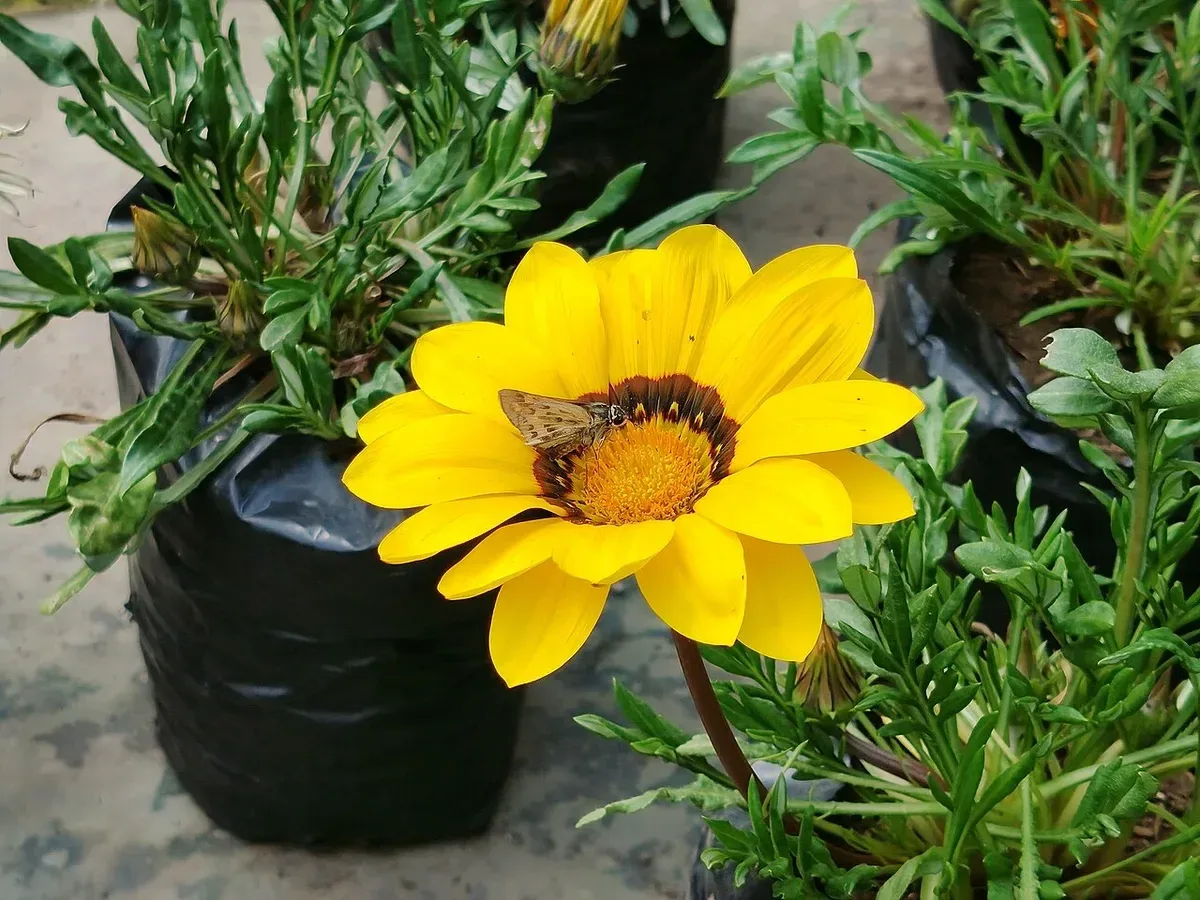
| ☀️ Light | Full sun |
|---|---|
| 💧 Water | Low (allow soil to dry) |
| 🪴 Soil | Sandy to average, well-drained soil; tolerates poor soil |
| 🌡️ Temp | -6°C – 35°C |
| 🐾 Safety | Cats: not verified · Dogs: not verified |
| 📏 Mature size | 25 cm |
Where It Grows & Climate Tolerance
Pet & Companion Animal Toxicity (How to Grow Gazania in India)
Gazania is a cool-season flower for most of India. SKUAST-Jammu groups it with winter annuals sown in September or October and transplanted in October or November. On the plains it flowers from December to April; in the hills it is a summer flower.
Care instructions
Care Guide & Maintenance Routine
Sow in trays in September or October and transplant in October or November, in full sun and sandy, well-drained mitti. Water every 7 to 10 days in winter, as SKUAST-Jammu suggests for annuals, and more often in March heat. Deadhead weekly. Keep pots out of heavy monsoon rain.
Light & Sunlight
NC State Extension recommends full sun for the best blooming. The flowers close at night and may not open fully on cloudy days, so shade means few open flowers.
Watering Schedule
NC State advises letting the soil dry between waterings and warns that overwatering causes root rot. Water young plants until established, then only in dry spells. Pots need more frequent checks.
Potting Mix & Drainage
Sandy to average, well-drained soil; tolerates poor soil
Temperature & Humidity
Established clumps ride out January pala (ground frost) in Punjab, Haryana and western UP. Soggy beds during barsaat cause most losses. When April and May afternoons pass about 38°C, blooming slows.
Gazania in Indian gardens
Gazania has become a common sight in winter flower beds, traffic islands and terrace gardens because it copes with dry, sandy soil and strong sun. Its main enemy in India is wet soil, not heat.
SKUAST-Jammu guidance
SKUAST-Jammu's floriculture package lists gazania among winter annuals sown in September and October and transplanted in October and November, and gives Gazania splendens, the treasure flower, a height of 20 to 35 cm. Its general advice for annuals: raise seedlings in beds of equal parts garden soil, sand and manure, transplant in the evening, and irrigate every 7 to 10 days in winter and every 4 to 5 days in summer. In the hills, annuals are grown in summer.
Region by region
- Punjab, Haryana, Delhi, Rajasthan, UP: sow in October; flowers from late December to April. Light frost in January may mark the leaves but rarely kills established plants.
- Bengaluru, Pune, Hyderabad: sow after the rains. Plants can carry on for a year or more in pots if kept out of monsoon rain.
- Gujarat and the Deccan: dry winters suit it; protect from the hottest April and May afternoons.
- Mumbai, Chennai, Kolkata, Kochi: humid air shortens its life. Grow it from November to March in pots.
- Shimla, Mussoorie, Darjeeling: sow in March and plant out after frost for summer flowers.
Traffic islands and society gardens
Municipal gardeners in Chandigarh, Delhi and Bengaluru use gazania for edging because it needs little water once settled. In a housing society garden, plant it along the sunniest path edge rather than under the gulmohar or neem, where flowers stay shut.
Buying seedlings
Nursery trays labelled simply as mixed colours come cheap in November. Pick trays with short, dark green seedlings, not pale stretched ones that sat in shade. A rooted cutting from a neighbour's favourite colour comes true; seed does not.
Mitti for gamlas
Mix two parts mitti with one part coarse sand and a handful of vermicompost. Clay gamlas and shallow troughs suit it.
Monsoon
Plants left in open beds usually rot in July. Move pots under a chajja, or treat gazania as a winter annual and sow afresh after IMD's normal monsoon withdrawal, around 25 September in Delhi and 8 October in Mumbai.
Summer pause
In April and May, flowering slows as temperatures pass 38 to 40°C. Shade pots in the afternoon and water in the morning.
Black cotton soil
Across Maharashtra, Madhya Pradesh and north Karnataka, heavy regur soil cracks when dry and turns sticky when wet. Grow gazania there in raised beds topped with river sand, or in gamlas.
Questions from Indian growers
- Why are the flowers closed in the afternoon? Check whether the spot gets shade then; flowers close without sun.
Seasonal rhythm
Seasonal Calendar
| Month | Care Tasks | Seasonal Focus |
|---|---|---|
| Jan | harvest | Lohri to Republic Day: full bloom in the north; snip faded heads weekly. |
| Feb | harvest | Basant colour on chhats; hose aphids off buds. |
| Mar | sow, harvest | Hills: sow in trays. Plains: water every 4 to 5 days as Holi heat builds. |
| Apr | plant, protect | Plains: afternoon shade for gamlas. Shimla, Mussoorie: plant out. |
| May | protect | Loo and 40°C days: water at dawn; flowering pauses. |
| Jun | protect | Lift gamlas under the chajja before barsaat. |
| Jul | protect | Heavy rains: no watering; pull out any rotting clumps. |
| Aug | protect | Hill stations: summer flowering. Plains: wait out the rains. |
| Sep | sow | Pitru paksha weeks: sow nursery trays of mitti, sand and khad. |
| Oct | sow, plant | Navratri to Diwali: transplant at dusk. |
| Nov | plant | Finish planting out, 25 to 30 cm apart. |
| Dec | harvest, protect | First blooms; January pala may spot leaves up north. |
Diagnostics
Common Problems & Troubleshooting
Rot and collapse in wet or heavy soil; flowers staying closed in shade or cloudy weather; flowering pause in peak summer heat; powdery mildew in humid spells; aphids and mealybugs on overwintered plants.
Pests & seasonal watch: Collar and root rot during barsaat and in sticky black cotton soil. Mahu (aphids) on buds in January and February. Mealybugs on terrace gamlas in dry months. Ask the local KVK or mali before spraying.
- Root rot — Roots turn brown and mushy in soil that stays wet.
- Mealybugs — White cottony clumps in leaf joints, often with sticky honeydew.
- Leggy — Long weak stems with big gaps between small leaves, leaning to the window.
- Aphids — Clusters of small soft insects on new tips, often sticky.
- White powder — A white powdery film on leaves, usually in still, humid air with dry soil at the roots.
- Overwatering — Soil stays wet, leaves yellow or droop, and the pot feels heavy.
- No flowers — A flowering houseplant stays leafy and will not bloom.
- Stem rot — The stem goes soft, dark or black at soil level and the top collapses.
Q&A
Frequently Asked Questions
Why do my gazania flowers close?
Gazania flowers close at night and may not open fully on cloudy days, as NC State notes. Plants in shade also keep their flowers closed. Move them to full sun.
How often should I water gazania?
Let the soil dry between waterings. NC State warns that overwatering leads to root rot. Established plants in beds need water only in long dry spells.
Why has my gazania stopped flowering in summer?
Heat. NC State notes gazanias may stop blooming in the hottest part of summer and flower again when it cools. Shade from rich soil and missed deadheading also reduce flowers.
Is gazania an annual or a perennial?
A half-hardy perennial. NC State rates it for USDA zones 9a to 11b; colder areas grow it as an annual.
Can I grow gazania from cuttings?
Yes. Take side shoots in late summer and root them in gritty mix. NC State notes rooted cuttings can be overwintered indoors.
Does gazania grow in pots?
Very well. NC State suggests containers and hanging baskets. Use a gritty, free-draining mix and a pot with drainage holes.
Should I deadhead gazania?
Yes. NC State recommends deadheading to encourage continued blooms. Cut faded flower stalks back to the leaves.
When should I sow seed in India?
SKUAST-Jammu groups gazania with winter annuals sown in September or October and transplanted in October or November on the plains. In the hills, sow in spring.
Is gazania safe for pets?
Not verified. There is no ASPCA entry for gazania, and NC State lists no poison information.
Similar Botanical Matches
Grower field notes
Reader Field Notes in India
Share how this plant performs in your local India climate.