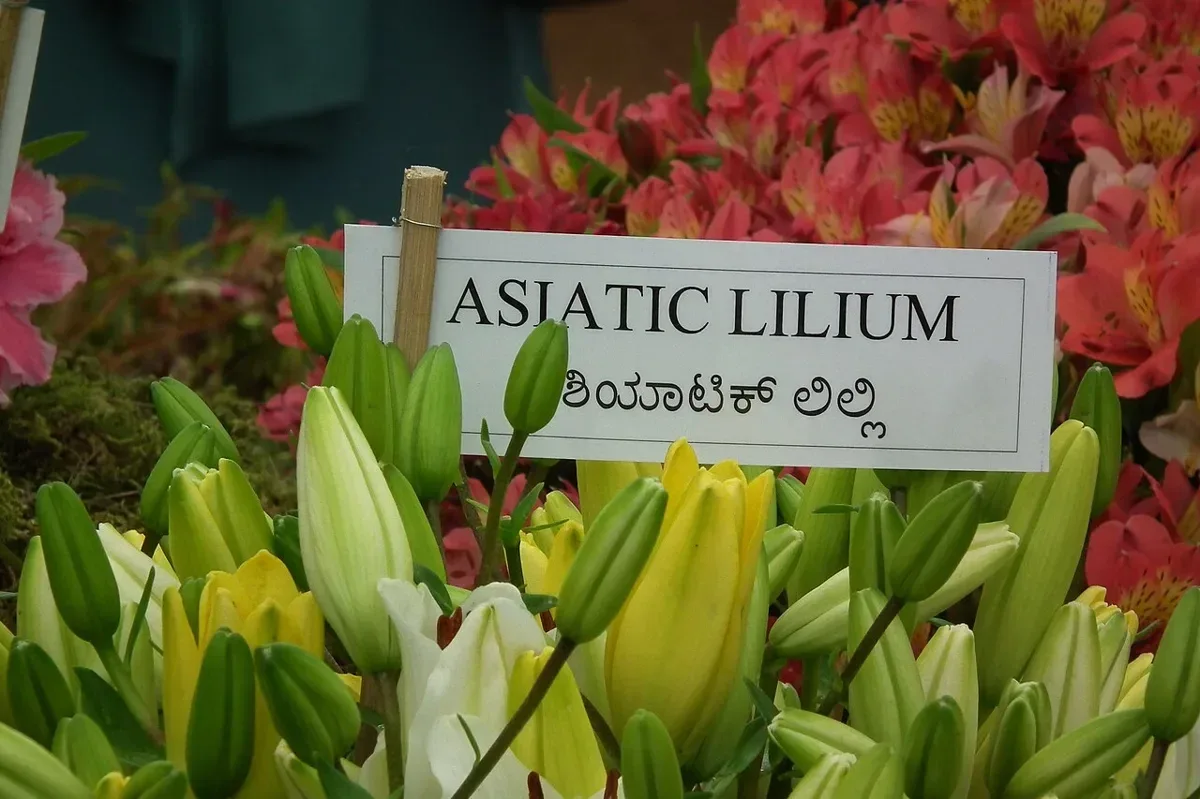
| ☀️ Light | Full sun |
|---|---|
| 💧 Water | Moderate (lightly moist) |
| 🪴 Soil | Deep, fertile, well-drained loam; pH about 6.0 to 7.0 |
| 🌡️ Temp | -30°C – 30°C |
| 🐾 Safety | Cats: toxic · Dogs: toxic |
| 📏 Mature size | 90 cm |
Where It Grows & Climate Tolerance
Pet & Companion Animal Toxicity (How to Grow Asiatic Lily in India)
In India the Asiatic lily, sold as lilium, is a hill flower in summer and a cool-season flower on the plains. SKUAST-Jammu plants bulbs in April and May under shade net in the mid and high hills, and in October and November under protection on the plains.
Care instructions
Care Guide & Maintenance Routine
Buy pre-chilled bulbs. In the hills plant in April or May; on the plains plant in October or November in deep gamlas or a shade house. Use loose, well-drained mitti with leaf mould and khad, keep it moist but not soggy, and give 50% shade in winter and up to 75% in summer. Stake as buds form.
Light & Sunlight
NC State lists full sun to light shade for Asiatic hybrids and advises sun on the leaves with shade over the roots. SKUAST-Jammu notes lilies are very sensitive to light: too little gives weak stems and bud drop, while strong summer sun keeps plants short and warms the soil, which encourages root rots.
Watering Schedule
NC State warns that overly moist soil rots bulbs but the soil should not dry out completely. Water deeply when the top few centimetres feel dry, especially while buds form, and reduce watering once the foliage starts to yellow after flowering.
Potting Mix & Drainage
Deep, fertile, well-drained loam; pH about 6.0 to 7.0
Temperature & Humidity
Grows best between 10 and 25°C. On the plains, flowering is a sardi event; by Holi the warmth shortens it and by April the loo ends growth. Kohra weeks bring weak stems and bud drop. In the hills, pala after shoots emerge can blacken tips, so plant after the last frost.
Lilium in Indian gardens
SKUAST-Jammu notes that commercial lilium growing in India is centred on Himachal Pradesh, Uttarakhand, Jammu and Kashmir, Pune and the outskirts of Delhi. Asiatic hybrids are the easiest group: they grow at higher altitudes and even on the plains in the cooler months, and have done well under protection in the Jammu plains. CSIR-IHBT Palampur reports that Himachal farmers who switched from pea and potato to Asiatic lilies earned five to seven times more, and ICAR notes Lahaul and Spiti suit lilium bulb multiplication.
SKUAST-Jammu and TNAU guidance
SKUAST-Jammu's floriculture package grows lilies at 10 to 25°C with indirect light, using 75% shade net in summer and 50% in winter and the rains. It plants in April and May in the mid and high hills and in October and November on the plains, harvests 90 to 120 days after planting, and lifts bulbs 40 to 50 days after flowering. TNAU, which grows lilium in greenhouses, gives ideal days of 18 to 22°C and nights of 10 to 15°C, and an Asiatic crop of 8 to 10 weeks.
Region by region
- Shimla, Kullu, Mussoorie, Srinagar, Darjeeling: plant after the spring frosts; flowers in June and July. Mulch well.
- Delhi, Chandigarh, Lucknow: plant chilled bulbs in late October; flowers in January and February in a sheltered, bright spot.
- Pune, Bengaluru, Nashik: mild winters allow planting from October to December under light shade.
- Mumbai, Chennai, Kolkata: treat as a one-season pot flower in the coolest months.
Gamla planting
Use a 12 to 14 inch deep gamla with a drainage hole. Fill with mitti, coarse sand and leaf mould or cocopeat, plus a handful of well-rotted khad mixed in below the bulbs. Plant three bulbs 10 to 15 cm deep, water once, and keep the pot under a chajja or shade net.
After flowering on the plains
Bulbs rarely survive the May heat in the ground. Reduce watering after the flowers fade, wait until the stems dry, then dig the bulbs, clean them, and store them in moist cocopeat or sawdust in a fridge vegetable drawer, following SKUAST-Jammu's cool, humid storage.
A typical season in the north
In Delhi or Jaipur, bulbs arrive around Dussehra. Plant them in gamlas after Diwali, when the nights cool. Shoots appear within two to three weeks, buds show colour by Christmas or Lohri, and the flowers open through January in a bright verandah. Fog-bound weeks can stall growth and drop buds, so move pots to the brightest place you have.
Buying from the phoolwala or online
Lilium stems reach city flower markets such as Delhi's Ghazipur phool mandi and Bengaluru's KR Market, usually tied in bundles; SKUAST-Jammu describes six-stem bundles packed in boxes. For planting, look for bulbs packed in damp cocopeat, firm to the touch, with white roots. Soft, shrivelled or fungus-covered bulbs from a roadside nursery rarely flower.
Questions from Indian growers
- Is lilium safe in a house with cats? No. ASPCA lists all lilies as toxic to cats, including the pollen.
Seasonal rhythm
Seasonal Calendar
| Month | Care Tasks | Seasonal Focus |
|---|---|---|
| Jan | harvest, protect | Paush: gamlas in bloom; shift them to the sunniest verandah. |
| Feb | harvest | Basant Panchami: snip stems as the lowest kali colours. |
| Mar | plant, feed | Kullu, Shimla: dig kyaris after snowmelt; plains pots dry off. |
| Apr | plant | Baisakhi: Himachal and Kashmir growers set chilled kand under jaali. |
| May | plant, protect | Hill planting ends; lift plains kand before the loo. |
| Jun | feed, protect | Jeth: tie stems to bamboo; 75% green net over hill beds. |
| Jul | harvest, protect | Sawan: hill-station blooms; drain kyaris in the barsaat. |
| Aug | protect | Bhadon: hill stems cut; wait 40 to 50 days, then lift kand. |
| Sep | protect | Pitru paksha: order cold-stored kand for the maidaan. |
| Oct | plant | Navratri to Diwali: fill deep gamlas with mitti, ret and khad. |
| Nov | plant | Kartik: press kand 10 to 15 cm deep as nights turn nippy. |
| Dec | feed, protect | Kohra weeks: stake early; no dark corners for the pots. |
Diagnostics
Common Problems & Troubleshooting
Bulb rot in wet soil; grey mould (Botrytis) spots in long rainy spells; aphids on buds; lily beetle grubs stripping leaves in Canada; weak stems and bud drop in low light; short plants in hot soil; pollen staining clothes.
Pests & seasonal watch: Aphids on buds in February. Botrytis spots in foggy plains winters and during hill barsaat. Bulb and root rot in waterlogged gamlas or beds. Slugs on young shoots in the hills. Ask the nearest KVK before spraying.
- Yellow leaves — Leaves fade from green to yellow, often starting at the bottom.
- Drooping — Stems and leaves hang limp even though the plant was recently fine.
- Root rot — Roots turn brown and mushy in soil that stays wet.
- Aphids — Clusters of small soft insects on new tips, often sticky.
- Leaf spot — Brown or tan spots with a yellow halo, sometimes with tiny dots in the centre.
- Grey mould — Fuzzy grey mould on faded flowers, damaged leaves or soft stems.
- Overwatering — Soil stays wet, leaves yellow or droop, and the pot feels heavy.
- No flowers — A flowering houseplant stays leafy and will not bloom.
Q&A
Frequently Asked Questions
Are Asiatic lilies poisonous to cats?
Yes. ASPCA lists all true lilies (Lilium species) as toxic to cats, causing kidney failure. They are listed as non-toxic to dogs and horses. Keep cut lilies and fallen pollen away from cats.
How deep should I plant lily bulbs?
NC State gives about 20 cm for lilies in general. A common rule is two to three times the height of the bulb, a little deeper in light soil and a little shallower in heavy soil.
When do Asiatic lilies bloom?
NC State notes Asiatic hybrids are usually the first lilies to bloom, from late spring into summer. On the Indian plains, bulbs planted in October and November flower in winter under protection.
Do Asiatic lilies need full sun?
They need sun on the stems and leaves but prefer a cool root zone. NC State lists full sun to light shade; SKUAST-Jammu uses 50 to 75% shade net in the hot season.
Why are my lily buds falling off?
SKUAST-Jammu notes low light, such as dark winter days, gives weak stems and bud drop. Dry soil while buds form and heat stress can also cause it.
Do I need to dig up lily bulbs?
Not in cold climates; NC State notes lilies overwinter well in the ground. On the Indian plains, SKUAST-Jammu lifts bulbs 40 to 50 days after flowering, once the stems dry, and cold-stores them.
How do I make more lilies?
Lift and divide clumps, or plant the small bulblets that form on the stem below ground. SKUAST-Jammu notes bulblets reach commercial size after about a year.
What is eating my lily leaves?
In Canada it is often the red lily beetle and its slug-like larvae. The University of Saskatchewan notes Asiatic lilies are its preferred food. Check under the leaves before treating.
Are Asiatic lilies scented?
Usually not. NC State notes Asiatic hybrids have no fragrance; scented types are mostly Oriental and trumpet lilies.
Similar Botanical Matches
Grower field notes
Reader Field Notes in India
Share how this plant performs in your local India climate.