
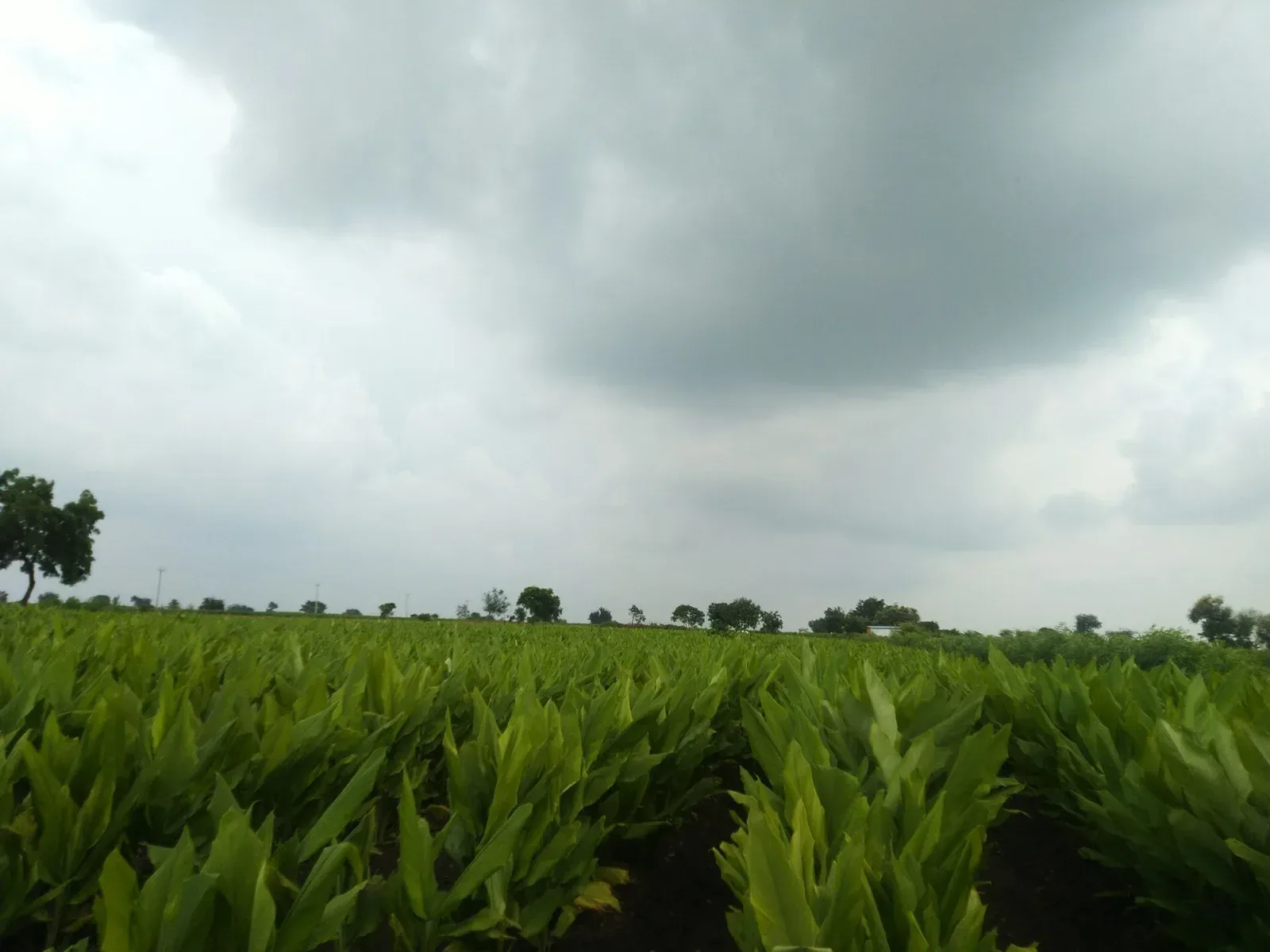
Turmeric rhizome rot usually shows first as yellowing at the tips and edges of the lower leaves during the monsoon, while the middle of each leaf stays green. The base of the stem (the collar) becomes water-soaked and soft, the plant collapses, and the rhizome turns soft and rots with a bad smell. It is caused by the soil-borne fungus-like organism Pythium aphanidermatum and spreads in waterlogged soil and through infected seed rhizomes. Remove affected clumps with their soil, improve drainage, and plant clean rhizomes in fresh soil next season.
Symptoms of rhizome rot
ICAR-IISR's turmeric guidance and the AICRP on Spices pamphlet describe these signs:
- Light yellowing at the tips and margins of the lower leaves, with the middle of the leaf still green early on.
- Yellowing spreads upward to the whole plant; leaf edges dry from the margin inwards.
- Water-soaked, dark brown patches at the base of the pseudostem (the leafy stem), which enlarge quickly.
- The stem becomes soft, and the plant collapses.
- Roots rot, then the rhizome: inner tissue breaks down, the skin looks sunken, and there is a foul smell.
- In a bed, affected plants often appear in circular patches.
IISR states the disease is soil-borne and carried in rhizomes, and appears with the onset of the monsoon. AICRP notes it can cause losses of up to 30 percent in turmeric growing areas.
Is it rot or something else?
| What you see | Likely cause | How to check |
|---|---|---|
| Lower leaves yellow from the edges in the monsoon; soft, water-soaked collar; rotten rhizome | Rhizome rot | Pull gently at the base; it comes away easily and smells |
| Whole plant yellows and dries evenly 7 to 9 months after planting | Normal maturity | Rhizomes firm and healthy; IISR says leaves turn light brown to yellowish at maturity |
| Small brown spots on both sides of leaves, turning dirty yellow or dark brown; leaves look scorched | Leaf blotch (Taphrina) | Collar and rhizome are firm |
| Brown spots with white or grey centres on young leaves, merging into patches | Leaf spot (Colletotrichum) | Collar and rhizome are firm |
| Stunting and yellowing; roots with galls or brown lesions; rhizomes with lesions or holes | Nematodes (may also open the way for rot) | Wash roots and look for galls |
| Grey-brown crusts about 1 mm wide on rhizomes; shrivelled rhizomes, often in storage | Rhizome scale insect | Scrape the crust with a fingernail |
If unsure, take a sample plant with its rhizome to your KVK. A firm decision on the cause needs a closer look than a photo.
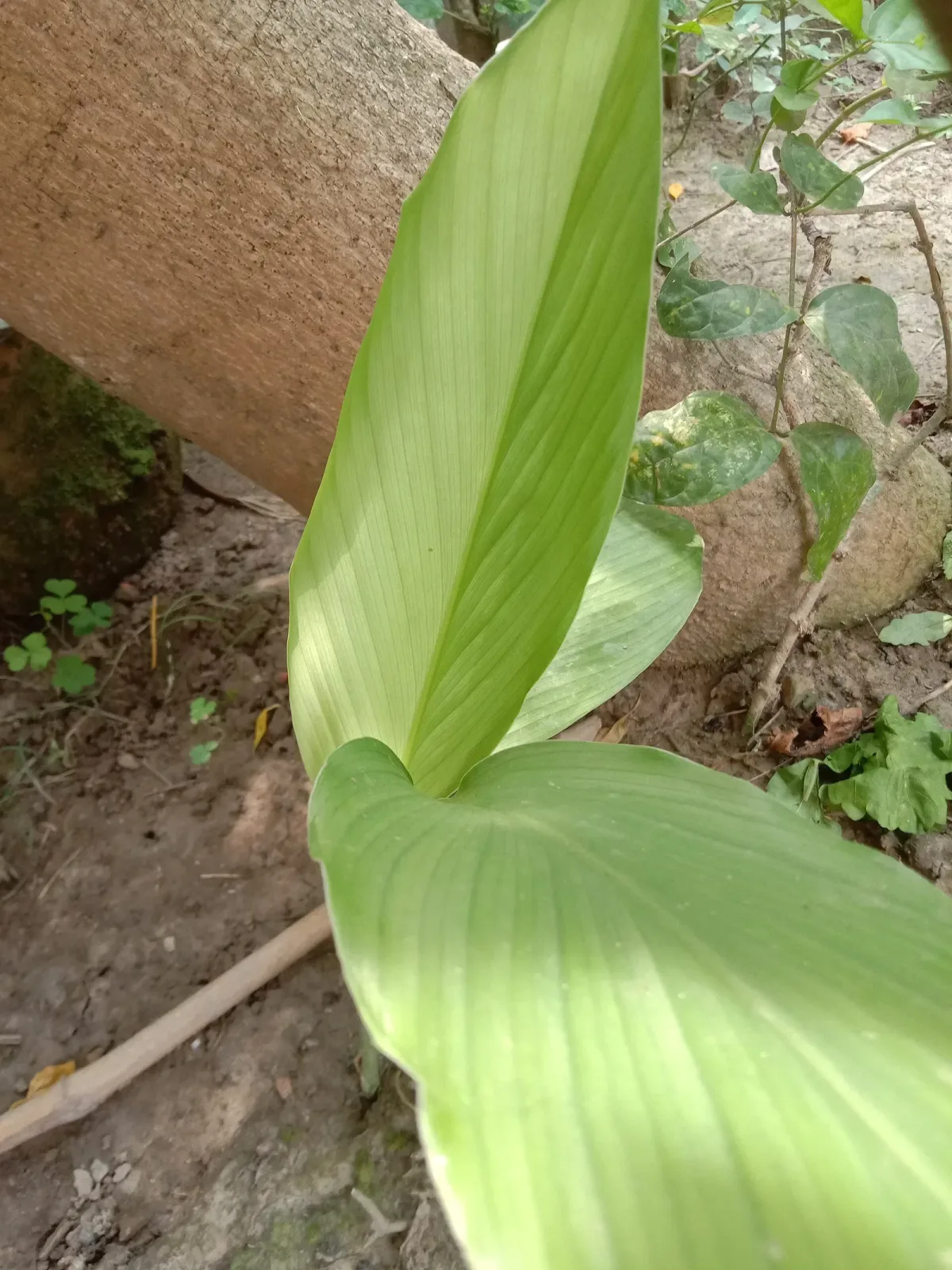
What to do if you find rhizome rot
- Dig out affected clumps with the soil around them. Do not shake the soil over healthy plants. Bag them and dispose of them away from the garden; do not compost.
- Improve drainage straight away: open channels, raise beds, or move pots out of standing water.
- Do not use soil from an affected pot or bed for turmeric or ginger again.
- IISR recommends drenching affected beds with a copper or metalaxyl-based product, and the AICRP pamphlet reports good control from Pseudomonas fluorescens and Trichoderma biocontrol consortia. These need correct, current dosing; ask your KVK. We do not give doses.
Plants already collapsed cannot be saved. The aim is to protect the rest.
Prevention
- Plant only firm, clean, disease-free rhizomes. IISR stresses that the disease is rhizome-borne.
- Use raised beds or free-draining pots. IISR's guidance on turmeric repeatedly links poor drainage to rhizome rot.
- Rotate: avoid growing turmeric in the same soil year after year.
- Mulch with green or dry leaves after planting, as IISR recommends.
- Soil solarisation (clear plastic over moist soil for 40 to 50 days in summer) reduces nematodes, which can make rot worse (IISR).
- Consider varieties listed as tolerant. TNAU's CL 101 is described as highly resistant to rhizome rot under field conditions in Tamil Nadu trials; IISR lists varieties by region in its Good Agricultural Practices manual.
Planting time
IISR advises planting just after the pre-monsoon showers, so the date depends on where you live. Rot risk rises once the rains set in, so drainage needs to be ready before then.
| Region | Planting time | Source |
|---|---|---|
| West Coast (Kerala and nearby) | April to May | ICAR-IISR; PPQS IPM package |
| Tamil Nadu | May to June | TNAU |
| Uttarakhand (plains and hills) | April to May | GB Pant University |
| Most other areas | May to June, with the first showers | PPQS IPM package |
The crop is ready in 7 to 9 months and is usually harvested between January and March.
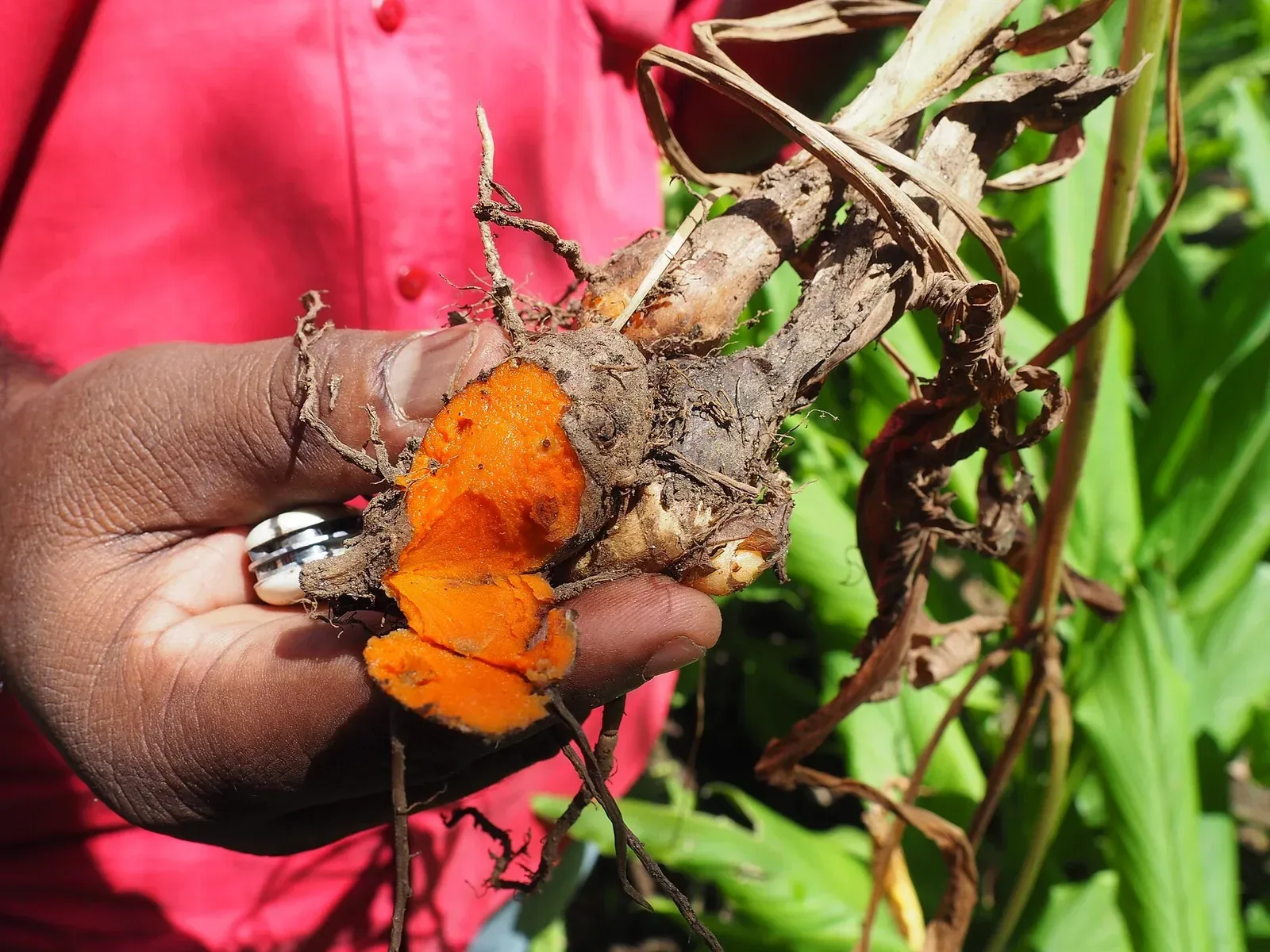
Watch: diseases of turmeric
An overview of turmeric diseases, including rhizome rot and leaf spots.
Related pages
- Turmeric (haldi) and ginger (adrak)
- Root rot and stem rot
- Yellow leaves
- Ginger leaves turning yellow
Sources
- TNAU Agritech: Turmeric (Tamil Nadu season May to June). Accessed 10 Nov 2026.
- ICAR-IISR: Turmeric extension pamphlet (2022) (rhizome rot symptoms and management; nematodes; harvest at 7 to 9 months). Accessed 10 Nov 2026.
- ICAR-IISR and AICRP on Spices: Good Agricultural Practices for Turmeric (rhizome rot, leaf blotch, leaf spot, rhizome scale; drainage; varieties by region). Accessed 10 Nov 2026.
- AICRP on Spices (TNAU Coimbatore): Management of turmeric rhizome rot (symptoms; up to 30 percent loss; biocontrol consortia; CL 101 resistance). Accessed 10 Nov 2026.
- Directorate of Plant Protection, Quarantine and Storage: IPM package for turmeric (planting after pre-monsoon showers; April to May on the West Coast; May to June elsewhere). Accessed 10 Nov 2026.
- GB Pant University of Agriculture and Technology: Kharif season advisory 2020 (turmeric April to May). Accessed 10 Nov 2026.
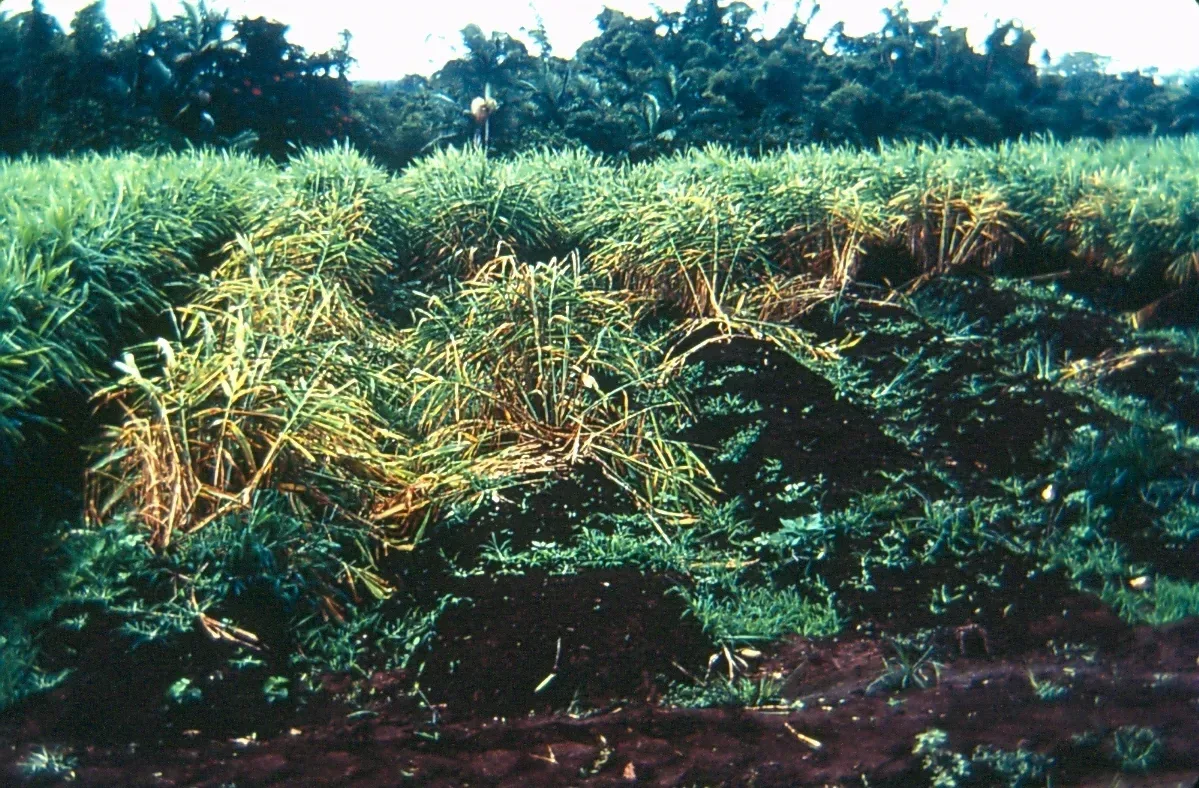


Comments
No comments yet — share what worked in your climate.