
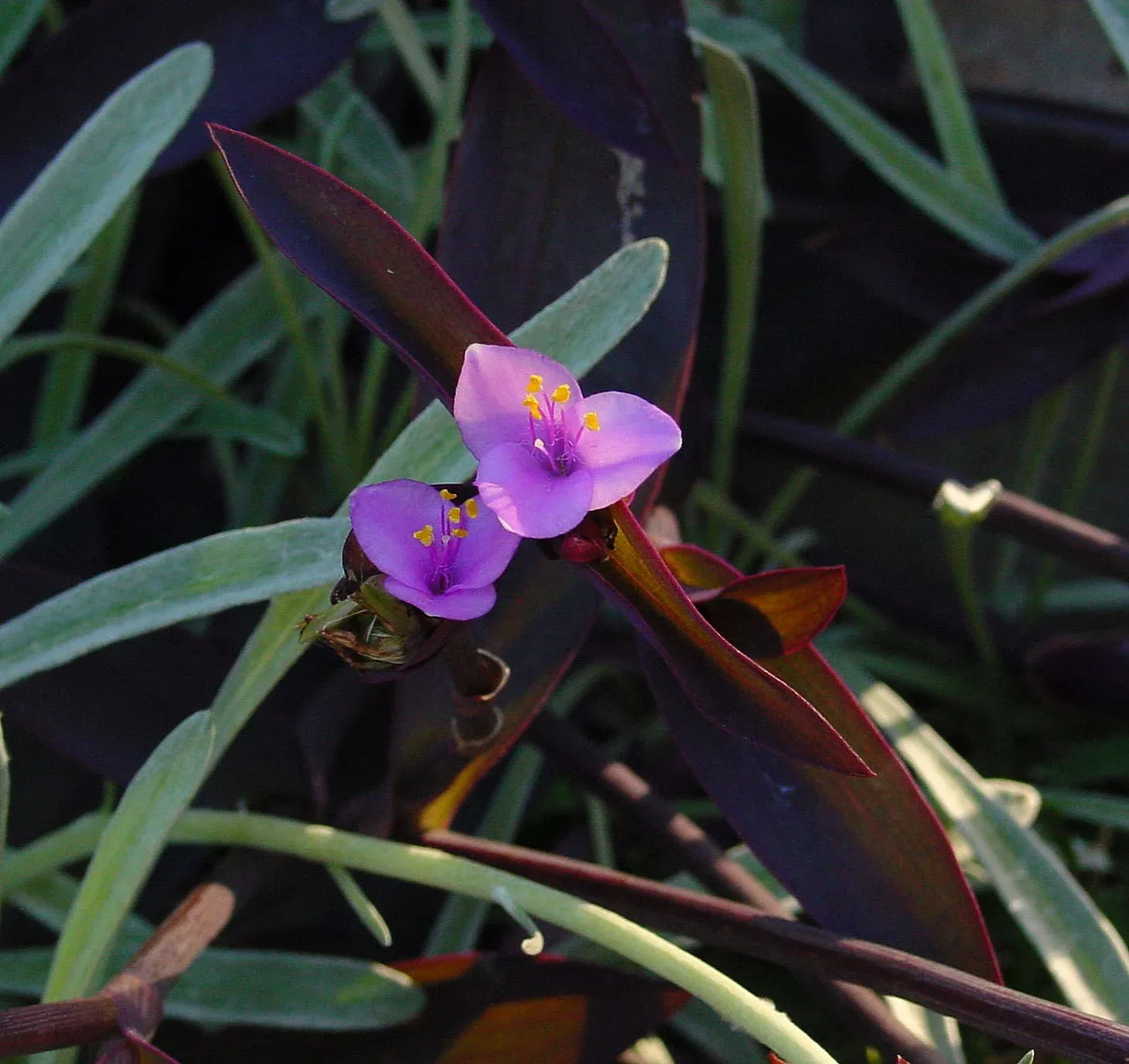
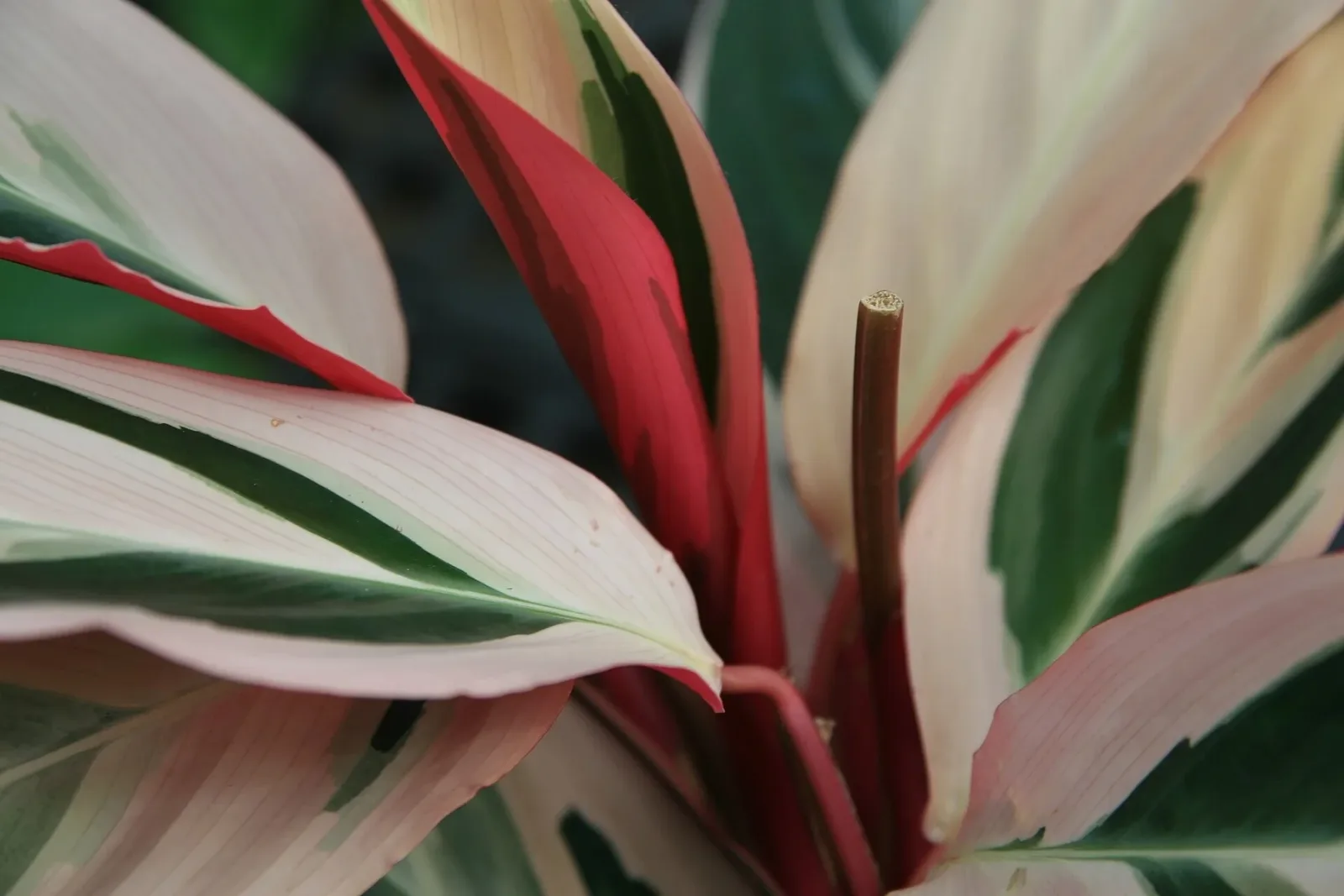
Cover photo: Wouter Hagens / Wikimedia Commons. Original photo · Public domain. Resized and converted for web use.
Purple Heart often becomes greener and stretched when it does not get enough light. Move it gradually into stronger daylight and suitable sun. Do not put a shade-grown plant straight onto a hot afternoon balcony or add more fertiliser to force purple leaves.
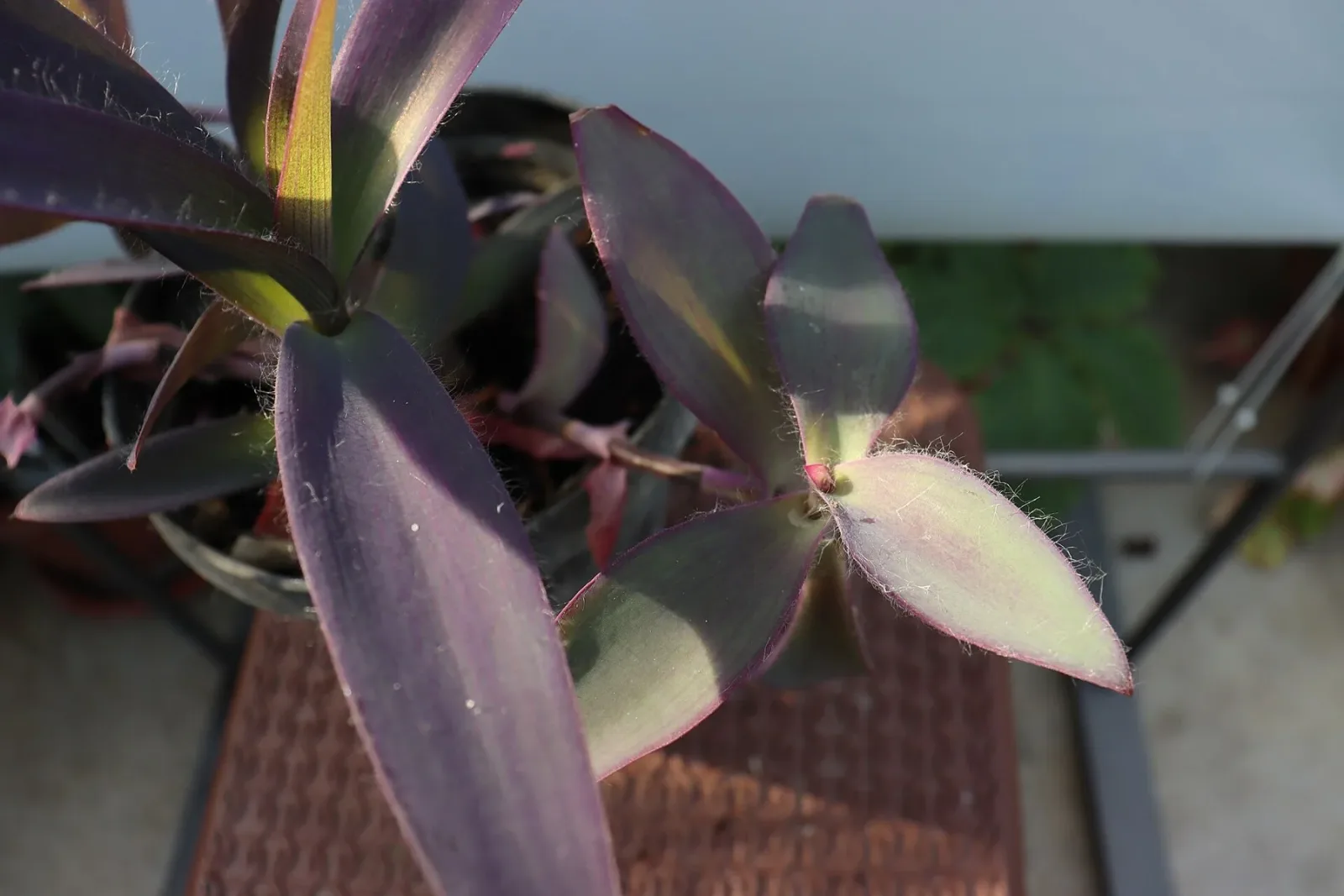
This guide is for the purple form of Tradescantia pallida, also sold under the older name Setcreasea purpurea. Check the label first. Striped Tradescantia zebrina and fuzzy purple velvet plant are different plants. The Purple Heart care profile covers the full routine.
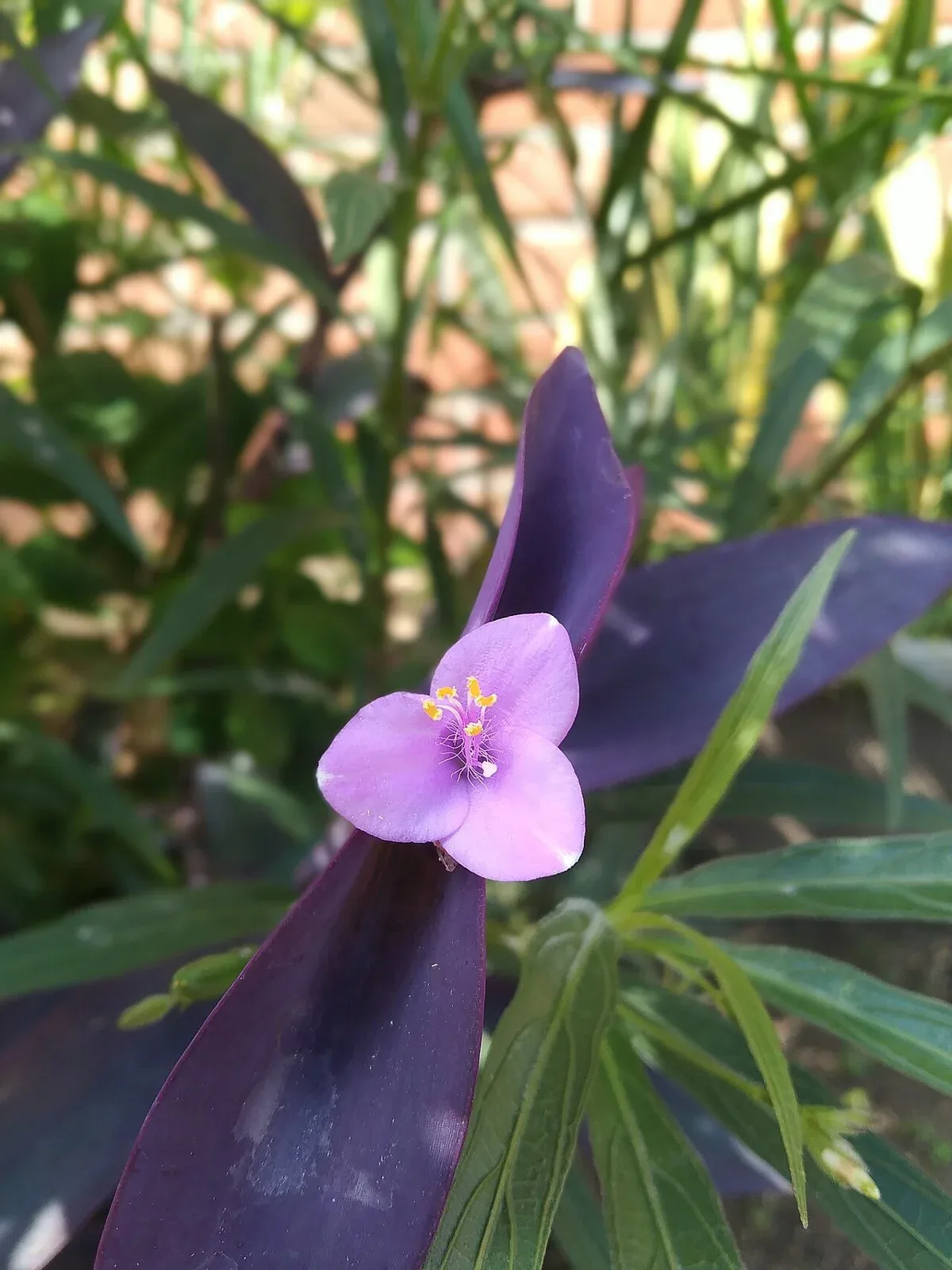
Look for weak light, not colour alone
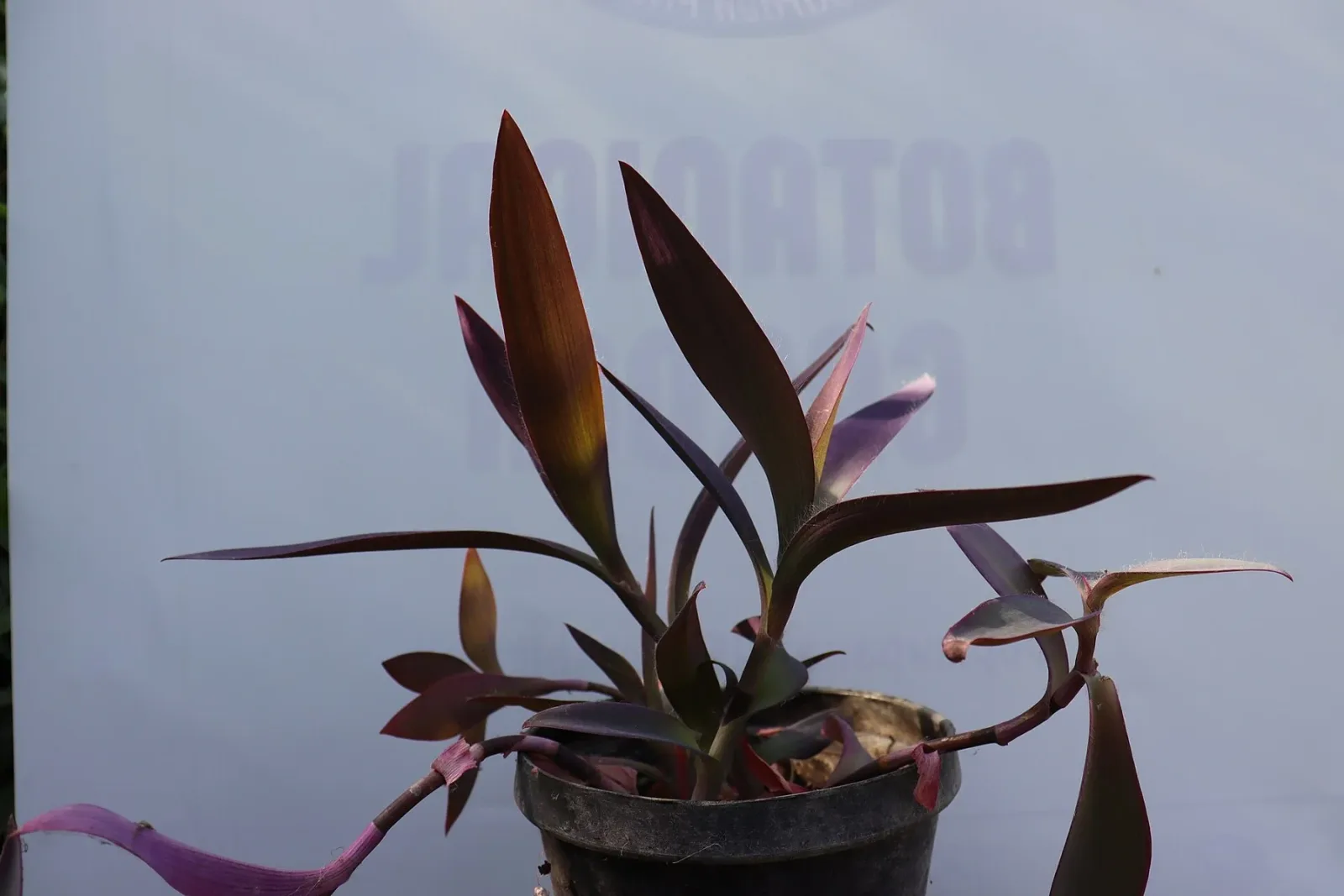
Check the spaces between leaves. Long bare spaces, thin growth and stems reaching towards the window add weight to a low-light problem. A few greener leaves by themselves do not prove that one care fault is the cause.
Plants and forms vary, and old leaves may not change fully after a move. Check new growth in the improved spot. A leaf photo alone cannot tell you how much daylight reaches the plant each day.
| What you notice | What to check | Next step |
|---|---|---|
| Greener leaves with long weak stems | Too little light | Increase light gradually. |
| Dry pale marks after a sudden sunny move | Sun or heat damage | Give relief from hard sun. |
| Yellow leaves with a wet soft base | Root or stem trouble | Check drainage and roots. |
| Different leaf pattern from the label | Plant identity or variety | Confirm the plant before changing care. |
Let the plant adjust to stronger light
Start with brighter daylight and gentle morning sun. Increase exposure in small steps, checking the leaves as you go. A nursery plant raised under shade has not yet adjusted to the heat of an exposed Indian terrace.
A sunny east-facing balcony can be a useful starting place. A west-facing wall or hot glass can add heat as well as light. During peak summer, give afternoon relief if the leaves scorch. Better colour is not a reason to ignore dry, burnt patches.
Do not use feed as a colour dye
A healthy growing plant can have a light balanced feed. Extra fertiliser cannot replace light. Feeding a weak plant heavily can add salts to the pot and leave you with another problem to solve.
Feel the mix before watering. Let the upper 3–5 cm dry, then water through and drain. Established Purple Heart tolerates a brief dry spell better than soggy roots, but repeated severe drying can still spoil the foliage.
If the mix stays wet and the base gets soft, use the root rot guide. A plant with failing roots needs more than a brighter window.
Tidy long stems after fixing the site
Pruning can make a sparse plant neater, but new growth still needs enough light. Shorten long stems above a healthy leaf joint. Keep enough healthy leaves and stem on the parent rather than cutting every shoot to a bare stump.
Use the Purple Heart pruning guide for the cuts. Sound tips can become new plants with the Purple Heart cutting method. Do not keep damaged or pest-filled pieces just to fill the pot.
Allow for monsoon cloud and winter shelter
A balcony can get much less useful light during long cloudy spells. Keep the plant in the brightest suitable place and reduce extra watering if the mix dries slowly. Do not leave it in repeated heavy rain to try to improve the colour.
In North Indian winter, choose a bright sheltered spot before cold nights arrive. An indoor shelf far from the window may be warmer but too dim. Find a balance of safe warmth and useful light, then watch the new stems.
Wear gloves when cutting because sap and leaf contact can irritate skin. Keep the plant away from chewing pets and children. Collect fallen pieces: Purple Heart can root from stems that land on suitable ground.
Sources
- Wisconsin Extension: Purple Heart
- NC State Extension: Tradescantia pallida and its irritation hazard
- RHS: Tradescantia pallida Purple Heart
- University of California IPM: houseplant problems
Sources checked on 21 November 2026. Care steps are adapted for Indian homes; check the actual light, warmth and moisture around your plant.

Comments
No comments yet — share what worked in your climate.