
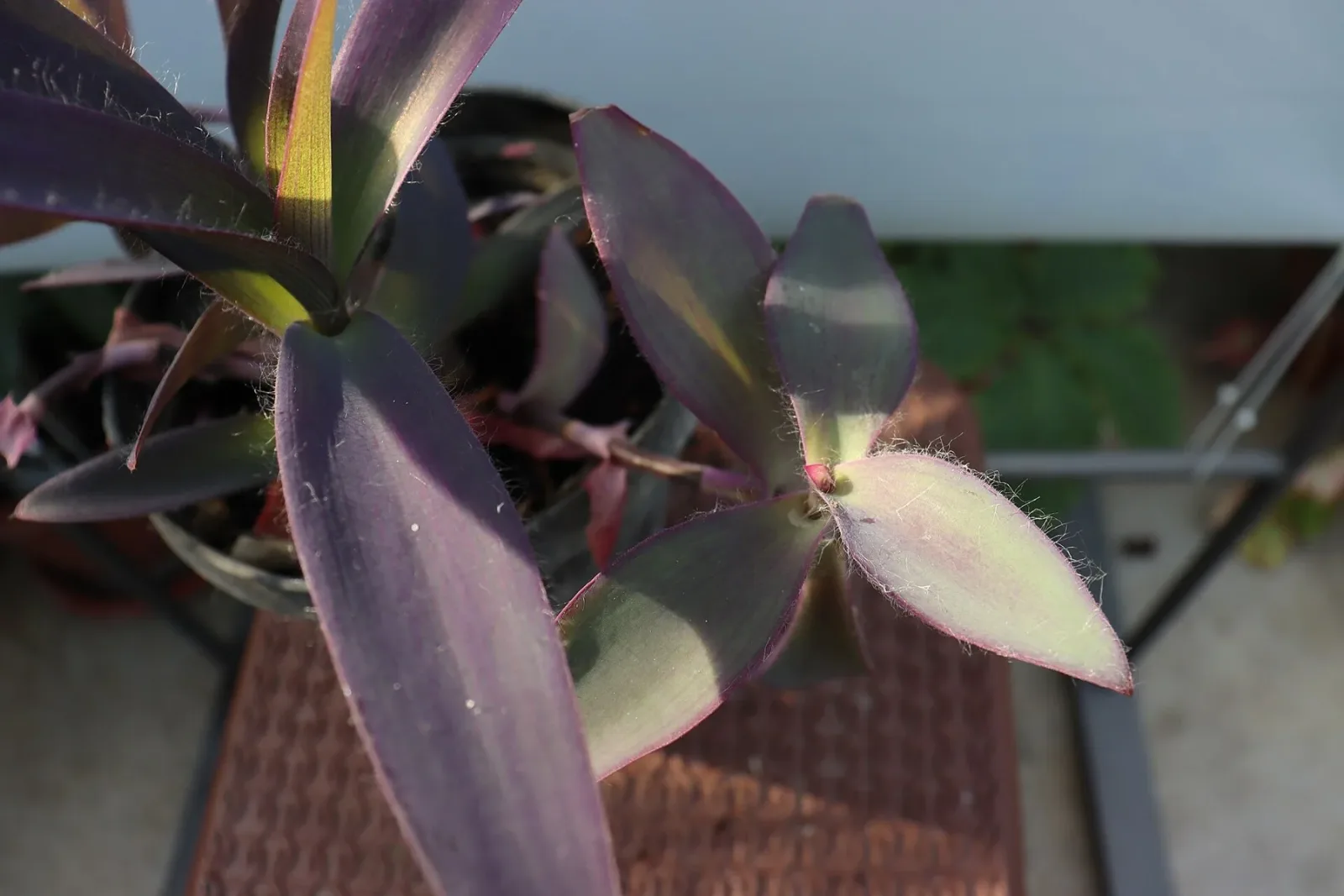
Cover photo: Dandarmkd / Wikimedia Commons. Original photo · CC BY-SA 4.0. Resized and converted for web use.
Prune Purple Heart by cutting a long stem just above a healthy leaf joint that stays on the parent plant. Keep enough sound stem and leaves below the cut. Work in mild, active growth and use clean scissors. Better light matters after pruning, too.
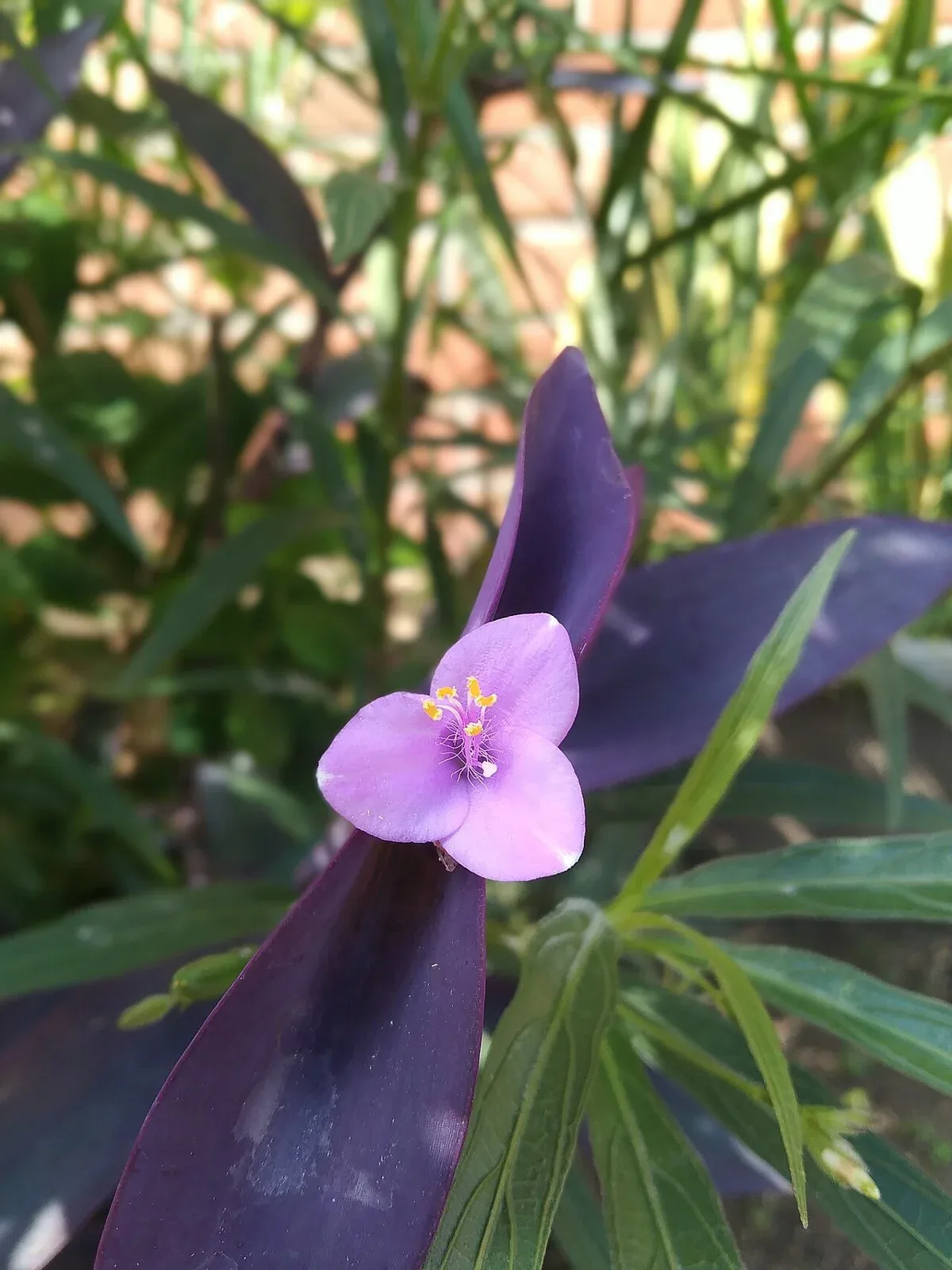
A leaf joint is called a node. Buds there can make side shoots, which is why the cut position matters. This guide is for Tradescantia pallida; the Purple Heart plant profile explains its full care needs.
Decide what you want to tidy
Look at the whole pot before cutting. You may only need to shorten a few trails or remove a broken stem. A plant with long bare spaces between leaves needs a light check as well as a trim.
Do not cut a weak, cold or badly rooted plant back hard just to make it look neat. Correct the root or site problem first. A small plant with few healthy leaves has less to spare than a full growing basket.
| Stem condition | What to do |
|---|---|
| Healthy but longer than the space allows | Shorten above a useful node. |
| Long, weak and sparse | Improve light, then trim while keeping healthy lower growth. |
| Broken but firm and healthy | Tidy the parent cut; consider a stem cutting. |
| Soft, black or pest-filled | Do not use it as a healthy propagation piece. |
Use gloves and support brittle stems
Sap and leaf contact can irritate skin. Wear gloves, use clean scissors and keep cut pieces away from chewing pets and children. Hold the stem lightly near the cut so it does not tear away from the rest of the plant.
Put a tray or sheet below the basket to catch pieces. Purple Heart can root from dropped stems. Collect the tips and leaves rather than letting them fall into other pots, open soil or drains.
Trim a few stems first
- Choose one long healthy stem and trace it back towards the pot.
- Find a firm leaf joint where you want the new shorter stem to end.
- Cut just above that joint, leaving it on the parent plant.
- Keep healthy leaves and more than a bare damaged stump below the cut.
- Repeat only where the shape needs it, then turn the pot and check the balance.
There is no need to cut every stem to the same height. Keep some leafy growth for a full display. If the base is very bare, rooted tip cuttings can help rebuild the pot rather than repeated severe cutting.
Keep the useful tips
A sound tip with stem nodes can be used for a new plant. Remove lower leaves before putting a node into lightly moist rooting mix. Read the Purple Heart cuttings guide before filling gaps with unrooted stems.
Do not push a large bunch of tips into a cold, wet pot. Keep enough space for air and keep leaves above the mix. Discard failed, soft or infested pieces in a way that does not spread them into the garden.
Fix the reason for stretched growth
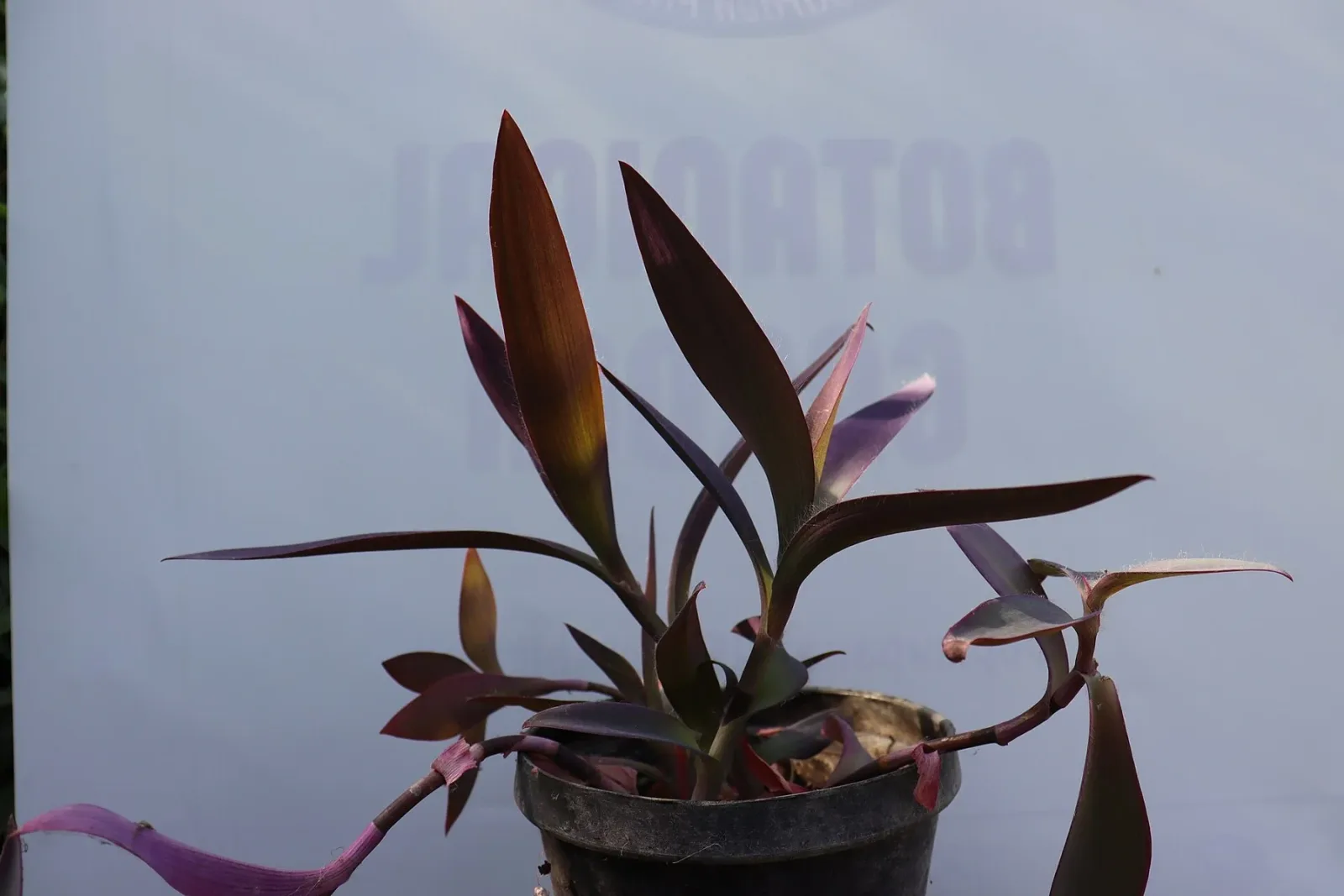
Weak light often leads to long thin stems and greener leaves. Pruning removes the old length, but it does not supply light. Move the plant gradually into a brighter suitable spot and gentle sun. The Purple Heart light and colour guide helps with that check.
In an Indian summer, do not put a shade-grown basket straight against hot west-facing glass. In the monsoon, keep useful daylight and avoid repeated soaking rain. During cold northern winters, a bright sheltered place is better than an exposed, cold wet basket.
Water the roots, not the cut ends
After trimming, water only if the potting mix needs it. An established plant can use the upper 3–5 cm drying check, followed by a thorough drink and full drainage. Cutting leaves off does not create a reason to soak already wet roots.
Pause heavy feeding and keep care steady. A light feed belongs to healthy active growth, not a weak plant you have just cut hard. There is no fixed date for a full basket after pruning. Watch the health and spacing of new shoots as the plant grows.
Sources
- Wisconsin Extension: Purple Heart
- NC State Extension: Tradescantia pallida and its irritation hazard
- RHS: Tradescantia pallida Purple Heart
Sources checked on 21 November 2026. Care steps are adapted for Indian homes; check the actual light, warmth and moisture around your plant.

Comments
No comments yet — share what worked in your climate.