
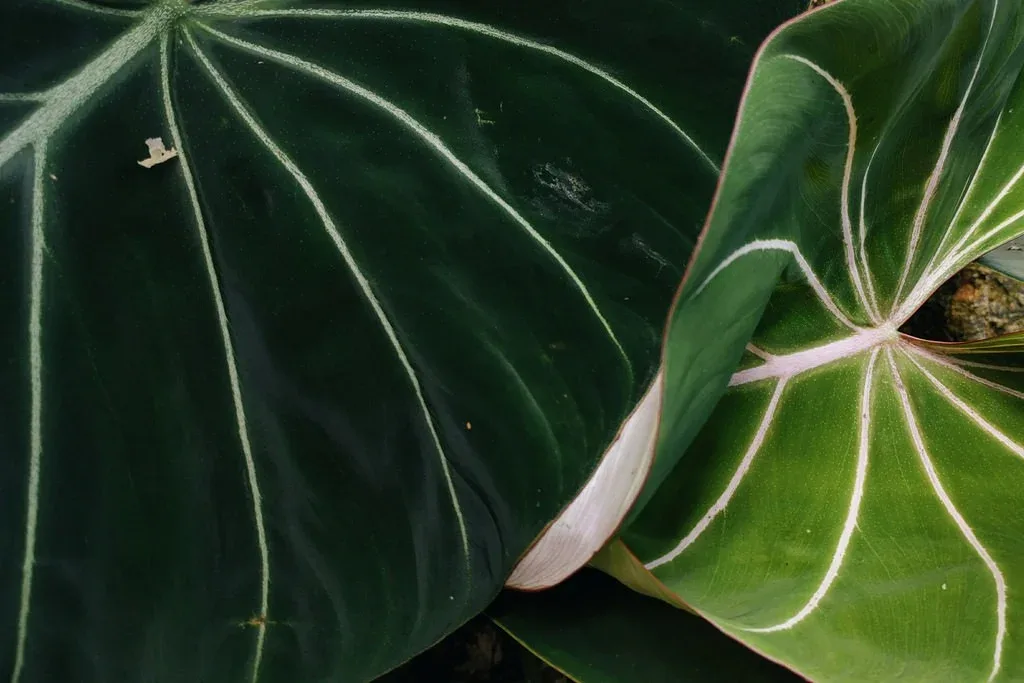
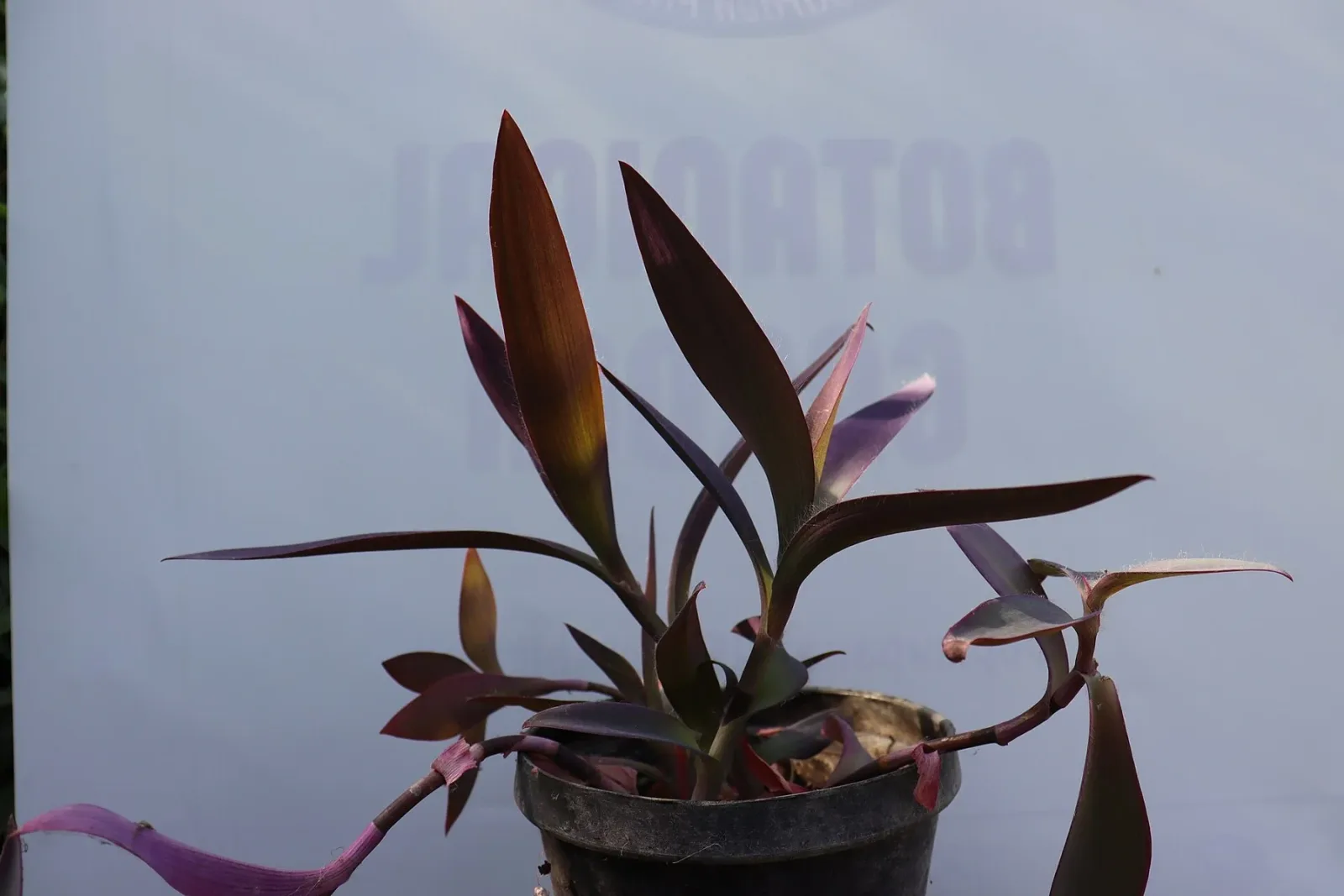
Cover photo: Theoperatingsystem / Wikimedia Commons. Original photo · CC BY-SA 4.0. Resized and converted for web use.
To propagate Philodendron gloriosum, you need part of the thick main stem with a healthy node. Roots on that section help. A leaf and its stalk without a stem node cannot make a complete new plant.
The main stem creeps across the growing surface. Do not treat it like a long climbing vine and cut at a random leaf stalk. Compare its growth habit with the Gloriosum plant profile before you make any cut.
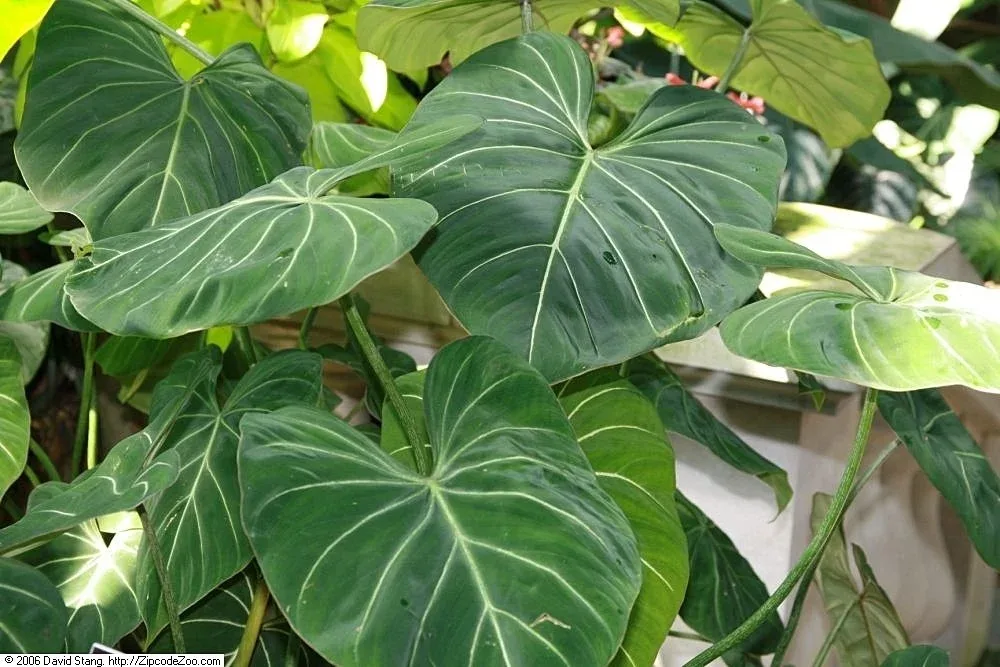
Find the stem, node and growing end
Look at the thick sideways stem near the mix. A node is a joint where a leaf, root or new shoot can grow. The thin upright stalk holding one leaf is not that main stem.
Plan the sections before cutting. Keep the parent plant with sound roots and healthy growing tissue. Choose a firm section with a node and, where possible, roots of its own. If you cannot locate a useful node or bud, leave the plant whole and ask an experienced grower to show you.
Only divide a plant that can spare a section
A small new plant with one weak growing end is a poor candidate. Start with an established plant and a clear reason to divide. Roots reaching the end of a pot do not force you to cut it; a longer planter may be the better answer.
Choose warm active growth and mild conditions. Cold northern winters and hot dry balcony weather make fresh cuts harder to manage. Take a sick or rotting plant as a separate rescue case, not as an ideal source of many new plants.
Get clean tools and a small pot ready
Wear gloves. Philodendrons are toxic if chewed, and the sap can irritate skin. Keep pets and children away from cut pieces and wash tools and hands after the job.
Use a sharp clean blade and a draining pot that suits the roots. Prepare an airy mix before cutting so the section does not sit loose while you look for supplies. A wide planter is useful later, but a small rooted piece does not need a large wet trough.
Separate a useful rooted section
- Ease the plant from the pot while supporting the roots. Clear only enough loose mix to see the main stem and root groups.
- Choose a firm stem section with at least one healthy node. Prefer a section with roots and a useful bud or growing shoot.
- Make a clean cut between nodes, avoiding the growth point and attached roots where you can.
- Set each rooted section into its own draining pot. Keep roots in the mix and the upper creeping stem at the surface.
- Gently support the piece so it does not rock. Keep leaves and fresh cut surfaces out of a deep wet layer.
Do not cut sound tissue into tiny pieces simply to increase the number of pots. A healthy, well-rooted section is easier to manage than a small bare piece with few stored reserves.
Keep moisture near roots, not trapped on the stem
Use bright filtered light and stable warmth. Keep an airy mix lightly moist around fresh roots, with full drainage. Avoid repeated soaking, hard sun or a sealed hot box.
For the correct planting depth, use the Gloriosum potting guide. Watering a fresh section is not the same as watering a large established pot. Check its roots and mix rather than using the parent plant’s old schedule.
Wait for real root and shoot growth
There is no exact number of days for every section to root or grow a shoot. Existing roots, node health, room warmth and light all matter. Do not keep lifting the piece out of the mix to test it.
Watch for a firm stem and useful new roots or growth. A leaf that stays green for a while is not proof that a leaf-only cutting can make a new plant. Once the section is rooted and growing, move towards normal care and light feeding.
If leaves yellow and the mix stays wet, check the Gloriosum yellow-leaf guide. Soft dark stem tissue needs a prompt check for stem rot. Do not keep burying a failed section deeper or feeding it to force a response.
Sources
- Kew: Philodendron gloriosum, including its creeping stem
- Singapore NParks: Philodendron gloriosum
- RHS: growing philodendrons
- Illinois Extension: taking cuttings
Sources checked on 21 November 2026. Care steps are adapted for Indian homes; check the actual light, warmth and moisture around your plant.

Comments
No comments yet — share what worked in your climate.