
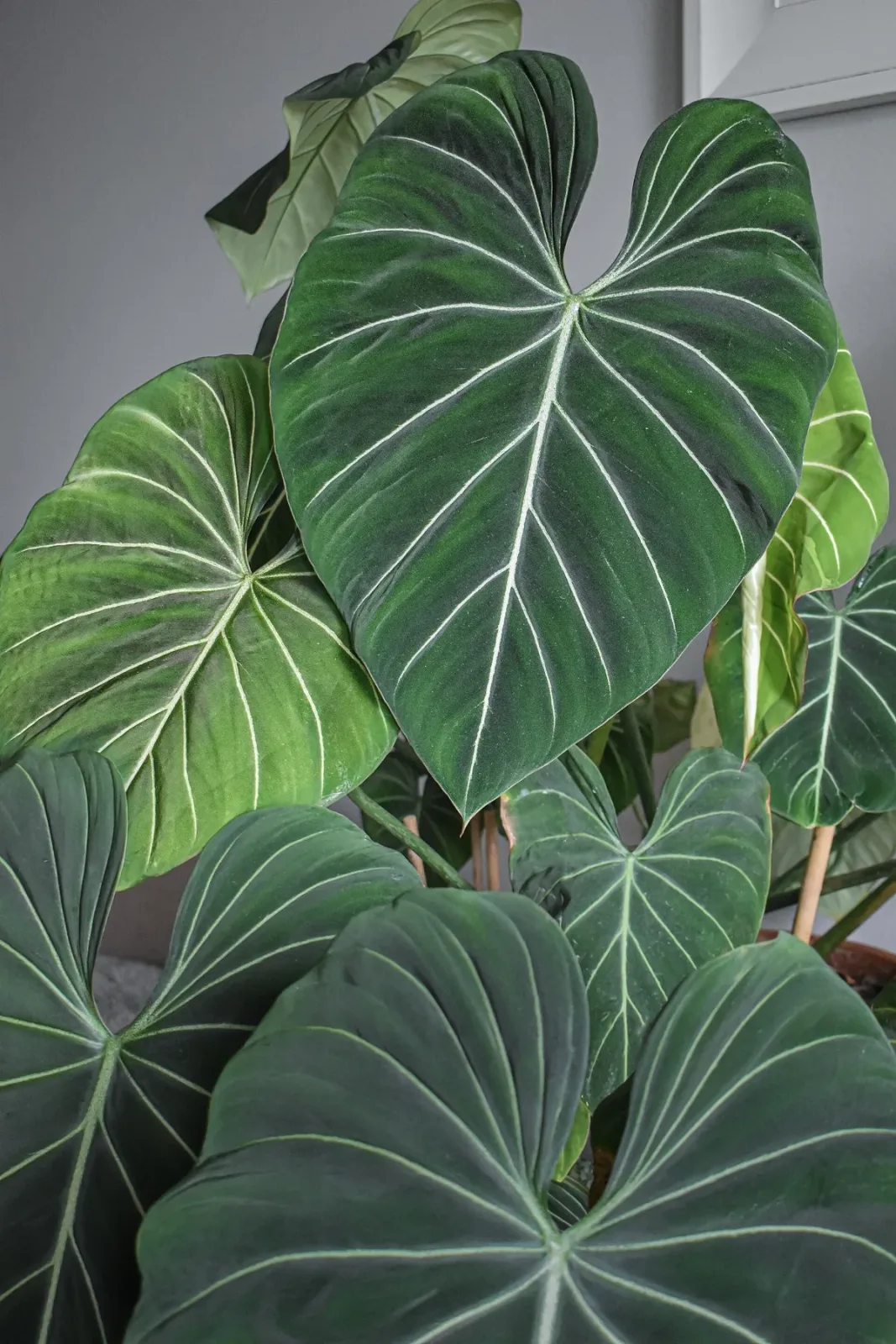
Cover photo: Myplantcollection_ / Wikimedia Commons. Original photo · CC BY-SA 4.0. Resized and converted for web use.
Pot Philodendron gloriosum with its roots in an airy mix and its thick creeping stem at the surface. Give the growing tip room to travel across the pot. A wide or long planter can help, but it must have drainage holes and fit the size of the root system.
This plant spreads along the ground rather than using a moss pole in the usual way. It is different from Philodendron ‘Glorious’, a climbing hybrid. Check the label and the Gloriosum plant profile before choosing the setup.
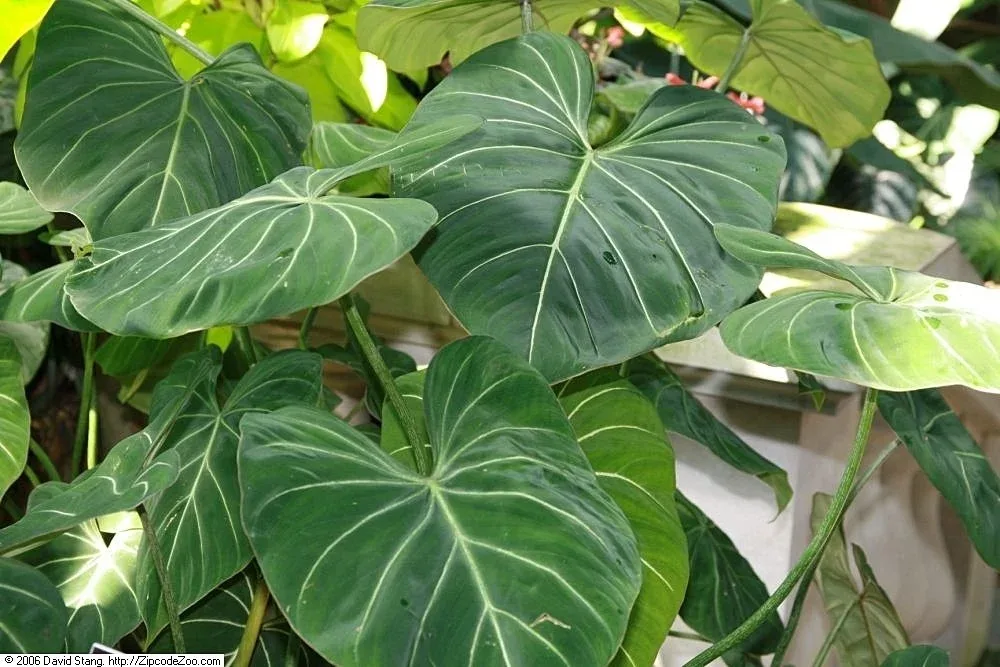
Find the main stem before you add mix
Look at the thick stem running sideways at the base. Leaf stalks rise from it, and roots grow from its nodes. A node is a joint where growth can start. The roots belong in the mix; the upper side of the main stem should not disappear under a deep wet layer.
Do not mistake each upright leaf stalk for a separate plant. Burying the whole base to make it stand upright can leave the creeping stem too wet. Support a loose plant gently while its roots hold, rather than packing more damp mix over the stem.
Choose space for roots and the growing tip
| Pot feature | Why it helps |
|---|---|
| Open drain holes | Allow spare water to leave. |
| Room ahead of the creeping tip | Gives the stem space to grow across the surface. |
| Size suited to the roots | Avoids a small plant in a large mass of wet mix. |
| Stable base | Helps support broad leaves without tipping. |
A rectangular planter is useful when the tip keeps reaching one side. It is not a rule that every small Gloriosum needs a long trough. Match the container to the plant you have, and leave usable space in front of its growing end.
Use an open mix, then test how it dries
A practical starting blend is equal parts quality indoor potting mix, small orchid bark and perlite by volume. The potting mix holds moisture; bark and perlite keep the blend open. This is a starting recipe, not a proven perfect ratio for every home.
Check the original product. Some mixes are already very coarse, while others are fine and dense. In a humid room, a dense mix can stay wet for too long. In a hot dry home, a very coarse small pot may need more frequent checks. Never use a stone layer to replace drainage holes.
Repot with the stem in view
- Wear gloves and use clean tools. Philodendron sap can irritate skin; keep the plant away from chewing pets and children.
- Remove the old pot gently while supporting the root ball.
- Check roots and the stem. Trim only clearly dead or rotten tissue where needed, using clean tools.
- Set the roots into the new mix, leaving the upper main stem at the surface.
- Point the growing end towards the open space in the pot.
- Water to settle the mix, let it drain and empty the outer tray.
If you find soft dark roots or stem tissue, do not bury it and hope a bigger pot will help. Check the stem rot guide and deal with the damage first.
Know when a move is worth doing
Repot when roots fill the pot, the tip reaches an edge with no useful space left or the mix has broken down. Warm spring growth is a useful window in many Indian homes. Wait for chilly nights to pass in the north, and avoid optional root work during a heatwave.
You can give a healthy plant more room without cutting it into pieces. If you do want to make another plant, use the Gloriosum stem-division guide. A leaf stalk alone is not a complete cutting.
Check the new pot before each drink
Allow the upper 2–3 cm of mix to dry and check that the pot feels lighter before watering through. A newly filled pot may dry more slowly than the old one. Keep the plant in bright filtered light and out of direct AC airflow.
Do not add extra feed to make up for a poor mix. If leaves yellow after the move, check the roots, depth and drying pattern using the Gloriosum yellow-leaf guide. The size of the new pot alone does not tell you whether the roots are doing well.
Sources
- Kew: Philodendron gloriosum, including its creeping stem
- Singapore NParks: Philodendron gloriosum
- RHS: growing philodendrons
Sources checked on 21 November 2026. Care steps are adapted for Indian homes; check the actual light, warmth and moisture around your plant.

Comments
No comments yet — share what worked in your climate.