
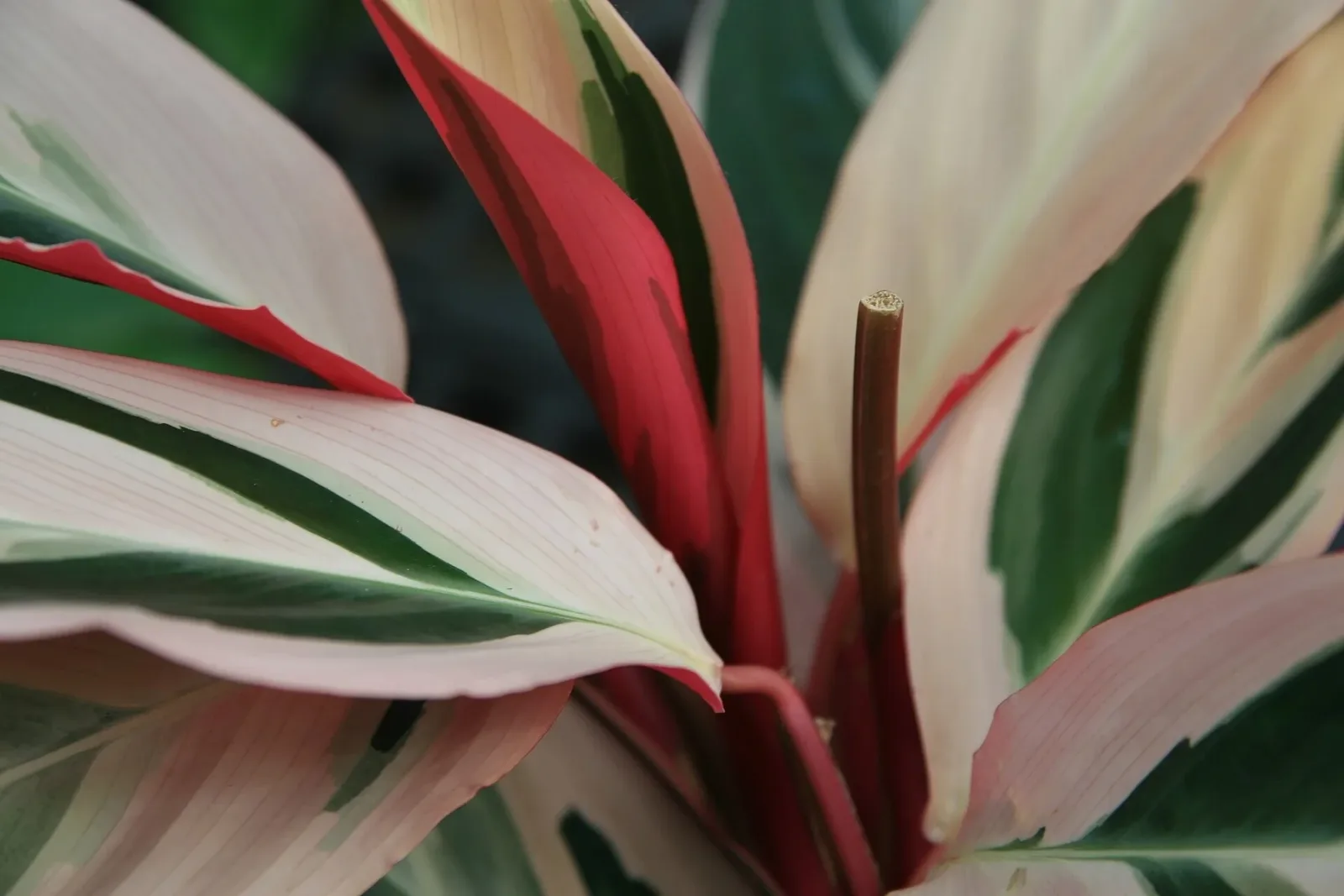
Cover photo: David J. Stang / Wikimedia Commons. Original photo · CC BY-SA 4.0. Resized and converted for web use.
If Triostar leaves curl tightly during the day or turn brown at the edges, check the potting mix first. Then look at hot sun, dry airflow and pests. Do not add water just because a leaf is curled; roots in a wet pot can also be in trouble.
Stromanthe thalia ‘Triostar’ also changes its leaf angle as light changes. Leaves lifting at night can be normal. The plant is also sold as Stromanthe sanguinea ‘Triostar’. See its main Triostar care page for the full routine.
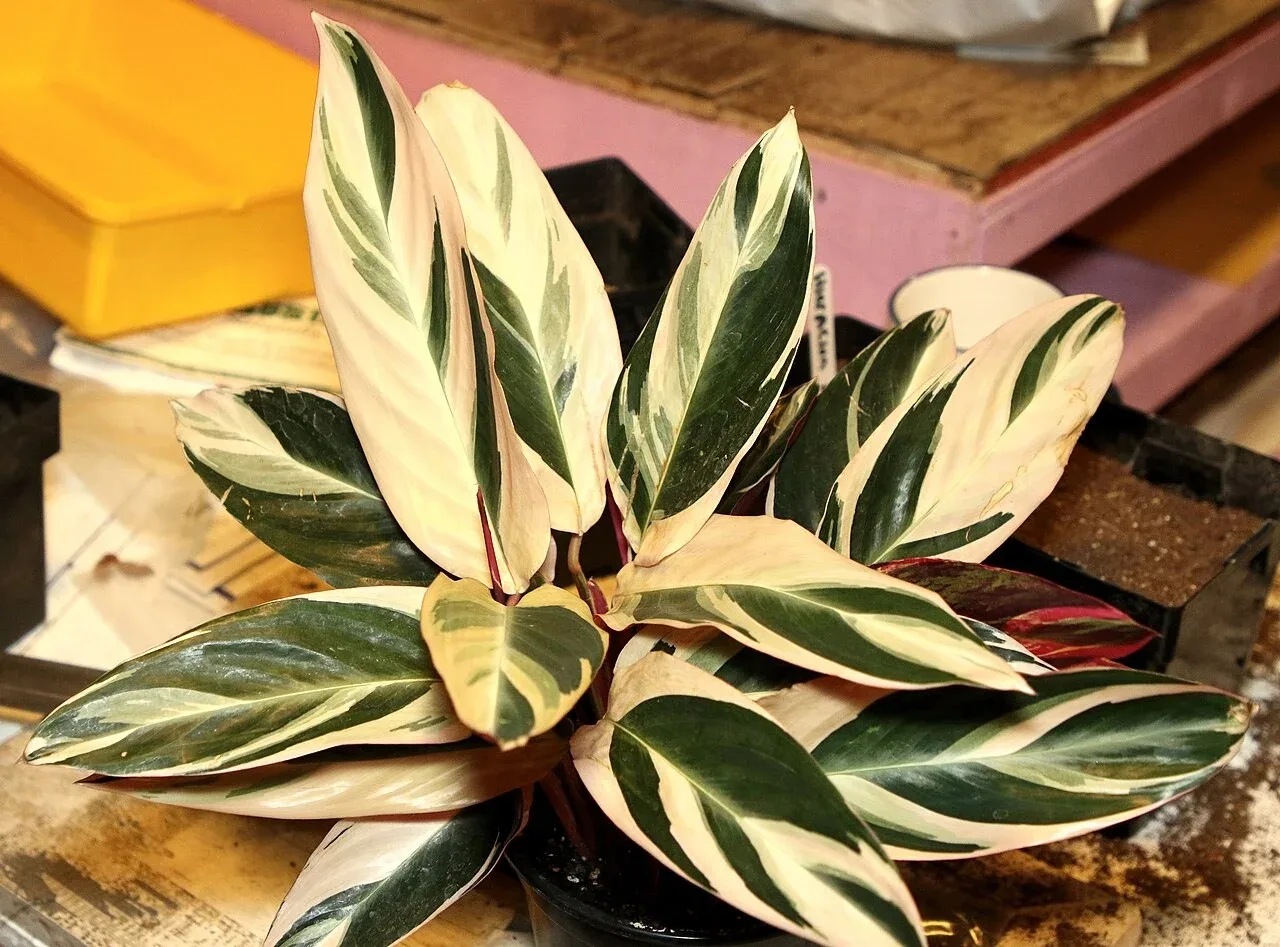
Normal movement or a problem?
Watch the same leaf in morning, afternoon and evening. Healthy leaves can lift and show more of their pink undersides at night. This is different from a leaf rolled tightly into a tube in a hot room, or a dry edge that stays crisp all day.
Use touch and the growing conditions as well as a photo. A picture of one curled leaf cannot tell you whether the roots are dry, wet or damaged.
| What you see | Check next | First change |
|---|---|---|
| Dry mix and a light pot | Whether the whole root ball has dried | Water through, then drain. |
| Damp heavy pot with yellowing leaves | Drainage and root condition | Stop extra watering and inspect if decline continues. |
| Crisp edges beside an AC outlet | Dry airflow and humidity | Move out of the air stream. |
| Dry pale patches on the sunny side | Harsh direct sun | Use bright filtered light. |
| Fine webbing or tiny speckles | Leaf undersides for mites | Separate the plant and identify the pest. |
Keep the roots lightly moist, not soaked
Check the top 1–2 cm of mix. When it starts to dry, water the whole root area and empty the tray. Avoid letting the pot turn bone dry, then soaking it again and again. That swing can damage leaf edges.
If the centre stays wet, adding another drink is the wrong first move. Check drain holes, the cover pot and the amount of mix around the roots. Use the Triostar watering guide to make this check clear.
Look at the air where the leaves sit
An AC room can feel comfortable to people but have dry air blowing straight over the plant. Move it away from the outlet. A small humidity meter helps you check the actual spot rather than guess from how the room feels.
Humid air with gentle movement suits Triostar. A humidifier is useful in a room that stays dry. A few sprays of mist do not keep a whole room humid. In a damp coastal monsoon home, more humidity may be unnecessary; give the leaves space and do not let them sit against a wet wall.
Check water, feed and sun
A white crust on the mix or pot edge is a reason to review water and feed. If salts are a concern, use a suitable lower-mineral water source. A basic carbon filter does not necessarily remove dissolved minerals. Do not blame all tap water or all brown edges without checking the rest of the care.
Where healthy roots and open drainage allow, a thorough watering can rinse some salts out of the mix. Do not keep flushing a pot that is already wet and failing. Hold feed while you sort out a stressed root system.
Keep pale leaf areas out of hard afternoon sun. An east-facing site with soft light may be a good start. Move into brighter light slowly if the current room is dim. Too little light also makes the pot dry more slowly.
What to trim and what to leave
Brown edges do not turn green. Keep a leaf that still has plenty of healthy green area. Remove a fully dead or badly damaged leaf at its base with clean scissors. Do not cut off most of the leaves to make the plant look new.
If roots are badly crowded or the mix has broken down, read how to repot and divide Triostar. Do not repot just because one leaf has a brown tip. If there is webbing or speckling, use the spider mite guide; humid air alone does not remove mites.
Sources
- Wisconsin Extension: Stromanthe Tricolor
- NC State Extension: Stromanthe thalia
- UF/IFAS: Triostar Stromanthe
- Iowa State Extension: brown leaf edges
- University of California IPM: houseplant problems
Sources checked on 21 November 2026. Care steps are adapted for Indian homes; check the actual light, warmth and moisture around your plant.

Comments
No comments yet — share what worked in your climate.