
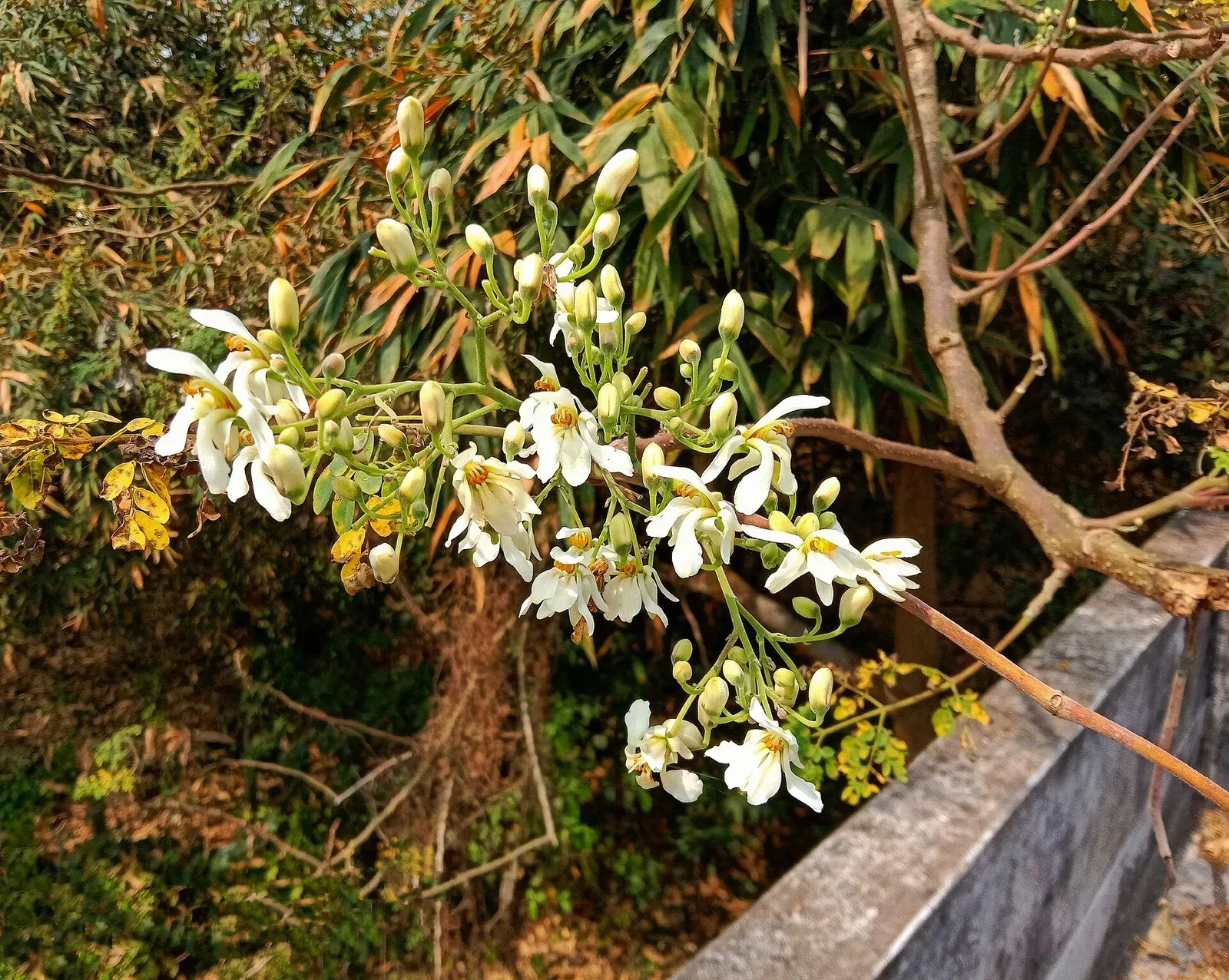
A drumstick (moringa, sahjan) tree that grows plenty of leaves but no flowers is usually in the wrong part of the year, is being watered too much, or has never been pruned. TNAU records moringa's main flowering season as January to April, with a peak around February. A short dry spell helps trigger flowering, while rain or waterlogging at flowering time makes flowers drop. Heat above about 40°C, frost, shade and bud-feeding pests also reduce flowers. Prune after harvest, give full sun, and water steadily but not heavily once flowering starts.
When does moringa flower?
TNAU's moringa book records flowering from January to April, with a peak around February, and flowers opening in the morning. It notes that moringa performs well in summer but not in winter, giving a lean period from November to February in its trials. Annual (seed-grown) types such as PKM 1 and PKM 2 start flowering about five to six months after sowing.
So a tree that is all leaves in August to November may be perfectly normal. Judge it after the cool season.
Common reasons moringa is not flowering
Too much water, or rain at the wrong time
Moringa is a dry-land tree. TNAU's research on soil moisture and flowering found that 20 to 30 days of moisture stress (depending on soil) helps induce flowering by holding back excess leafy growth. TNAU also advises timing sowing so flowering does not coincide with the monsoon, because rain at flowering causes heavy flower shedding. Dry, hot weather during flowering is preferred.
What to do: if your tree is constantly watered, along with a lawn or other plants, ease off watering for a few weeks before the flowering season. Make sure the base never sits in water; TNAU notes moringa roots are highly sensitive to waterlogging.
Water stress during flowering and fruit set
Once flowering starts, the advice reverses. TNAU says moisture stress at peak flowering and fruit set causes flower drop, pollen drying, immature fruit drop and pods drying from the tip. Too much water and waterlogging at this stage also cause flower and fruit drop. Water regularly and moderately while the tree is flowering.
Never pruned, or pruned at the wrong time
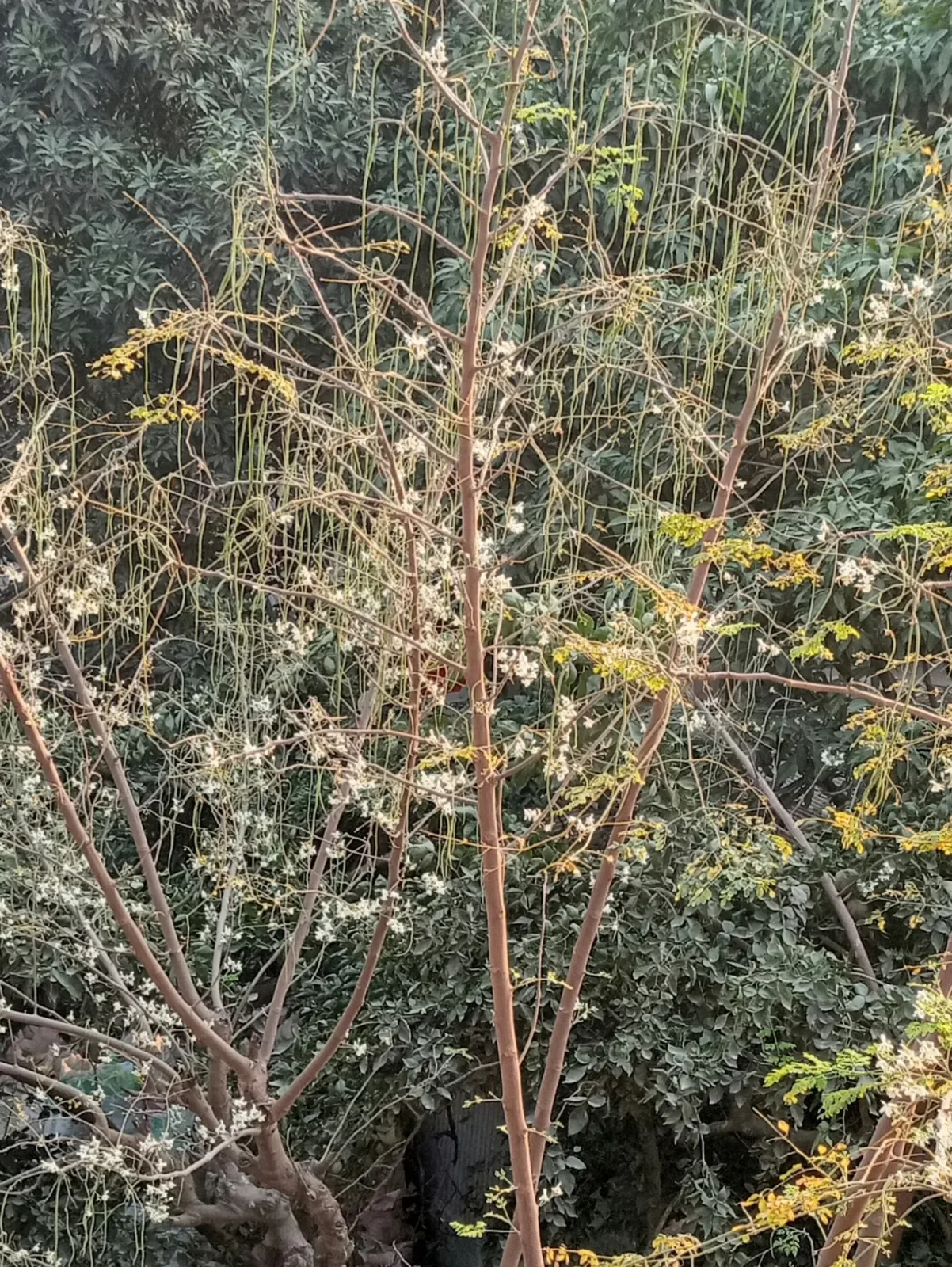
Moringa flowers on new shoots. TNAU's guidance for annual moringa is to pinch seedlings at about 75 cm to encourage branching, and to cut trees back to about 90 cm above ground after harvest, after which they come back into bearing in four to five months. For perennial moringa, TNAU recommends medium pruning, removing about 70 cm from the shoot tips, to regulate flowering. A tall, unpruned tree may flower only at the top, out of sight, or flower poorly.
Extreme heat or frost
TNAU gives 25 to 35°C as the best range for growth, says moringa is highly susceptible to frost, and notes that temperatures above 40°C cause flower shedding. In North India, trees are often damaged in cold winters and may flower later, once warmth returns; in very hot areas, flowers can drop in May and June heat.
Too much shade or nitrogen
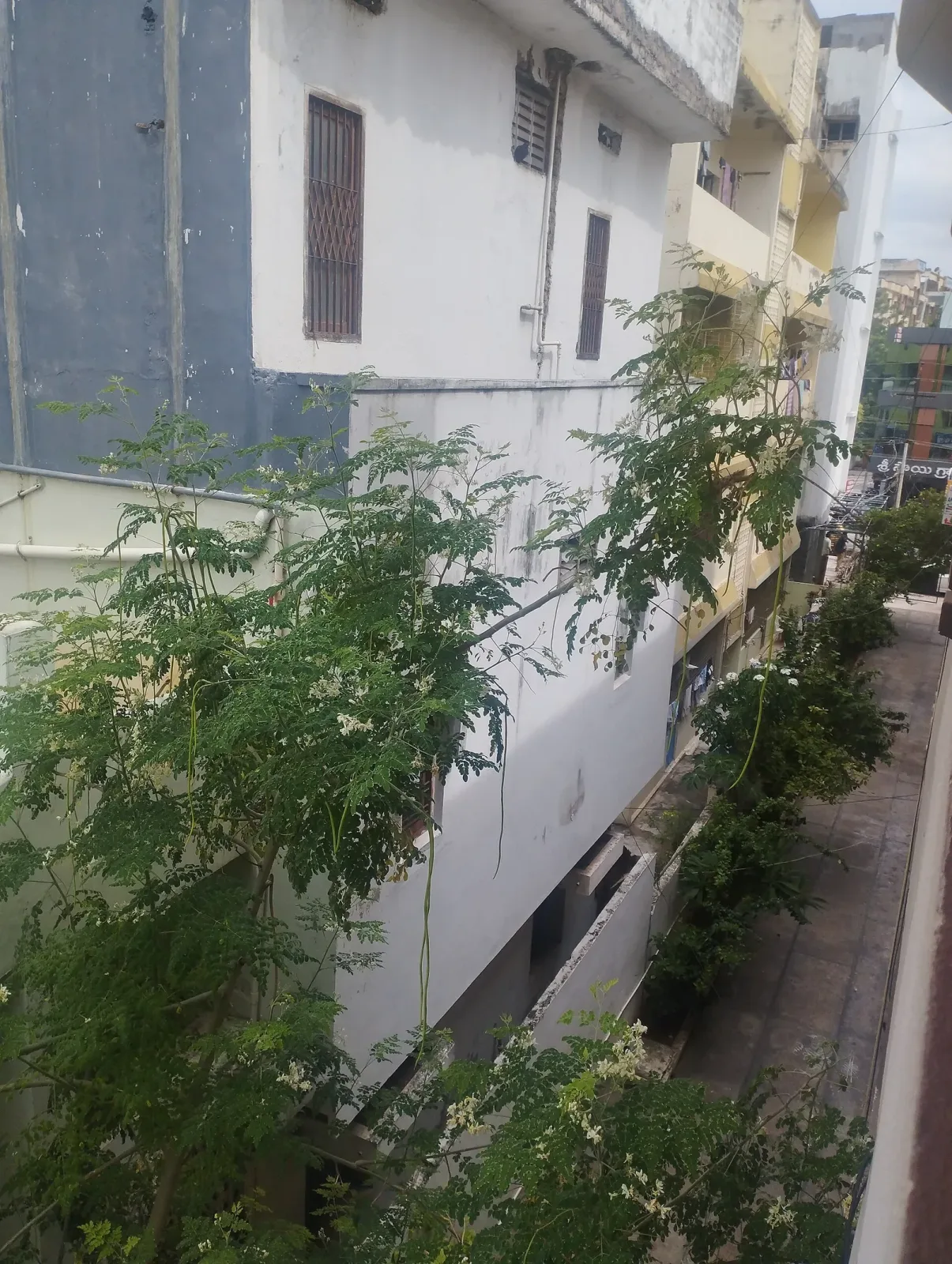
Moringa needs full sun. A tree shaded by buildings or larger trees grows tall and thin with few flowers. Heavy feeding with nitrogen (urea, fresh manure) drives leafy growth at the cost of flowers; TNAU's moisture-stress findings work precisely by suppressing excess vegetative growth.
Bud pests
If the tree forms buds but they fall before opening, look for pests. TNAU's moringa book describes:
- Bud worm (Noorda moringae): the larva bores into flower buds and causes heavy shedding. In severe cases in South India it damaged 78 percent of buds. The larva is dirty brown with a stripe down the back and a black head.
- Bud midge (Stictodiplosis moringae): larvae feed inside buds, causing many to drop.
Split a few fallen buds: a small larva or tunnelling inside points to a pest, while clean buds suggest weather or water stress. Collect and destroy fallen buds. Ask your KVK about approved controls if damage is heavy.
Region and planting time
| Region | Planting time | What to expect |
|---|---|---|
| Tamil Nadu | July to October (state agriculture department) | Main flowering January to April, peak around February (TNAU) |
| Kerala | May to June (KAU) | KAU's variety Anupama is described as early flowering |
| Northern plains | No institutional date found in the sources we checked | Frost damage in cold winters can delay flowering until warmth returns (TNAU says moringa is highly sensitive to frost) |
| Hills | Not recommended where frost is regular | Frost damage; poor flowering |
Seed-grown or cutting-grown?
Annual varieties such as PKM 1 and PKM 2 (TNAU) are grown from seed and flower within about six months. Many home trees are perennial types grown from large stem cuttings and may take longer. If your tree is young, give it time.
Quick checklist
- Is it August to November? Wait for the January to April flowering season.
- Is the tree watered often or standing in wet soil? Reduce watering before the flowering season; improve drainage.
- Has it been pruned? Cut back after harvest to encourage new flowering shoots.
- Is it in shade? Moringa needs full sun.
- Are buds forming and dropping? Check for bud worm or midge; check watering.
- Has there been frost or 40°C-plus heat? Expect a delay or drop.
Watch: when to prune moringa
A natural-farming video on pruning time for moringa.
Related pages
Sources
- Tamil Nadu Department of Agriculture: Cropping season for major horticulture crops (Tamil Nadu planting seasons for banana, papaya, pomegranate, tomato, brinjal, okra, gourds and drumstick). Accessed 10 Nov 2026.
- Kerala Agricultural University: Package of Practices, vegetables (Kerala sowing seasons for okra, bitter gourd, bottle gourd, ridge gourd, Basella and drumstick). Read on 9 Nov 2026; the site returned errors on the 10 Nov 2026 recheck.
- TNAU: Moringa (English book) (flowering January to April; soil moisture management for flowering; rain at flowering; heat above 40°C; frost susceptibility; waterlogging; bud worm and bud midge; lean period November to February). Accessed 10 Nov 2026.
- TNAU Agritech: Annual moringa (PKM 1 and PKM 2; July to October planting; pinching at 75 cm; cut back to 90 cm after harvest; medium pruning of perennial moringa). Accessed 10 Nov 2026.


Comments
No comments yet — share what worked in your climate.