
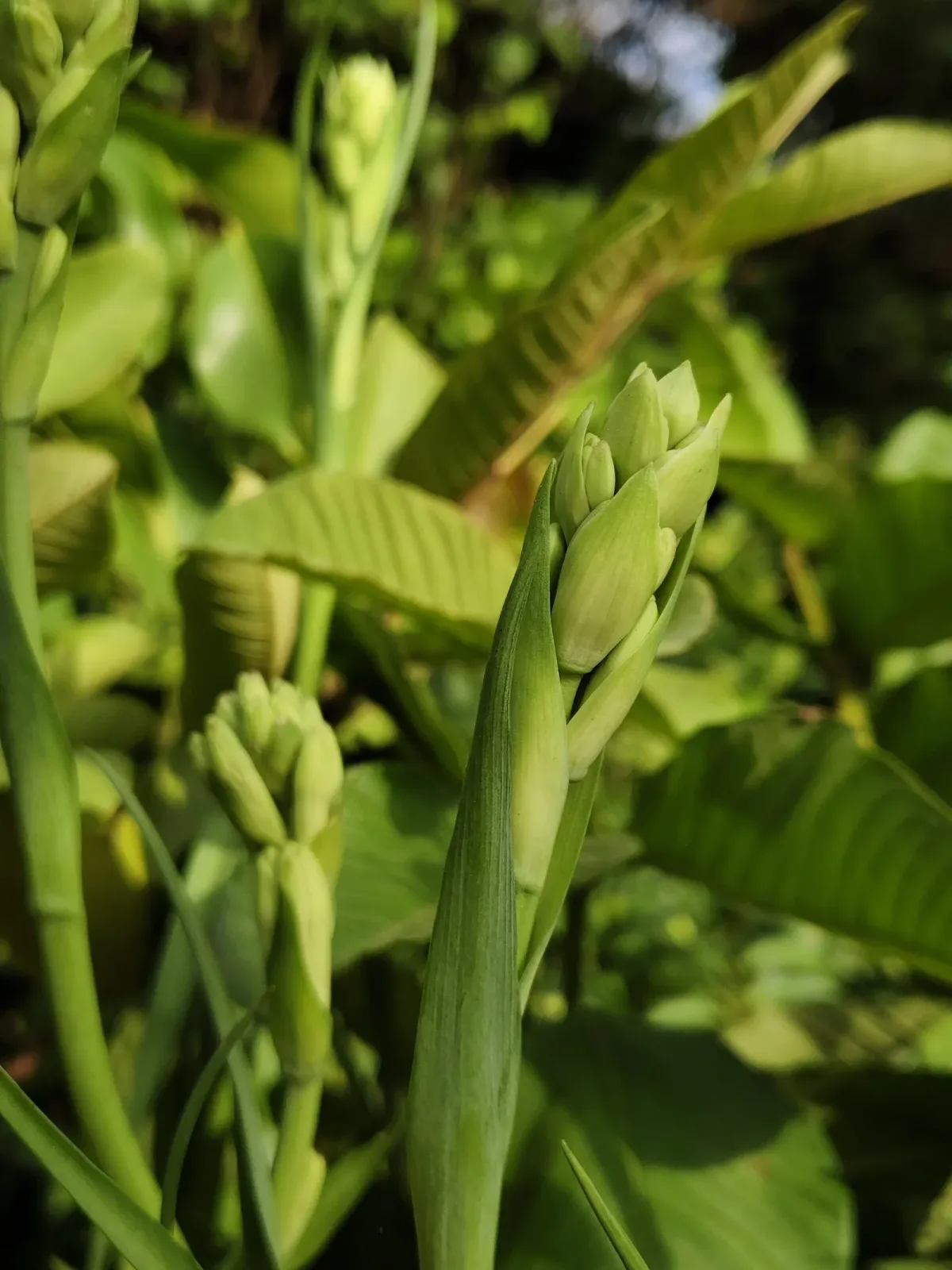
A rajnigandha (tuberose) plant that stays leafy and does not flower usually has one of these problems: bulbs that are too small, too little sun, the wrong season, an old crowded clump, or roots sitting in wet soil. IIHR says tuberose starts flowering about three months after planting, uses bulbs of 2 to 2.5 cm diameter, and needs a sunny spot with temperatures of about 20 to 30°C. Plant good-sized bulbs at the right time for your region in full sun, keep the soil moist but never waterlogged, and divide clumps every few years.
When does rajnigandha flower?
From a healthy bulb, tuberose flowers about three months after planting (IIHR). The season depends on where you live:
| Region | Planting time | Flowering | Source |
|---|---|---|---|
| Punjab and similar North Indian plains | March to April | June to October | PAU |
| IIHR general guidance (Bengaluru-based institute) | May to July | About three months after planting | ICAR-IIHR |
| Tamil Nadu | June to July | About three months after planting | TNAU |
| Hills | Late spring, after frost | Summer | General practice, no institutional source found; check your state university or KVK |
In North India, rajnigandha goes quiet in winter. Leaves may yellow and the plant rests until spring. That is normal, not a fault.
Common reasons it is not flowering
1. Bulbs too small
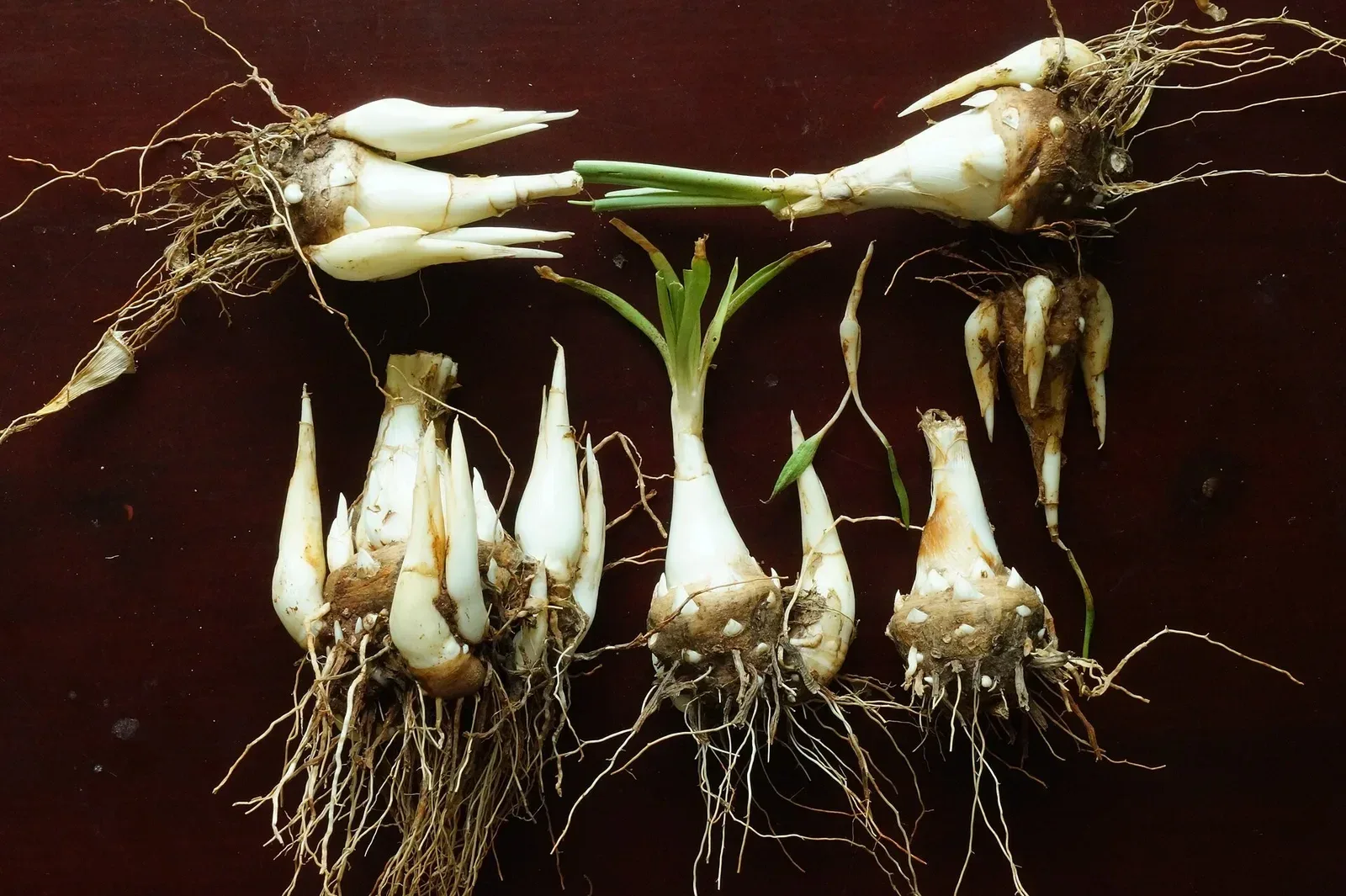
IIHR's tuberose guidance uses spindle-shaped bulbs of 2.0 to 2.5 cm diameter to get a uniform crop, and TNAU uses bulbs of 25 to 30 g. Small bulblets will grow leaves first and may need a season or more to reach flowering size. If you bought a pack of tiny offsets, give them a year.
2. Not enough sun
PAU says tuberose needs an open, sunny location, and IIHR says it performs well in sunny situations. A pot on a shaded balcony may stay leafy. Give at least six hours of direct sun (a common horticultural guideline).
3. Wrong season or too cold
Tuberose likes 20 to 30°C (PAU and IIHR). Bulbs planted in North Indian winter sit idle until it warms up. Very high temperatures also hurt: PAU notes that above 40°C, spike length and flower quality suffer.
4. Old, crowded clumps
Tuberose bulbs multiply. PAU notes that you can take two or three ratoon (repeat) crops from one planting, but the ratoon crop gives more spikes with fewer florets, shorter spikes and lighter flowers. After about three years, a pot or bed packed with small bulbs often gives poor flowering. Lift the clump when flowering is over, separate the bulbs, replant the largest and grow on the small ones.
5. Waterlogging or dry spells
PAU says tuberose needs moist soil but must not be waterlogged. Use a free-draining mix and a pot with drainage holes, and water when the top few centimetres dry out. In heavy soils, PAU recommends raised beds.
6. Freshly lifted bulbs
IIHR notes that bulbs are almost dormant when lifted at the end of the season, and TNAU plants bulbs about 30 days after harvest. PAU says cleaned bulbs can be replanted after four to six weeks or stored for the next season. Bulbs replanted immediately after lifting may sit idle for a while.
7. Nematodes and other pests
IIHR names thrips, root mealybugs and nematodes as the major pests of tuberose, and TNAU lists root-knot nematode. Nematode-affected plants are stunted and weak, with knotted or swollen roots. Look-alikes: poor feeding, small bulbs and too much shade also give weak plants, but with clean roots. If you find root galls, discard the soil and start fresh bulbs in new mix. Ask your KVK about approved controls; we do not give doses.
8. Feeding
PAU's practice applies nitrogen in the early growth phase for good leaf growth, with phosphorus and potash at planting. Heavy nitrogen alone tends to give lush leaves without spikes (a general horticultural principle). Use compost plus a balanced feed rather than only urea.
Single or double?
PAU describes single types (one row of petals) as more fragrant and double types (several rows, often pink-tinged buds) as milder. PAU recommends Arka Prajwal (single) and Suvasini (double) for Punjab; TNAU lists many more, including Calcutta Single, Prajwal, Shringar, Calcutta Double and Suvasini.
Quick checklist
- Bulbs smaller than about 2 cm across? Wait a season.
- Less than six hours of sun? Move to a sunnier spot.
- Winter in North India? Wait for spring.
- Same clump for three or more years? Lift, divide and replant the biggest bulbs.
- Soggy pot? Improve drainage.
- Stunted, knotted roots? Suspect nematodes; start fresh.
Watch: why rajnigandha is not flowering
A Hindi masterclass on rajnigandha care and common flowering problems.
Related pages
Sources
- Punjab Agricultural University: Package of practices for flowers (tuberose section) (sunny site; 20 to 30°C; above 40°C harms spikes; March to April planting; June to October flowering; ratoon crops; moist but not waterlogged; varieties; bulb lifting). Accessed 10 Nov 2026.
- ICAR-IIHR: Good agricultural practices for commercially important flower crops (tech bulletin 2021) (bulbs 2 to 2.5 cm; May to July planting; flowering about three months after planting; pests and diseases; bulb dormancy at lifting). Accessed 10 Nov 2026.
- TNAU Agritech: Tuberose (varieties; bulbs 25 to 30 g; June to July planting; bulbs planted 30 days after harvest; root-knot nematode). Accessed 10 Nov 2026.


Comments
No comments yet — share what worked in your climate.