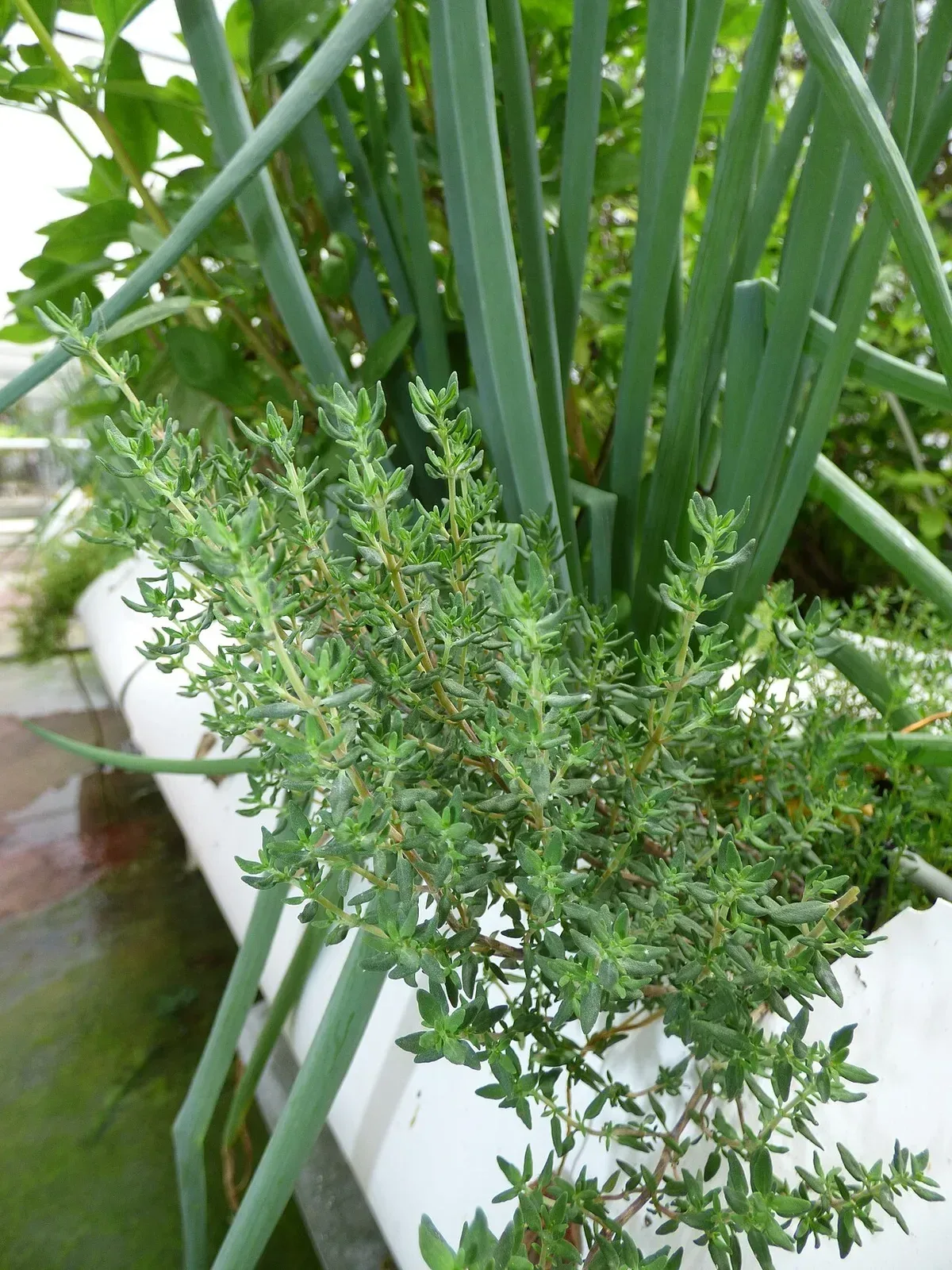
| ☀️ Light | Full sun |
|---|---|
| 💧 Water | Low (allow soil to dry) |
| 🪴 Soil | Dry, sandy or rocky, well-drained soil; neutral to alkaline |
| 🌡️ Temp | -23°C – 35°C |
| 🐾 Safety | Cats: non-toxic · Dogs: non-toxic |
| 📏 Mature size | 30 cm |
Where It Grows & Climate Tolerance
Pet & Companion Animal Toxicity (How to Grow Thyme in Canada)
Common thyme survives winter in much of southern Canada if it has sharp drainage. On the Prairies it is more of a gamble; there, creeping thyme or a potted plant brought indoors is the safer route.
Care instructions
Care Guide & Maintenance Routine
Plant after the last spring frost in full sun and gravelly soil. Harvest from June to September. In Zones 3 and 4, plant against a south wall and mulch after freeze-up. On the wet BC coast, raise the bed or use a pot under cover for winter.
Light & Sunlight
NC State Extension lists full sun only. Six or more hours of direct sun keeps growth compact and aromatic; shade makes it thin and floppy.
Watering Schedule
NC State describes it as drought tolerant and suited to dry, sandy or rocky soils. Water established plants only in long dry spells; pots need water when the top of the mix is dry.
Potting Mix & Drainage
Dry, sandy or rocky, well-drained soil; neutral to alkaline
Temperature & Humidity
Frost tolerant once established. Losses come from wet, frozen soil and repeated thaw-freeze cycles in late winter. Plant after average last frost, from 26 March in Vancouver to 1 June in St. John's (ECCC normals).
Thyme in Canadian gardens
Common thyme is sold in nearly every Canadian garden centre each spring, often beside lemon thyme and French thyme. In Quebec it is labelled thym. It copes with cold better than its small size suggests, but a winter of wet, half-frozen soil finishes it off quickly, so site matters more than zone.
Thyme or creeping thyme?
Our creeping thyme page covers Thymus serpyllum, the flat groundcover used between flagstones and in thyme lawns. This page is about Thymus vulgaris, the upright cooking thyme. Many Prairie gardeners grow creeping thyme outdoors and keep common thyme in pots.
Planting dates
Average last spring frost (ECCC 1991-2020 normals via GrowersGuide.ca):
- Victoria 14 April and Vancouver 26 March: plant in April.
- Toronto 4 May, Ottawa 7 May, Montréal 29 April, Québec City 11 May: plant from mid-May.
- Halifax 8 May, Fredericton 16 May, Charlottetown 18 May, St. John's 1 June: late May to early June.
- Edmonton 22 May, Calgary 26 May, Regina 28 May, Winnipeg 24 May: plant in early June.
Winter survival by zone
NRCan's 1991-2020 map gives Kelowna and Toronto Zone 7a, Halifax 6b, St. John's 6a, Montréal and Charlottetown 5b, Ottawa and Fredericton 5a. Thyme usually returns in these places in a raised, gritty bed. In Edmonton and Calgary (4a), Winnipeg (3b) and Saskatoon or Regina (3a), plant in the warmest, driest corner, ideally against a south-facing wall, and pile on snow or leaves once the ground freezes.
West coast winters
Vancouver and Victoria rarely get cold enough to harm thyme, but months of rain can rot it. Grow it in a pot under the eaves or in a raised bed topped with gravel.
Harvesting
Cut the soft top growth just before flowering in June or early July. A second, lighter cut is possible in August. Stop cutting by early September in colder regions so the plant can harden off for winter.
Indoors for winter
Pot a rooted layer in late summer and bring it in before hard frost. A south window or grow light keeps it producing. Let the mix dry between waterings; furnace-dried air is fine for thyme, though spider mites may appear.
Questions from Canadian readers
- Why did my thyme die over winter? Usually wet soil around the crown during thaw cycles, not cold alone.
- Pets? ASPCA lists common thyme as non-toxic to cats and dogs.
Snow and road salt
Plants along a driveway in Ottawa or Calgary often die from salty slush thrown off by plows, not from cold. Grow them in a spot away from the road, or in a raised bed by the back door.
Trying other thymes
Lemon thyme is less cold-hardy than common thyme; in Winnipeg or Edmonton grow it in a pot and keep it in an unheated garage over the cold months.
Seasonal rhythm
Seasonal Calendar
| Month | Care Tasks | Seasonal Focus |
|---|---|---|
| Jan | protect | Outdoor thyme dormant under snow. Potted plants on the brightest windowsill; water sparingly. |
| Feb | protect | Look under indoor leaves for spider mites. Order seed or plan new beds. |
| Mar | sow | Sow seed indoors under lights in Ontario, Quebec and the Prairies; it is slow and uneven. |
| Apr | plant, prune | Coastal BC: plant out and trim winter-damaged tips. Elsewhere: clear mulch as snow melts. |
| May | plant, prune | Plant after last frost in Ontario, Quebec and Atlantic Canada. Trim back to live green shoots. |
| Jun | plant, harvest | Prairie planting. First sprigs in BC and southern Ontario before bloom. |
| Jul | prune, harvest | Main harvest just before flowering, then a light trim after bloom. |
| Aug | sow, harvest | Second light harvest. Peg stems down to root new plants for next year. |
| Sep | repot | Pot up rooted layers. Prairies: last cuts before frost. |
| Oct | protect | Stop trimming so plants harden off. Bring pots indoors before hard frost. |
| Nov | protect | Mulch crowns with leaves or straw after the ground freezes in Zones 3 to 5. |
| Dec | protect | Indoor thyme grows slowly. Outdoor beds rest; avoid piling wet snow from driveways on them. |
Diagnostics
Common Problems & Troubleshooting
Rot at the base from wet soil or humid weather; woody, bare centre on older plants; thin growth in shade; leaves browning after a wet winter.
Pests & seasonal watch: Crown rot on clay soils and on the rainy BC coast. Spider mites on indoor winter pots. Very few insect problems outdoors.
- Root rot — Roots turn brown and mushy in soil that stays wet.
- Leggy — Long weak stems with big gaps between small leaves, leaning to the window.
- Spider mites — Fine webbing and pale speckled leaves, worse in dry heated rooms.
- Overwatering — Soil stays wet, leaves yellow or droop, and the pot feels heavy.
- Leaf drop — Many leaves fall in a short time, sometimes still green.
- Stem rot — The stem goes soft, dark or black at soil level and the top collapses.
Care encyclopedia · 1 guide
Guides & Articles for How to Grow Thyme in Canada
Q&A
Frequently Asked Questions
What is the difference between thyme and creeping thyme?
Common thyme (Thymus vulgaris) is an upright little shrub grown mainly for cooking. Creeping thyme (Thymus serpyllum) is a low, mat-forming plant grown mostly as groundcover. Both are edible, but common thyme has the stronger flavour.
Why is my thyme turning woody?
Thyme naturally becomes woody with age. Trim it lightly after flowering and in early spring, never cutting into bare old wood, and replace very old plants with cuttings.
How do I harvest thyme without killing it?
NC State suggests cutting 12 to 15 cm off the top growth while leaving at least 12 cm of stem and the woody base. Harvest just before flowering for the strongest flavour.
Can I grow thyme from seed?
Yes, but NC State notes germination is uneven. Cuttings, layering or division give faster, more reliable plants.
Is thyme safe for cats and dogs?
ASPCA lists Thymus vulgaris as non-toxic to dogs, cats and horses.
How often should I water thyme?
Rarely. Water when the soil is dry a few centimetres down. Thyme is drought tolerant and dies from wet roots far more often than from dryness.
Does thyme need fertiliser?
Very little. Lean soil gives better flavour. One light feed in spring is enough for a potted plant.
Can thyme grow indoors?
Yes, on a very sunny windowsill or under a grow light, in a terracotta pot with gritty mix.
Why is my thyme dying in the middle?
Older plants often go woody and bare in the centre, and wet soil makes it worse. Trim lightly after flowering, improve drainage and replace the plant every few years with rooted cuttings.
Similar Botanical Matches
Grower field notes
Reader Field Notes in Canada
Share how this plant performs in your local Canada climate.