
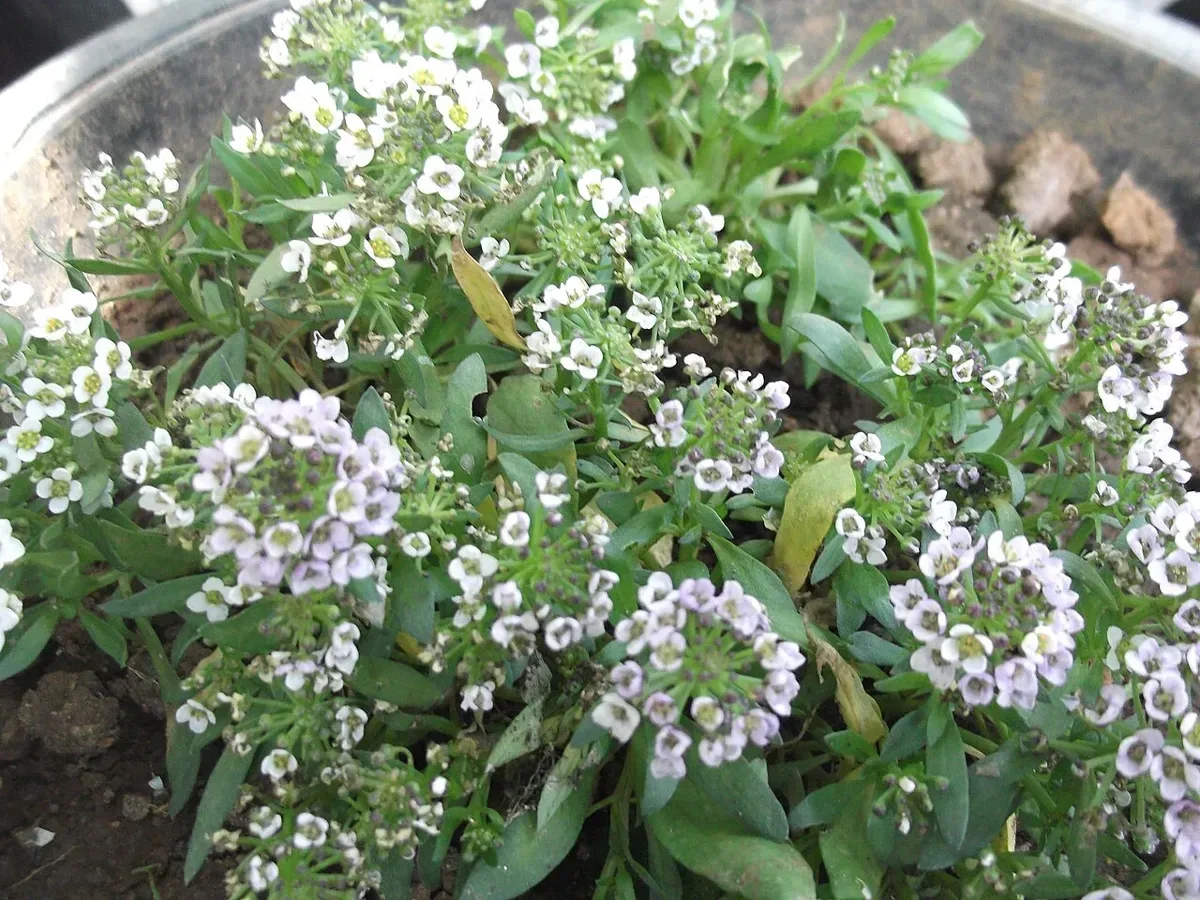
| ☀️ Light | Full sun |
|---|---|
| 💧 Water | Moderate (lightly moist) |
| 🪴 Soil | Light, very well-drained soil of moderate fertility |
| 🌡️ Temp | -5°C – 30°C |
| 🐾 Safety | Cats: non-toxic · Dogs: non-toxic |
| 📏 Mature size | 15 cm |
Where It Grows & Climate Tolerance
Pet & Companion Animal Toxicity (How to Grow Sweet Alyssum in Canada)
Sweet alyssum is one of the easiest bedding annuals in Canada. It handles cool spring weather, fills borders and baskets from late May, and often flowers well after the first light fall frosts. Cool summers on the coasts and on the Prairies suit it best.
Care instructions
Care Guide & Maintenance Routine
Start seed indoors five to six weeks before the last frost, or buy cell packs in May. Plant out in sun or light shade in well-drained soil. If plants turn ragged in July heat, shear them back and feed lightly; they recover as nights cool in August and September.
Light & Sunlight
NC State lists full sun to partial shade. In hot climates, afternoon shade extends flowering; in cool summers, full sun gives the densest carpet.
Watering Schedule
Water when the top few centimetres dry out. NC State stresses very good drainage, because stem and crown rots and edema follow wet soil. Pots and hanging baskets dry faster and need more frequent checks.
Potting Mix & Drainage
Light, very well-drained soil of moderate fertility
Temperature & Humidity
Handles light spring and fall frosts better than most annuals. A hard freeze below about -5°C ends the season. Plant out around the last frost date.
Sweet alyssum in Canadian gardens
Sweet alyssum is a staple of Canadian borders, window boxes and hanging baskets. It suits the country's cool springs and falls, and NC State's hardiness range of zones 5a to 9b means it is effectively an annual almost everywhere here, though seedlings often return in the same spot.
Starting and planting
NC State suggests starting seed indoors five to six weeks before the last frost date. Barely cover the tiny seed and keep it moist. Seedlings can go out around the last frost date, since light frosts rarely harm them:
- Vancouver, Victoria: April.
- Toronto, Montréal, Ottawa: mid- to late May.
- Calgary, Edmonton, Regina, Saskatoon, Winnipeg: late May to early June.
- Halifax, Fredericton, Charlottetown, St. John's: late May to June.
Summer heat
Wisconsin Horticulture notes plants become ragged in summer heat and revive in cool weather, so shear them and feed lightly. In southern Ontario and the Okanagan, this usually happens in late July. In cooler coastal and Prairie gardens, plants may flower without a break.
In the vegetable garden
Wisconsin Horticulture notes the flowers attract syrphid flies, whose larvae eat aphids. Many Canadian gardeners plant a row of alyssum along lettuce, kale and brassica beds for this reason.
Fall
Alyssum often keeps flowering well into October, after tender annuals have been killed by frost. In mild coastal BC, plants can carry on into winter. Elsewhere, leave a few seedheads to ripen and drop; volunteers often pop up next May along the driveway, in gravel and between interlocking pavers.
Planters, boulevards and cottage beds
Because it shrugs off cold nights, alyssum is often the first annual into Canadian planters in May, sometimes before Victoria Day in milder cities. It edges front walks in Halifax, spills from window boxes in Québec City and fills the gaps between patio stones at the cottage. In a hanging basket on a Saskatoon deck, pair it with trailing petunias and lobelia. Along a dry boulevard strip, it seeds itself into cracks year after year. If you grow brassicas such as kale, cabbage or broccoli, watch for flea beetles on young alyssum in late May, since both belong to the same family. A light row cover over seedlings helps in the first few weeks.
A typical season in Calgary
Seed goes in under lights in late March or early April. Plants are hardened off on the deck in mid-May and planted around the long weekend, ready to be covered if a late frost is forecast. The edge of the bed is white by Canada Day and stays in flower through Stampede and into September.
Questions from Canadian readers
- Will alyssum self-seed in my garden? Often, yes. Seedlings appear the next spring; purple strains tend to drift back to white.
Seasonal rhythm
Seasonal Calendar
| Month | Care Tasks | Seasonal Focus |
|---|---|---|
| Jan | Sow | January: flip through seed catalogues for 'Snow Princess'. |
| Feb | Sow | Family Day: scrub planters and baskets in the garage. |
| Mar | Sow | March break: Prairie households sow trays under shop lights. |
| Apr | Sow | April: Ontario sowing; Victoria and Nanaimo plant outside. |
| May | Plant out | Victoria Day long weekend: tuck plugs into window boxes. |
| Jun | Plant out | June: Saskatoon and Winnipeg transplanting; fill paving cracks. |
| Jul | Harvest | Canada Day: edging along the front walk in full bloom. |
| Aug | Prune, Fertilize | Late July humidity in Toronto: shear, then fertilize lightly. |
| Sep | Harvest | Labour Day: regrowth flowers as cottage nights cool. |
| Oct | Protect from frost/heat | Thanksgiving: still blooming after the first light frosts. |
| Nov | Protect from frost/heat | Remembrance Day: a hard freeze ends it; leave seed to drop. |
| Dec | Protect from frost/heat | December: Vancouver Island patches may linger until Christmas. |
Diagnostics
Common Problems & Troubleshooting
Plants turning brown and stringy in hot weather; rot at the base in wet soil; downy mildew in humid spells; blistered leaves (edema) from overwatering in cool, cloudy weather; aphids on shoots.
Pests & seasonal watch: Flea beetles chew small holes in spring, especially near brassicas. Aphids, downy mildew in cool, wet spells on the coasts, and rot in waterlogged baskets.
- Yellow leaves — Leaves fade from green to yellow, often starting at the bottom.
- Root rot — Roots turn brown and mushy in soil that stays wet.
- Leggy — Long weak stems with big gaps between small leaves, leaning to the window.
- Aphids — Clusters of small soft insects on new tips, often sticky.
- Overwatering — Soil stays wet, leaves yellow or droop, and the pot feels heavy.
- No flowers — A flowering houseplant stays leafy and will not bloom.
- Edema — Corky or blistered spots on leaf undersides after the plant takes up more water than it can lose.
- Stem rot — The stem goes soft, dark or black at soil level and the top collapses.
Similar Botanical Matches
Keep exploring
Related plants
Grower field notes
Reader Field Notes in Canada
Share how this plant performs in your local Canada climate.