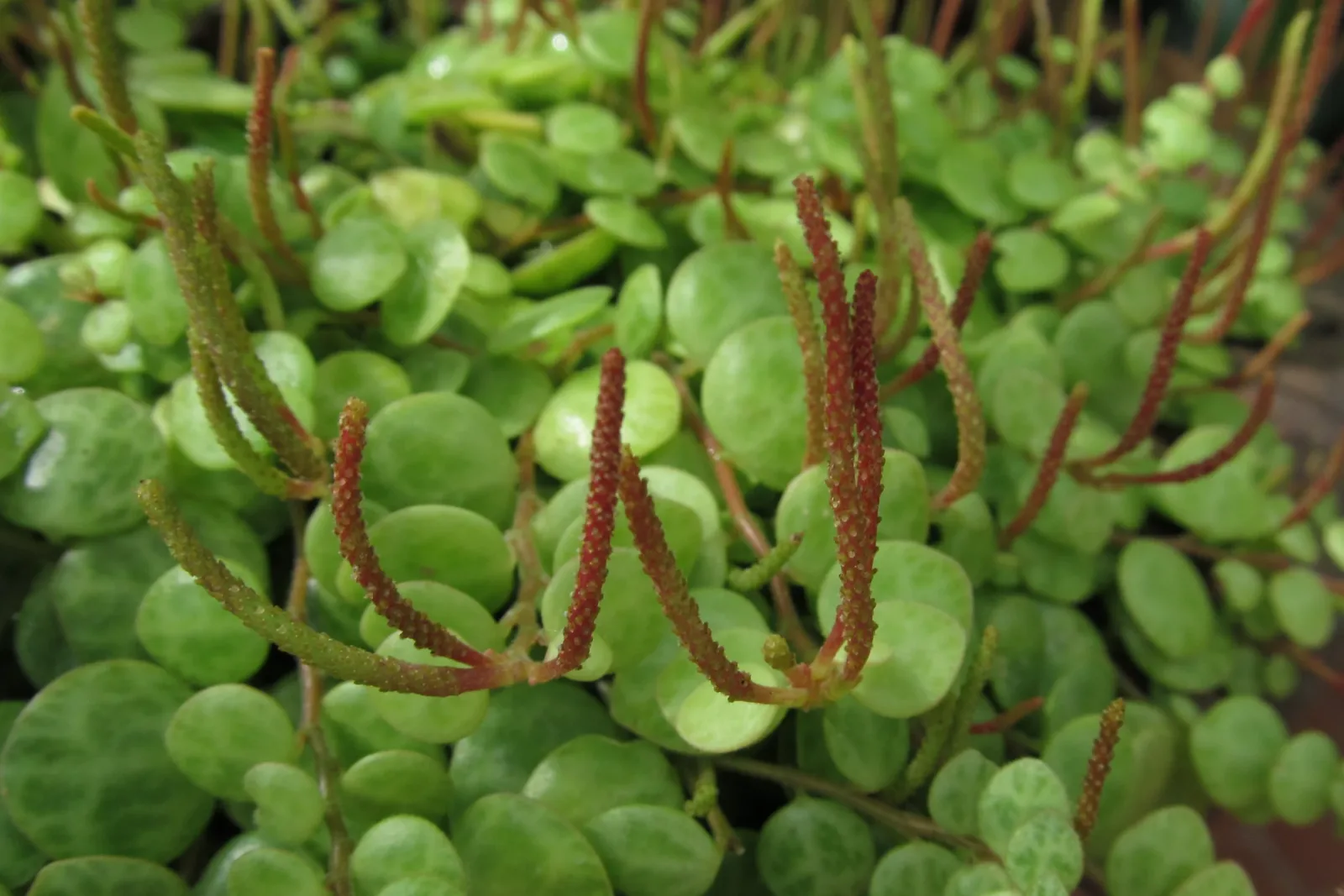
| ☀️ Light | Bright indirect light |
|---|---|
| 💧 Water | Moderate (lightly moist) |
| 🪴 Soil | Light, well-drained houseplant mix |
| 🌡️ Temp | Min 15°C |
| 🐾 Safety | Cats: not verified · Dogs: not verified |
| 📏 Mature size | 30 cm |
Where It Grows & Climate Tolerance
Pet & Companion Animal Toxicity (String of Turtles Care for Canadian Homes)
In Canada, grow this tropical trailing peperomia indoors. Winter heating and cold window glass matter more than outdoor hardiness zones.
Care instructions
Care Guide & Maintenance Routine
Place by a bright window out of direct summer afternoon sun. Keep the pot above 15°C, check the mix before watering and drain it fully.
Light & Sunlight
Bright indirect light keeps the leaf pattern clear; shield from harsh summer afternoon sun and cold winter glass.
Watering Schedule
Check the mix before each watering. Water when the surface begins to dry and empty the saucer; reduce frequency in darker winter months.
Potting Mix & Drainage
Light, well-drained houseplant mix
Temperature & Humidity
Indoor-only in Canada. RHS rates this species for protected growing above 15°C; avoid winter window glass and exterior door drafts.
Canadian homes offer a different challenge from a tropical greenhouse. In winter, daylight hours shorten while room heat can dry the air. Keep String of Turtles in a bright room, away from frosty glass and heat vents. Move it closer to daylight as autumn arrives, but check that leaves do not touch a cold pane overnight.
A small hanging pot or shelf lets its thin stems trail safely. Choose a draining container and check the potting mix with your finger. The pot may dry faster near a vent and more slowly in a cool room, so a fixed weekly watering date is unreliable. Water only after checking the mix, then empty the saucer.
Do not plant this species outdoors for a Canadian winter. If you move a pot outside for warm weather, keep it sheltered and bring it inside before chilly nights. Inspect the stems for pests before bringing it back indoors. A humidifier may help when heated air causes persistent crisping, but it does not replace correct watering.
Seasonal rhythm
Seasonal Calendar
| Month | Care Tasks | Seasonal Focus |
|---|---|---|
| Jan | protect | Keep the pot away from icy window glass. Check the mix before watering; growth is usually slow in low winter light. |
| Feb | protect | Continue bright filtered light and avoid cold drafts. Skip fertilizer while growth remains slow. |
| Mar | As daylight improves, watch for new growth. Water only after checking the mix, then drain well. | |
| Apr | feed | If growth resumes, begin light monthly feeding. Repot only if roots have filled the current pot. |
| May | feed | Keep in bright indirect light. Healthy stem tips may be used for cuttings during active growth. |
| Jun | feed | Shield from strong afternoon sun. Check pots more often in warmer rooms, without leaving them wet. |
| Jul | feed | Keep the plant shaded from harsh midday sun and water according to the mix, not a calendar date. |
| Aug | feed | Inspect trailing stems for pests. Continue light feeding only while the plant is actively growing. |
| Sep | As days shorten, reduce fertilizer. Check any plant that spent summer outside before bringing it in. | |
| Oct | protect | Move the pot away from cold glass. Let the mix tell you when it needs water. |
| Nov | protect | With indoor heating on, watch for dry leaf edges and drafts. A humidifier can help persistent dryness. |
| Dec | protect | Give the brightest safe indirect light available. Avoid fertilizer when growth has slowed and never leave runoff in the saucer. |
Diagnostics
Common Problems & Troubleshooting
Soft stems or yellowing leaves: check for waterlogged roots. Faded leaf pattern: improve indirect light. Crisp leaves: check root moisture and dry heated air.
Pests & seasonal watch: Inspect leaves and stems for mealybugs, scale and mites before moving a summer patio plant indoors.
Similar Botanical Matches
Grower field notes
Reader Field Notes in Canada
Share how this plant performs in your local Canada climate.