
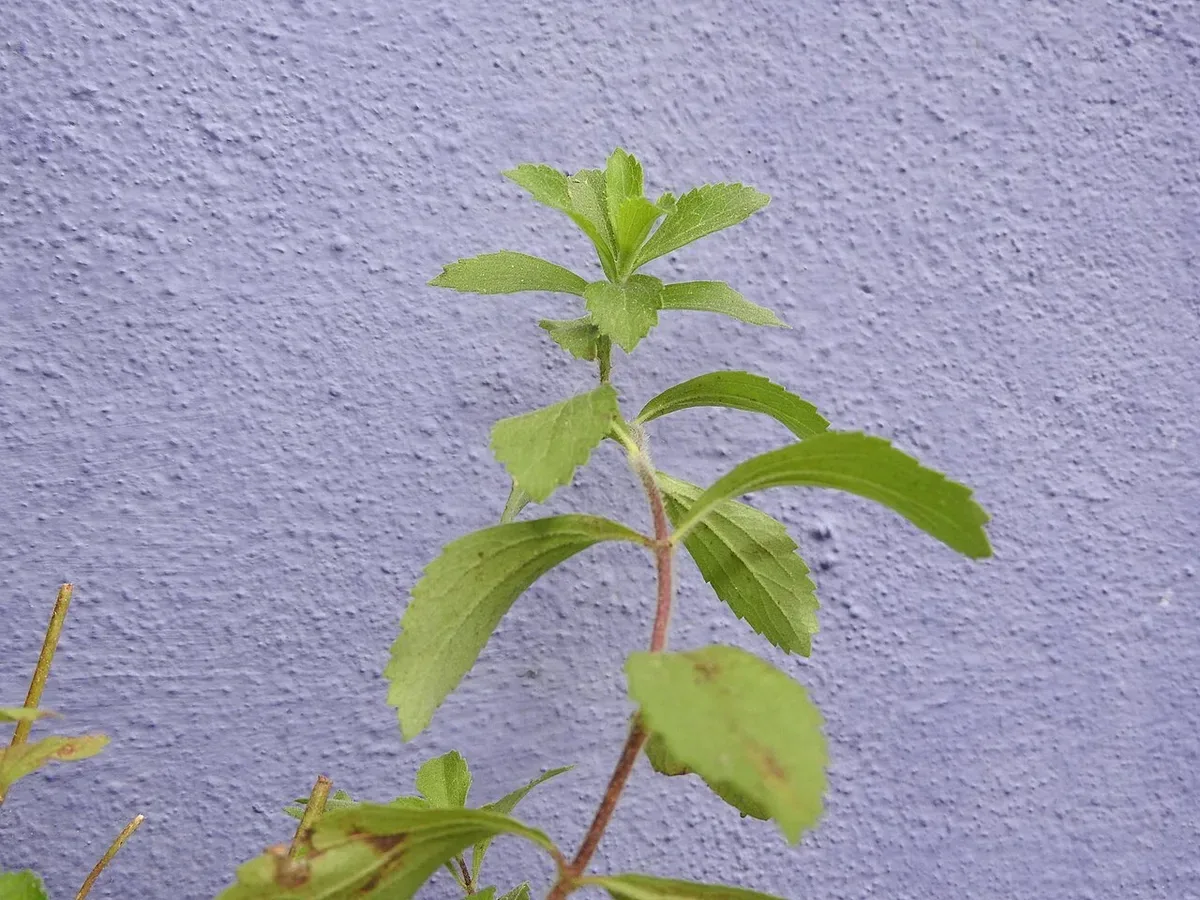
| ☀️ Light | Full sun |
|---|---|
| 💧 Water | Moderate (lightly moist) |
| 🪴 Soil | Loose sandy loam, well drained, slightly acidic to neutral |
| 🌡️ Temp | 4°C – 40°C |
| 🐾 Safety | Cats: non-toxic · Dogs: non-toxic |
| 📏 Mature size | 60 cm |
Where It Grows & Climate Tolerance
Pet & Companion Animal Toxicity (How to Grow Stevia in Canada)
Stevia is a summer herb in every part of Canada. NC State rates it hardy only in USDA zones 10 and 11, so it is planted out after the last frost, harvested through summer and either brought indoors in fall or restarted from cuttings.
Care instructions
Care Guide & Maintenance Routine
Plant out once nights stay above about 10°C, in full sun and well-drained soil or a large pot. Pinch tips in June, pick leaves through July and August, and take the main harvest before the first fall frost. Overwinter a pot or rooted cuttings in a bright window.
Light & Sunlight
NC State Extension lists full sun to part shade. Plants in full sun are stockier and sweeter; in hot inland summers a little afternoon shade stops pots from drying out too fast.
Watering Schedule
NC State recommends moist but well-drained soil and lists overwatering as a common problem. Water when the top two or three centimetres feel dry, and never leave a pot standing in water. Shallow roots mean stevia wilts quickly in a dry spell.
Potting Mix & Drainage
Loose sandy loam, well drained, slightly acidic to neutral
Temperature & Humidity
Killed by frost and sulks below about 10°C. Plant out after the last spring frost and harvest or move indoors before the first fall frost, which comes as early as early September on the Prairies.
Stevia in Canadian gardens
Stevia is easy to keep for one season and a little more challenging to carry through winter. Canadian gardeners grow it like basil: a sunny spot, warm soil and a big harvest before frost. Long June and July days actually help, because the plant stays leafy until days shorten in late summer.
Zones and planting dates
Zone does not matter much for an annual crop, but frost-free days do. Average last frost dates from ECCC 1991-2020 normals, compiled by GrowersGuide.ca, are 26 March in Vancouver, 22 April in Windsor, 29 April in Montréal, 7 May in Ottawa, 16 May in Kelowna, 22 May in Edmonton and Saskatoon, and 24 May in Winnipeg. Wait a week or two after those dates, until nights stay above about 10°C.
Containers on decks and balconies
A 30 cm pot on a south-facing deck warms faster than garden soil and can be carried indoors in September. Use a peat-free or bark-based mix with perlite. On a windy condo balcony in Toronto or Calgary, group pots so they shade each other's roots.
Provinces and climate
- BC coast: the longest season, but cool, wet springs slow early growth. Plant in late May against a warm wall.
- Okanagan and southern Ontario: hot summers give the biggest plants, and two cuts are possible.
- Prairies: intense sun suits stevia; the season ends early, with the first fall frost around 10 September in Calgary.
- Quebec and the Maritimes: one main harvest in late August or early September is typical.
Bringing it inside for winter
Cut the plant back by half and check for aphids and whitefly before moving a pot indoors. A south window or grow light keeps it alive; growth is slow until spring. Furnace-dry air in January invites spider mites, so rinse the foliage in the shower every couple of weeks.
Cuttings instead of a big pot
Rooting four or five 10 to 15 cm cuttings in August takes less space. Keep them on a bright sill through winter and pot them up in April.
Drying the harvest
Hang small bunches in a warm, dry room or use a dehydrator on its lowest setting. Store the crumbled leaf in a jar for winter tea and baking.
Hardening off in May
Nursery plants raised in Ontario or BC greenhouses are soft. Set them outside for an hour on a calm day, then a little longer each afternoon for about a week. Cold rain or a breezy evening below 8°C sets them back, so bring them into the garage on those nights.
Questions from Canadian readers
- Can I sow seed outdoors? Not usefully. Germination is poor and the season is too short. Start with plants.
- Is it safe around cats? ASPCA lists stevia as non-toxic to cats and dogs.
Seasonal rhythm
Seasonal Calendar
| Month | Care Tasks | Seasonal Focus |
|---|---|---|
| Jan | Protect from frost/heat | Indoor pots: south window or grow light; water sparingly. |
| Feb | Protect from frost/heat | Check overwintered plants for spider mites. |
| Mar | Plant out, Prune | Cut back leggy indoor plants. Root fresh tip cuttings. |
| Apr | Repot | Pot up rooted cuttings into fresh mix. |
| May | Plant out | Harden off. Plant out on the BC coast and in southern Ontario late in the month. |
| Jun | Plant out, Prune | Plant out on the Prairies and in the Maritimes. Pinch tips. |
| Jul | Fertilize, Harvest | Pick leaves as needed. Feed lightly. |
| Aug | Plant out, Harvest | Main harvest before flowers open. Take cuttings to overwinter. |
| Sep | Harvest, Protect from frost/heat | Prairies: final cut before frost. Bring pots indoors. |
| Oct | Protect from frost/heat | Indoor plants: bright window; reduce watering. |
| Nov | Protect from frost/heat | Keep away from cold glass and heat vents. |
| Dec | Protect from frost/heat | Rinse leaves to discourage spider mites in dry air. |
Diagnostics
Common Problems & Troubleshooting
Root rot and wilting in wet soil; leggy, thin stems in shade; early flowering and fewer leaves in short days; spider mites in hot, dry weather; frost kill in cold winters.
Pests & seasonal watch: Aphids on young transplants in June. Spider mites and whitefly hitch a ride indoors on September pots. Root rot in chilly, waterlogged clay during Manitoba, Ontario and Quebec springs.
- Root rot — Roots turn brown and mushy in soil that stays wet.
- Leggy — Long weak stems with big gaps between small leaves, leaning to the window.
- Spider mites — Fine webbing and pale speckled leaves, worse in dry heated rooms.
- Aphids — Clusters of small soft insects on new tips, often sticky.
- Whitefly — Tiny white insects fly up in a cloud when you touch the plant.
- Overwatering — Soil stays wet, leaves yellow or droop, and the pot feels heavy.
- Underwatering — Soil is bone dry and leaves are crispy, curled or dull.
- Cold damage — Dark, water-soaked or blackened patches after a cold night or an AC blast.
Care encyclopedia · 1 guide
Guides & Articles for How to Grow Stevia in Canada
Similar Botanical Matches
Keep exploring
Related plants
Grower field notes
Reader Field Notes in Canada
Share how this plant performs in your local Canada climate.