| ☀️ Light | Bright indirect light |
|---|---|
| 💧 Water | Moderate (lightly moist) |
| 🪴 Soil | Standard indoor mix with perlite |
| 🌡️ Temp | 15°C – 27°C |
| 🐾 Safety | Cats: toxic · Dogs: toxic (ASPCA Animal Poison Control) |
| 📏 Mature size | 1.5 m |
Where It Grows & Climate Tolerance
Pet & Companion Animal Toxicity (Schefflera)
Umbrella plant for bright Canadian rooms; tough foliage tree that dislikes soggy soil.
Care instructions
Care Guide & Maintenance Routine
Bright indirect light, water when top half dry, prune to shape.
Light & Sunlight
Bright indirect. Tolerates some direct morning sun.
Watering Schedule
Water when top half of mix dry. Overwatering is the main killer.
Potting Mix & Drainage
Standard indoor mix with perlite
Temperature & Humidity
Above 13 C. Avoid cold glass nights.
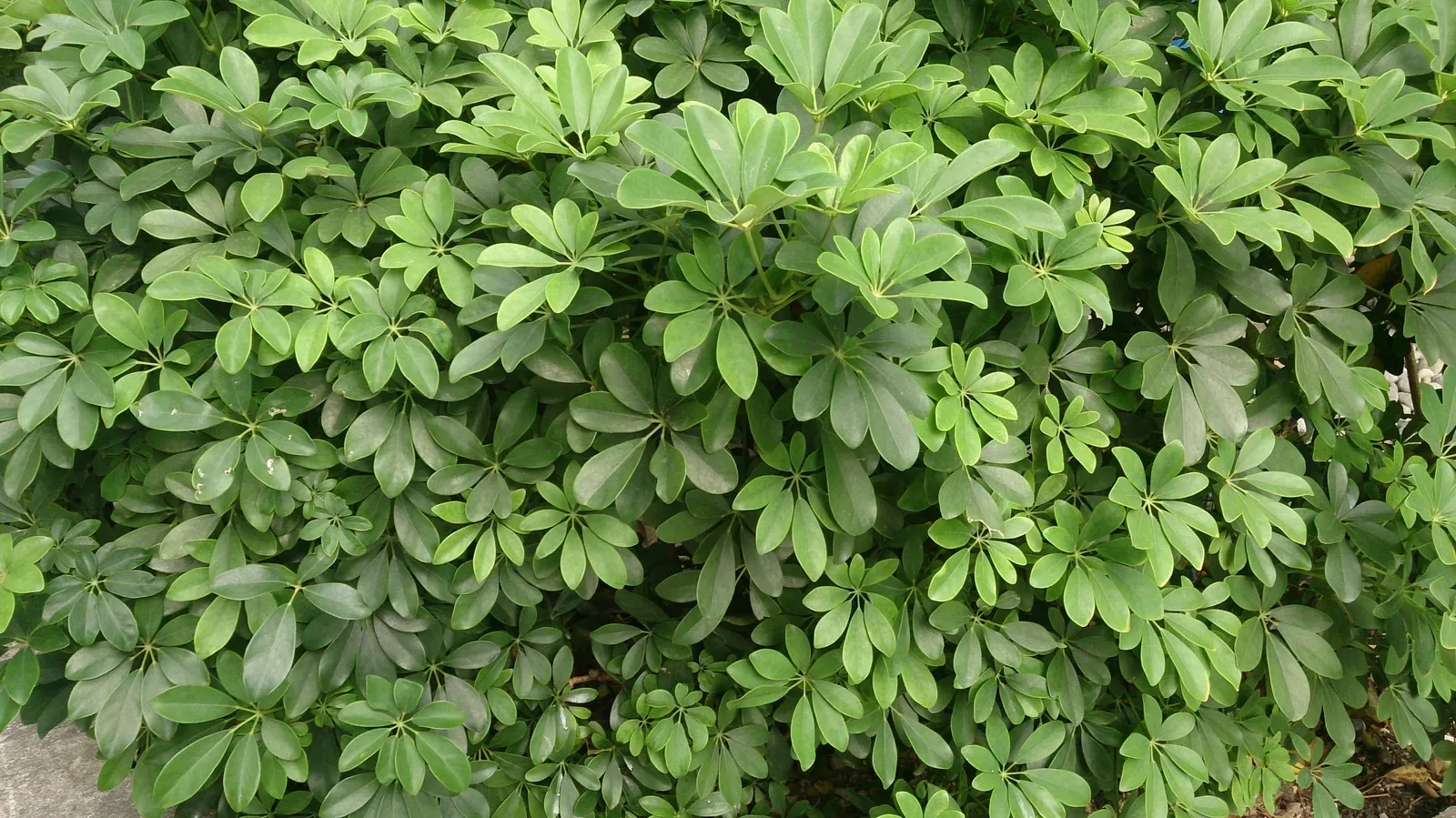
Schefflera arboricola, the dwarf umbrella plant, is a sturdy indoor tree for bright Canadian living rooms and offices.
Give bright indirect light and water only when the top half of the mix feels dry. Soggy soil causes leaf drop faster than dry spells. Average humidity is enough, which suits prairie and condo winters better than ferns do.
Prune in spring to keep a compact shape. Wipe leaves and inspect for scale. The plant is toxic if chewed. Repot only when roots circle the pot.
Variegated forms need the brighter end of the light range. A plant that leans toward the window should be rotated weekly. With a light watering hand, schefflera becomes one of the more forgiving foliage trees available in Canadian nurseries.
Schefflera forgives the dry air that defeats ferns in prairie winters, which is why offices from Calgary to Ottawa still use it. The trade-off is overwatering — cold wet mix in January leads to leaf drop that looks like drought. Always check that the top half of the soil is dry before you water again.
Variegated umbrella plants need more light than solid green ones. If internodes stretch, move closer to the window or add a simple LED bar. Prune a too-tall specimen in spring; cuttings root with warmth. Keep it away from pets. A stable bright corner and a light watering hand turn this into one of the easier indoor trees for Canadian renters.
Wipe leaflets top and bottom when you check for scale. Sticky floors under the plant are a clue. A strong prune in spring can turn one tall cane into a multi-branch shrub form. Keep soil on the dry side of moist in winter. Bright light without hot glass contact is the sweet spot for Canadian living rooms.
Seasonal rhythm
Seasonal Calendar
A month-by-month calendar for Schefflera in Canada is coming soon. See the light, water and temperature notes above.
Diagnostics
Common Problems & Troubleshooting
Leaf drop (overwater or move); pale leaves (low light); sticky leaves (scale).
Pests & seasonal watch: Scale and mites. Wipe stems.
- Spider mites — Fine webbing and pale speckled leaves, worse in dry heated rooms.
- Scale — Hard or soft brown bumps stuck to stems and leaf ribs, often with sticky honeydew.
- Whitefly — Tiny white insects fly up in a cloud when you touch the plant.
- Leaf drop — Many leaves fall in a short time, sometimes still green.
- Nutrient shortage — Overall pale growth, or yellowing between veins, on a plant that is otherwise watered well.
Care encyclopedia · 3 guides
Guides & Articles for Schefflera
Schefflera Care Guide for Canada
A practical Canadian guide to schefflera, with seasonal care, common problems, propagation and buying checks.
Read guide →Toxic Plants for Pets and Kids in Canada: Houseplants, Garden Plants and Poison Centre Numbers
Which houseplants and garden plants are toxic to cats, dogs and children in Canada, what to do right away if one is eaten, and the poison centre number for every province and territory.
Read guide →Common Indoor Plant Pests: How to Identify and Treat Spider Mites, Fungus Gnats, Mealybugs, Scale and Aphids
Sticky leaves, tiny flies or cottony fluff on your houseplants? Learn how to identify and treat the five most common indoor plant pests, spider mites, fungus gnats, mealybugs, scale and aphids, with safe methods and PMRA-registered products.
Read guide →Q&A
Frequently Asked Questions
How often to water schefflera?
When the top half of the mix is dry — less often than you think.
Is it toxic to pets?
Yes. Keep away from chewing pets.
Can I keep it small?
Yes. Prune in spring to hold the size you want.
Why are leaves dropping?
Often overwatering or a sudden location change.
Similar Botanical Matches
Grower field notes
Reader Field Notes in Canada
Share how this plant performs in your local Canada climate.