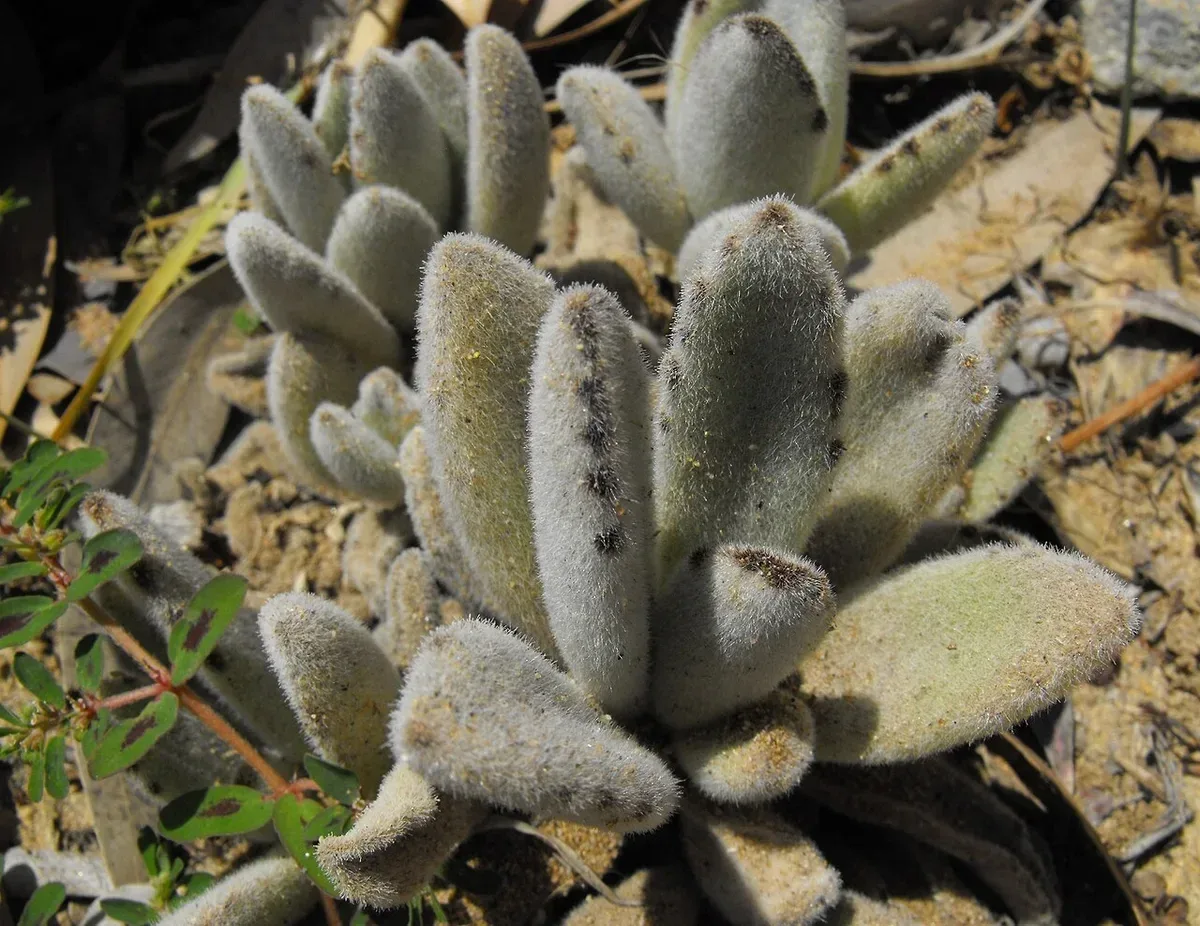
| ☀️ Light | Bright indirect light |
|---|---|
| 💧 Water | Low (allow soil to dry) |
| 🪴 Soil | Cactus or succulent mix; gritty and fast draining |
| 🌡️ Temp | 10°C – 35°C |
| 🐾 Safety | Cats: toxic · Dogs: toxic |
| 📏 Mature size | 45 cm |
Where It Grows & Climate Tolerance
Pet & Companion Animal Toxicity (Panda Plant Care in Canada)
In Canada the panda plant is a year-round houseplant. NC State rates it hardy only in USDA zones 9 to 11, so it lives indoors, with an optional summer outside. Its main threats are dim winter light and watering too often while it is barely growing.
Care instructions
Care Guide & Maintenance Routine
Keep it in the brightest window, ideally south or west, and add a grow light from November to February. Water only when the mix is completely dry, about every three to four weeks in winter. Keep it off cold glass. It can summer outdoors in bright shade once nights stay above 10°C.
Light & Sunlight
NC State Extension says it prefers bright, indirect light for at least six hours a day, with protection from the sun in very hot climates to prevent leaf burn. Too little light makes it leggy.
Watering Schedule
NC State advises letting the soil dry out between waterings. Wrinkled or shrivelled leaves suggest too little water; yellow or mushy leaves and stems suggest too much. Water less in cool or dull weather.
Potting Mix & Drainage
Cactus or succulent mix; gritty and fast draining
Temperature & Humidity
Not hardy anywhere in Canada. Keep indoors from September to late May. Cold windowpanes and drafty doors in winter can chill leaves to damaging levels; keep it above about 10°C.
Panda plant in Canadian homes
Its soft leaves and tidy size make it a popular windowsill plant in apartments across the country. Dry indoor air suits it, since NC State notes it prefers low humidity. Winter light is the limiting factor.
Winter light
From November to February, daylight is short everywhere in Canada and weaker the farther north you live. In Edmonton, Winnipeg or Québec City, even a south window may not be enough. A small LED grow light 20 to 30 cm above the plant for 12 to 14 hours a day keeps the rosettes compact.
Watering through the seasons
From May to September, water when the mix is dry, often every 10 to 14 days. From November to March, every three to four weeks is usually plenty in a cool room. Wrinkled leaves in March mean it is time; soft, translucent leaves mean you have been watering too often.
Cold glass and drafts
Leaves pressed against a window can chill on a -25°C night. Pull the pot back a few centimetres, or move it off the sill on the coldest nights. Keep it away from exterior doors in January.
Summer on the deck
Once nights stay above about 10°C, usually by early June in southern Ontario and later on the Prairies, it can go outside in bright shade. Move it gradually; sudden full sun scorches the leaves. Bring it back in before September nights cool.
Repotting and mixes
Garden centres sell cactus mix in small bags. Lighten it with extra perlite or pumice for even faster drainage. Repot in April or May, when growth starts. Unglazed clay pots from a local garden centre dry out faster than decorative ceramic cachepots.
Bringing one home in January
A walk from the store to the car at -20°C can freeze a succulent in minutes. Ask for a paper sleeve or bag, warm the car first, and do not leave the plant in a parked vehicle while you run other errands.
Basement suites and north windows
Many rentals in Toronto, Calgary and Vancouver have small or north-facing windows. A clip-on LED lamp on a timer gives enough light to keep the panda plant compact, even in a basement.
Humidifiers
If you run a humidifier for your own comfort in winter, keep the panda plant away from the mist, which settles in the leaf hairs.
Pests on newcomers
Plants bought in winter from big-box stores sometimes carry mealybugs. Check the leaf bases with a flashlight and isolate new plants for two weeks.
Questions from Canadian readers
- Is it safe with my cat? No. ASPCA lists kalanchoes as toxic to cats and dogs.
- Can I propagate it in winter? Wait until spring, when longer days speed rooting.
Seasonal rhythm
Seasonal Calendar
| Month | Care Tasks | Seasonal Focus |
|---|---|---|
| Jan | protect | Deep-freeze month: LED timer on, a drink only every three to four weeks. |
| Feb | protect | Polar vortex nights: slide the pot back from frosty panes. |
| Mar | protect | Flashlight check of leaf axils for cottony mealybugs. |
| Apr | feed, repot | Spring thaw: fresh bagged cactus mix; first half-strength feed. |
| May | plant | Victoria Day weekend: start leaf and tip cuttings. |
| Jun | protect | Deck or balcony in dappled shade once evenings are mild. |
| Jul | protect | Heatwaves: shield from noon glare on patios. |
| Aug | feed | Final half-strength feed before Labour Day. |
| Sep | protect | Back inside before cool September evenings; isolate and inspect. |
| Oct | protect | Thanksgiving onward: stretch the gap between drinks. |
| Nov | protect | Clocks fall back: switch the grow light on. |
| Dec | protect | Holiday season: clear of baseboard heaters, entry doors and drafts. |
Diagnostics
Common Problems & Troubleshooting
Root rot and mushy stems from overwatering; shrivelled leaves from underwatering; stretched, leggy stems in low light; scorched leaves in hot sun; leaf drop after cold.
Pests & seasonal watch: Mealybugs arriving on big-box store purchases and spreading in dry January rooms. Spider mites beside forced-air registers. Fungus gnats and rotting roots when compost stays soggy between November and March.
- Root rot — Roots turn brown and mushy in soil that stays wet.
- Mealybugs — White cottony clumps in leaf joints, often with sticky honeydew.
- Leggy — Long weak stems with big gaps between small leaves, leaning to the window.
- Spider mites — Fine webbing and pale speckled leaves, worse in dry heated rooms.
- Overwatering — Soil stays wet, leaves yellow or droop, and the pot feels heavy.
- Underwatering — Soil is bone dry and leaves are crispy, curled or dull.
- Leaf drop — Many leaves fall in a short time, sometimes still green.
- Sun scorch — Bleached or crispy patches on the side that faces strong sun.
- Cold damage — Dark, water-soaked or blackened patches after a cold night or an AC blast.
Similar Botanical Matches
Grower field notes
Reader Field Notes in Canada
Share how this plant performs in your local Canada climate.