
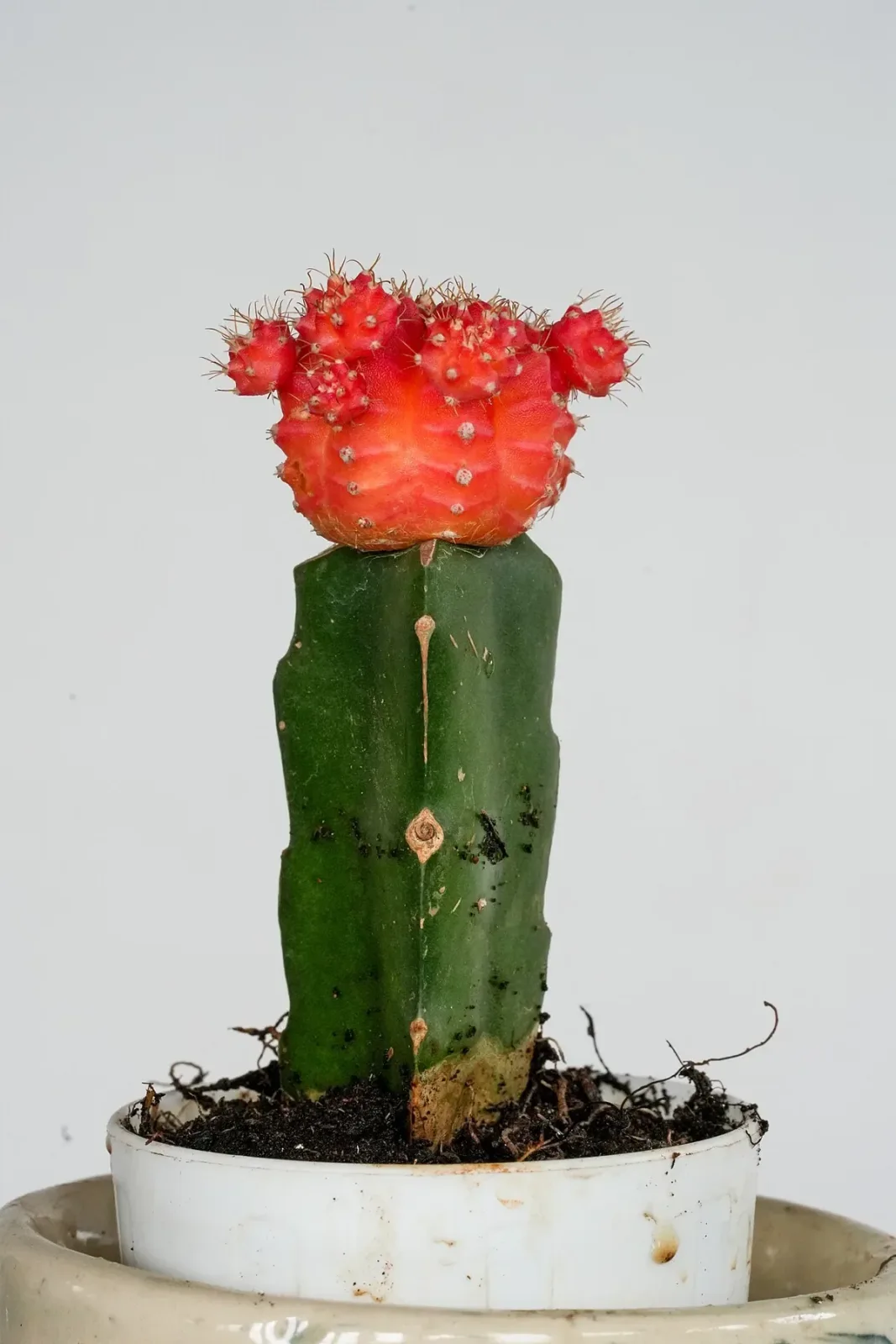
| ☀️ Light | Bright indirect light |
|---|---|
| 💧 Water | Low (allow soil to dry) |
| 🪴 Soil | Gritty, well-drained cactus and succulent mix |
| 🌡️ Temp | 10°C – 32°C |
| 🐾 Safety | Cats: not verified · Dogs: not verified |
| 📏 Mature size | 15 cm |
Where It Grows & Climate Tolerance
Pet & Companion Animal Toxicity (Moon Cactus Care in Canadian Homes)
Not yet verified: Toxicity status for cats, dogs, and horses has not yet been confirmed against veterinary poison-control records. Keep out of reach of pets or consult your veterinarian.
In Canada a moon cactus is a windowsill plant year-round. The tropical rootstock dislikes cold, so winter brings the main risks: chilly windowsills, wet mix and short days.
Care instructions
Care Guide & Maintenance Routine
Give the brightest indirect light you have, with a south or west window in winter. Water only when the mix is fully dry, about monthly from October to March. Keep above 10°C and off cold glass. Summer outdoors in shade once nights stay above about 10°C.
Light & Sunlight
NC State says moon cactus prefers bright, indirect light and notes that too much direct sun can scorch grafted plants. A little gentle morning sun is fine; the coloured top burns in harsh afternoon sun.
Watering Schedule
NC State advises watering sparingly and letting the mix dry out completely between waterings, with even less water in the winter rest. Wet mix and high humidity encourage fungal rot.
Potting Mix & Drainage
Gritty, well-drained cactus and succulent mix
Temperature & Humidity
Not frost hardy anywhere in Canada; grow indoors. Keep above 10°C and away from cold glass in winter. Summer outdoors only after nights stay above about 10°C, typically June, and bring in before September cold.
Moon cactus in Canadian homes
A moon cactus is a common impulse buy at Canadian garden centres and grocery stores, its bright tops lined up at the checkout. It can live happily on a windowsill, but it is not a desert-hardy cactus. The green rootstock is a tropical climbing cactus, and NC State Extension advises keeping the plant above 10°C.
Winter light
From November to February, a south- or west-facing window is the best spot across most of Canada. In Saskatoon or Edmonton, where midwinter days are short, a small LED grow light for 12 hours a day keeps the rootstock from stretching. In grey Vancouver winters, light is the limit more than temperature.
Cold windowsills
The space beside a window on a January night in Winnipeg or Québec City can drop well below room temperature. Pull the pot back from the glass at night or slide a piece of cardboard between pot and window. Rootstock damage from cold often shows later as soft, dark patches.
Watering through the Canadian year
- April to September: water when the mix is completely dry, often every 10 to 14 days.
- October to March: water lightly about once a month, or less in a cool room. Wet mix plus cold is the most common way moon cacti die in Canada.
Summer outdoors
Once nights stay above about 10°C, usually June in Toronto, Montréal and Vancouver and mid-June on the Prairies, the plant can go out on a balcony or deck. Start in shade and keep it out of harsh afternoon sun, which scorches the coloured top. Bring it in by early September, before nights cool, and check the graft for aphids first.
Province notes
- British Columbia: on the Lower Mainland and Vancouver Island, dim, rainy winters are the challenge; a grow light helps more than extra heat. Kelowna and Kamloops summers are hot and sunny, so shade outdoor pots.
- Alberta, Saskatchewan and Manitoba: parched indoor air suits a cactus, but -30°C nights make windowsills dangerous.
- Ontario and Quebec: muggy July and August weather outdoors means watering sparingly after thunderstorms.
- Nova Scotia, New Brunswick, PEI and Newfoundland: foggy coastal summers are short; many growers keep it inside year-round.
- Yukon, NWT and Nunavut: an indoor plant under lights, especially from November to January.
Vacations and cottage season
A moon cactus copes well with a week or two of neglect, which suits summer trips to the cottage in Muskoka or the Laurentians. Water before leaving only if the mix is dry, and move the pot back from hot glass. In winter, set the thermostat no lower than about 15°C while away, so the rootstock never sits near its cold limit.
Bringing one home in winter
Cacti bought in January can be chilled on the walk from a Calgary or Ottawa store to the car. Ask for a paper sleeve and keep the trip short.
Repotting from the store
Many store moon cacti come in dense peat mix or with glued gravel on top. Repot in spring into a gritty cactus mix in a pot with drainage.
Seasonal rhythm
Seasonal Calendar
| Month | Care Tasks | Seasonal Focus |
|---|---|---|
| Jan | Protect from frost/heat | Keep off cold glass; water about monthly or less. |
| Feb | Protect from frost/heat | Lowest light: brightest window or grow light. |
| Mar | Fertilize, Repot | Repot store plants into gritty mix. Start light feeding. |
| Apr | Fertilize | Increase watering as growth resumes. |
| May | Protect from frost/heat | Plan a shaded outdoor spot for summer. |
| Jun | Protect from frost/heat | Move outdoors to shade once nights stay above about 10°C. |
| Jul | Fertilize, Protect from frost/heat | Water when fully dry; avoid afternoon sun. |
| Aug | Protect from frost/heat | Check for aphids; last feed late in the month. |
| Sep | Protect from frost/heat | Bring indoors before cool nights. |
| Oct | Protect from frost/heat | Reduce watering as growth slows. |
| Nov | Protect from frost/heat | Furnace season: bright window, little water. |
| Dec | Protect from frost/heat | Short days: move to the sunniest window. |
Diagnostics
Common Problems & Troubleshooting
Rot at the base or at the graft from wet mix; scorched, pale patches on the top from strong sun; a shrivelled top when the rootstock fails; the rootstock outgrowing or swallowing the top over time.
Pests & seasonal watch: Mealybugs at the graft line; spider mites in dry, heated rooms; aphids on plants summered outdoors.
- Root rot — Roots turn brown and mushy in soil that stays wet.
- Mealybugs — White cottony clumps in leaf joints, often with sticky honeydew.
- Spider mites — Fine webbing and pale speckled leaves, worse in dry heated rooms.
- Aphids — Clusters of small soft insects on new tips, often sticky.
- Overwatering — Soil stays wet, leaves yellow or droop, and the pot feels heavy.
- Sun scorch — Bleached or crispy patches on the side that faces strong sun.
- Cold damage — Dark, water-soaked or blackened patches after a cold night or an AC blast.
- Stem rot — The stem goes soft, dark or black at soil level and the top collapses.
Similar Botanical Matches
Keep exploring
Related plants
Grower field notes
Reader Field Notes in Canada
Share how this plant performs in your local Canada climate.