
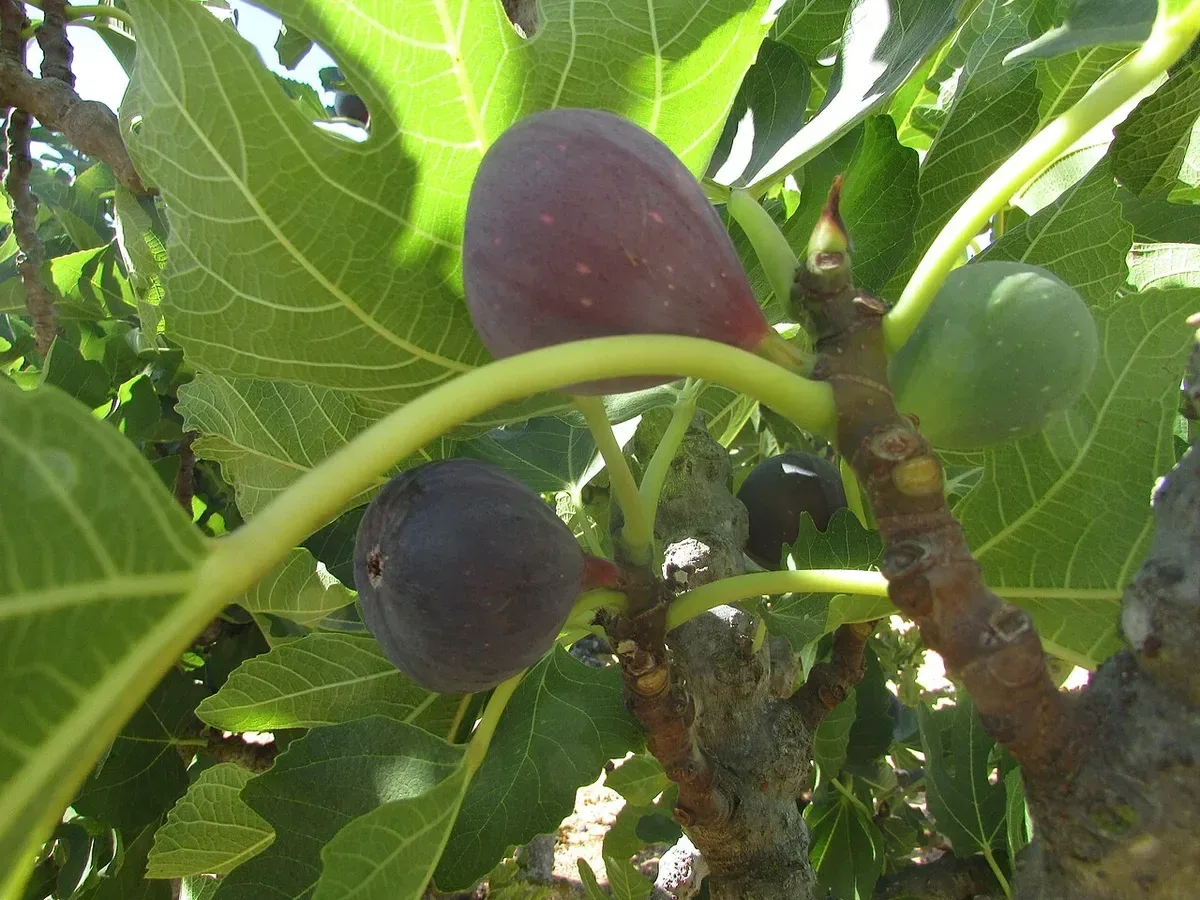
| ☀️ Light | Full sun |
|---|---|
| 💧 Water | Moderate (lightly moist) |
| 🪴 Soil | Well-drained loam rich in organic matter; avoid waterlogged ground |
| 🌡️ Temp | -12°C – 42°C |
| 🐾 Safety | Cats: toxic · Dogs: toxic |
| 📏 Mature size | 4.5 m |
Where It Grows & Climate Tolerance
Pet & Companion Animal Toxicity (How to Grow a Fig Tree in Canada)
Figs can be grown in Canada with planning. They crop outdoors on the BC coast and against warm walls in southern Ontario, and elsewhere do well in large pots stored in a cold garage over winter.
Care instructions
Care Guide & Maintenance Routine
Grow a cold-tolerant variety in a large pot or against a south-facing wall. After leaf drop in fall, move pots into an unheated garage or wrap in-ground trees. Bring pots out after the last frost. Pick figs in August to October once they are soft.
Light & Sunlight
NC State lists full sun to partial shade, but fruit ripens best in full sun. The RHS advises a warm, sunny, sheltered spot, ideally against a south- or south-west-facing wall in cooler climates.
Watering Schedule
Keep soil evenly moist while fruit is developing; NC State advises mulching to hold moisture. Irregular watering, followed by heavy watering, can split ripening fruit. Pots dry out quickly in summer.
Potting Mix & Drainage
Well-drained loam rich in organic matter; avoid waterlogged ground
Temperature & Humidity
Dormant wood is damaged by hard cold, so in-ground trees outside coastal BC need wrapping. Store pots at about -5 to 5°C in winter. Last frost averages run from 26 March in Vancouver to 4 May in Toronto and 8 May in Halifax (ECCC normals). Warm, sunny summers ripen fruit.
Figs in Canadian gardens
Figs are a labour of love in most of Canada, but very rewarding. Toronto and Montréal have a long tradition of backyard figs grown by Italian and Portuguese families, who wrap the trees or bend them over and bury them for winter.
Zones and regions
NC State lists USDA zones 7 to 10. NRCan zones are calculated differently, so treat them as a rough guide:
- Coastal BC (zones 8 and 9, Vancouver, Victoria, Gulf Islands): figs grow outdoors in sunny, sheltered spots. Summers are cool, so the early crop often ripens best.
- Southern Ontario (zones 6 and 7, Toronto, Niagara, Leamington, Windsor): in-ground trees need wrapping or a warm wall. Hot summers ripen the main crop from late August.
- Montréal, Ottawa, the Maritimes: grow in pots and store them in a garage or cold room for winter.
- Prairies and the North: pots only, with a long-season variety started early in spring.
Winter storage for pots
After the first fall frosts drop the leaves, move the pot into an unheated garage, shed or cold cellar that stays roughly between -5 and 5°C. Water lightly about once a month so the roots do not dry out. In April, bring it out to a sheltered spot by day and back in on cold nights.
Wrapping in-ground trees
In Toronto backyards, gardeners tie the branches together in November, wrap them in burlap and add a layer of leaves or straw, topped with a waterproof cover and a bucket over the tip. Unwrap in April once hard frosts are over (average last frost about 4 May in Toronto, ECCC normals via GrowersGuide.ca), keeping cloth handy for late cold nights.
Ripening in a short season
Give the sunniest spot you have and a dark pot that warms in the sun. The RHS advises removing small green figs at the end of summer in cool climates, since they will not ripen; tiny pea-sized ones may form next year's first crop.
Sunrooms
A heated sunroom keeps a potted fig in leaf all winter, but spider mites build up fast in that dry air and the tree gets no rest. Most growers in Ottawa or Winnipeg get better crops by letting it go fully dormant somewhere cold and dark.
Choosing a variety
NC State lists 'Chicago Hardy' and 'Brown Turkey' as cold-tolerant. Ask local growers' clubs which types crop reliably near you.
Pests
Spider mites and scale can build up on figs kept indoors. Raccoons, squirrels and birds take ripe fruit in August.
Sharing cuttings
Cuttings swap hands at seed exchanges, community gardens and fruit-growers' meetups from Victoria to Halifax. Take pencil-thick pieces when you put the tree away in November, store them in damp sawdust in a fridge or cool basement, and root them under a grow light in March.
Safety
Wear gloves when wrapping or pruning, as the sap irritates skin.
Seasonal rhythm
Seasonal Calendar
| Month | Care Tasks | Seasonal Focus |
|---|---|---|
| Jan | Protect from frost/heat | Pots in the garage: water lightly once a month. Check wraps after storms. |
| Feb | Protect from frost/heat | Keep wraps on. Prune stored pot plants while dormant. |
| Mar | Prune | Coastal BC: prune in-ground trees. Watch stored pots for early leaves. |
| Apr | Protect from frost/heat | Unwrap Ontario trees after hard frosts; bring pots out by day. |
| May | Plant out | Move pots into full sun after last frost. Plant new trees. |
| Jun | Prune, Fertilize | Potash-rich feed for pots; pinch new shoots to five leaves (RHS). |
| Jul | Harvest | Coastal BC: early crop ripens. Water pots daily in heat. |
| Aug | Harvest | Southern Ontario: main crop starts to ripen. Net against birds and squirrels. |
| Sep | Harvest | Pick soft figs; remove unripe ones larger than a pea at the end of summer (RHS). |
| Oct | Protect from frost/heat | Leaves drop after frost. Move pots to the garage. |
| Nov | Protect from frost/heat | Wrap in-ground trees in burlap and leaves. |
| Dec | Protect from frost/heat | Check storage temperature stays roughly between -5 and 5°C. |
Diagnostics
Common Problems & Troubleshooting
Fruit dropping while small from dry soil or poor light; lots of leaves and little fruit from rich soil or unrestricted roots; split fruit after heavy rain; rust spots on leaves in humid weather; frost-killed shoot tips.
Pests & seasonal watch: Spider mites and scale on pots stored in garages or sunrooms. Raccoons, squirrels and birds on ripe fruit. Fig rust is uncommon in dry summers.
- Yellow leaves — Leaves fade from green to yellow, often starting at the bottom.
- Root rot — Roots turn brown and mushy in soil that stays wet.
- Mealybugs — White cottony clumps in leaf joints, often with sticky honeydew.
- Spider mites — Fine webbing and pale speckled leaves, worse in dry heated rooms.
- Scale — Hard or soft brown bumps stuck to stems and leaf ribs, often with sticky honeydew.
- Aphids — Clusters of small soft insects on new tips, often sticky.
- Leaf spot — Brown or tan spots with a yellow halo, sometimes with tiny dots in the centre.
- Underwatering — Soil is bone dry and leaves are crispy, curled or dull.
- Leaf drop — Many leaves fall in a short time, sometimes still green.
- Cold damage — Dark, water-soaked or blackened patches after a cold night or an AC blast.
Similar Botanical Matches
Keep exploring
Related plants
Grower field notes
Reader Field Notes in Canada
Share how this plant performs in your local Canada climate.